Types of Bio-based Materials and Their Uses
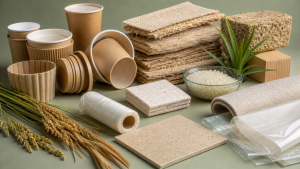
Bio-based materials are made wholly or partly from biomass and are used as renewable alternatives to fossil-fuel-based products. They include plastics, composites, textiles, adhesives, and resins, with applications ranging from packaging and construction to medical and industrial uses.
Overview
Bio-based materials are products derived wholly or partly from biomass. Biomass includes materials of biological origin such as plants, trees, algae, marine organisms, and microorganisms. These materials serve as renewable alternatives to traditional fossil-fuel-based products.
A clear distinction exists between bio-based and biodegradable. Bio-based refers to the origin of the raw materials, focusing on the beginning of the product life cycle. Biodegradable refers to the end-of-life recovery pathway, meaning the material can break down into natural elements through microbial action. Some bio-based materials, such as bio-polyethylene, are not biodegradable. Conversely, some fossil-fuel-based polymers, such as polycaprolactone (PCL), are fully biodegradable.
These materials play a central role in circular economy models. During growth, biomass resources absorb carbon dioxide from the atmosphere. This carbon sequestration helps offset the carbon dioxide released when the materials eventually decompose or are incinerated.
Core Classification of Bio-based Plastics
Polylactic Acid (PLA)
Polylactic Acid is a biodegradable thermoplastic polyester. Industrial producers manufacture PLA by fermenting plant starch extracted from corn, cassava, sugarcane, or sugar beet pulp. The fermentation process yields lactic acid, which then undergoes polymerization to form PLA.
PLA requires specific industrial composting conditions to decompose. It needs temperatures of around 60 degrees Celsius and high humidity to break down. PLA has high rigidity and excellent transparency. Common applications include 3D printing filaments, food packaging, disposable tableware, tea bags, and medical implants such as biodegradable sutures and bone screws.
Polyhydroxyalkanoates (PHAs)
Polyhydroxyalkanoates are linear polyesters produced naturally through the microbial fermentation of sugars or lipids. Bacteria, such as Cupriavidus necator, accumulate PHAs internally as an energy reserve under nutrient-limited conditions.
PHAs are fully biodegradable in marine, soil, and freshwater environments without requiring industrial composting. They offer UV resistance and water-barrier properties. Manufacturers use PHAs for agricultural mulch films, single-use packaging, cosmetic containers, and medical devices like cardiovascular patches.
Bio-based Polyethylene (Bio-PE) and Bio-PET
Bio-PE and Bio-PET are known as “drop-in” bioplastics. Factories produce bio-ethanol from sugarcane or sugar beet and dehydrate it to create ethylene. This bio-ethylene undergoes polymerization to produce Bio-PE.
These drop-in plastics are chemically identical to conventional, petroleum-derived polyethylene and polyethylene terephthalate. They are not biodegradable. However, they are fully recyclable through existing municipal recycling streams. They are used in soft drink bottles, cosmetics packaging, and automotive interior parts.
Starch-based Blends
Starch is an abundant, inexpensive, and fully biodegradable natural polymer. Because pure starch is brittle and sensitive to water, manufacturers blend it with other biodegradable polymers like polybutylene adipate terephthalate (PBAT) or PLA.
Starch blends degrade rapidly in soil and compost. Primary uses include water-soluble packing peanuts, agricultural mulch films, and carrier bags.
Bio-based Composites and Structural Materials
Natural Fiber Composites (NFCs)
Natural Fiber Composites combine polymer matrices with natural fibers. Common fibers include flax, hemp, jute, kenaf, and coir. The polymer matrix can be fossil-based or bio-based.
NFCs feature low density and high specific strength compared to glass fibers. They provide reliable thermal and acoustic insulation. The automotive industry uses NFCs for interior door panels, dashboards, and parcel shelves. They are also popular in construction for outdoor decking and cladding.
Hempcrete
Hempcrete is a bio-composite material made from the woody core of the hemp plant (hemp shives) mixed with a lime-based binder and water.
Hempcrete acts as a carbon sink, sequestering more carbon during the plant’s growth and the lime’s curing process than the manufacturing process emits. It is lightweight, highly vapor-permeable, and fire-resistant. Workers use hempcrete as a non-structural insulating material for walls, floors, and roofs.
Mycelium-based Materials
Mycelium is the vegetative, root-like network of fungi. To grow mycelium-based materials, technicians inoculate agricultural waste like straw, cotton husks, or sawdust with fungal spores. The mycelium grows throughout the substrate, binding it into a solid, cohesive block.
Once grown, the material undergoes heat treatment to kill the fungus and halt growth. The resulting product is lightweight, fire-retardant, and fully biodegradable. It serves as a direct alternative to expanded polystyrene (Styrofoam) in protective packaging, acoustic wall panels, and thermal insulation.
Bio-based Textiles and Specialty Fibers
Regenerated Cellulose Fibers
Regenerated cellulose fibers are made by dissolving natural wood pulp or bamboo pulp in a solvent and spinning the solution into fibers. Lyocell and Modal are primary examples.
Lyocell uses a closed-loop production system. The solvent, N-Methylmorpholine N-oxide (NMMO), is non-toxic and recycled at a recovery rate of over 99 percent. Lyocell fibers are highly breathable, moisture-absorbent, and completely biodegradable. They are used in activewear, denim, and medical dressings.
Algae-based Fibers
Algae-based fibers use alginate, a natural polysaccharide extracted from brown seaweed. Manufacturers mix the alginate with cellulose to spin textile fibers.
Algae cultivation requires no arable land, pesticides, or freshwater resources. The resulting fibers are naturally flame-resistant and rich in active substances such as antioxidants. The textile industry uses these fibers for sensitive-skin apparel and sustainable activewear.
Synthetic Spider Silk
Synthetic spider silk is a bio-synthetic fiber produced by inserting spider silk genes into host organisms like yeast, bacteria, or alfalfa plants. Fermentation of these hosts yields liquid silk proteins, which undergo wet-spinning to create solid fibers.
Synthetic spider silk possesses high tensile strength combined with high elasticity. Key applications include military body armor, high-performance sports apparel, and surgical sutures.
Bio-adhesives and Bio-resins
Soy-based Adhesives
Soy-based adhesives are formulated from soy protein isolate. These bio-adhesives replace traditional urea-formaldehyde resins in wood products.
Soy-based adhesives emit no toxic volatile organic compounds (VOCs), protecting indoor air quality. Wood manufacturing facilities use them to bind plywood, particleboard, and medium-density fiberboard (MDF).
Cardanol-based Resins
Cardanol is a natural phenol obtained from Cashew Nut Shell Liquid (CNSL), a byproduct of the cashew nut processing industry.
Cardanol-based resins possess high thermal resistance, chemical resistance, and hydrophobic properties. Industrial manufacturers use cardanol as a green alternative to petroleum-derived phenol in heavy-duty protective coatings, varnishes, and friction materials like brake linings.
Comparison of Key Bio-based Materials
| Material | Primary Biological Source | Biodegradable? | Common Applications |
| Polylactic Acid (PLA) | Corn starch, sugarcane | Yes (industrial composting) | 3D printing, food packaging, disposable tableware |
| Polyhydroxyalkanoates (PHA) | Microbial fermentation of sugars | Yes (marine and soil) | Agricultural mulch films, medical sutures, packaging |
| Bio-Polyethylene (Bio-PE) | Sugarcane-derived ethanol | No | Beverage bottles, carry bags, automotive components |
| Mycelium-based Materials | Fungal networks on agricultural waste | Yes | Protective packaging, acoustic panels, insulation |
| Hempcrete | Hemp shives and lime binder | Yes | Insulating walls, non-structural building blocks |
| Lyocell | Wood pulp | Yes | Apparel, medical wipes, home textiles |
| Cardanol Resins | Cashew Nut Shell Liquid | No | Friction materials, heavy-duty industrial coatings |
Key International Standards and Certifications
ASTM D6866
ASTM D6866 is a standardized test method developed in the United States. It uses radiocarbon (Carbon-14) analysis to determine the exact bio-based content of solid, liquid, and gaseous samples. This standard distinguishes modern biomass carbon from fossil carbon, which contains no Carbon-14.
USDA Certified Biobased Product
This label is managed by the United States Department of Agriculture under the BioPreferred Program. It certifies products that meet or exceed minimum bio-based content percentages, which are verified using ASTM D6866 testing standards.
EN 16785-1
EN 16785-1 is the European standard that specifies requirements for determining the bio-based content of products. It combines radiocarbon analysis with elemental analysis to verify the renewable origin of carbon, hydrogen, oxygen, and nitrogen in a given material.
OK biobased (TÜV AUSTRIA)
This certification program uses a star-rating system to indicate the percentage of renewable raw materials used in a product. A product with one star contains between 20 percent and 40 percent bio-based content, while a four-star rating requires more than 80 percent bio-based content.
Recent Context
India’s first large-scale biopolymer plant is coming up at Gola Gokarannath in Uttar Pradesh. The Balrampur Chini Mills project will convert sugarcane into PLA and is scheduled for commissioning in October 2026.
The plant is designed with a Zero Liquid Discharge system and will produce biodegradable items such as plates, cups, and carry bags.
Rare Facts for Prelims
- Carbon-14 basis: ASTM D6866 works because recently grown biomass contains measurable Carbon-14, unlike fossil carbon.
- PHA origin: PHAs are stored by bacteria as intracellular energy reserves under nutrient stress.
- Closed-loop solvent: Lyocell production is notable for recycling more than 99 percent of the NMMO solvent.
- Seaweed advantage: Algae-based fibers do not need arable land or freshwater for cultivation.
- Fire-resistant composite: Hempcrete is valued in construction for being fire-resistant and vapour-permeable.
- Mycelium use: Mycelium materials are often grown on agricultural waste before heat treatment makes them stable and non-living.
| Related | |
|---|---|