Important Environmental Technologies in Industries
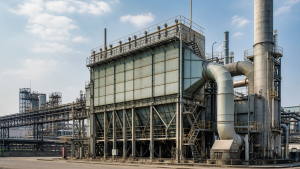
Industrial growth needs cleaner technologies to control pollution, reuse water, manage waste, and cut emissions. The main industrial environmental systems used for this purpose are listed below.
Air Pollution Control Technologies
Industries release particulate matter and toxic gases into the atmosphere. Specialized equipment is used to clean these emissions before release.
Electrostatic Precipitators (ESP)
ESPs remove fine dust particles from flowing gases using electrical energy. Dirty gas passes through electrodes, which give the particles a negative charge. The charged particles then stick to positively charged collector plates. Periodic rapping knocks the dust into hoppers for disposal.
ESPs often exceed 99% collection efficiency for dry particles.
Thermal power plants and cement factories are major users of ESPs.
Scrubbers
Scrubbers remove both particulate matter and acid gases from industrial exhaust streams. Wet scrubbers spray a liquid, usually water mixed with chemical reagents, into the gas flow. The liquid traps the pollutants. Dry scrubbers inject dry reactants into the exhaust to neutralize acids.
Flue Gas Desulfurization (FGD) is a common scrubbing process. It uses limestone or lime slurry to neutralize sulfur dioxide (SO2), converting it into synthetic gypsum.
Fabric Filters (Baghouses)
Baghouse filters act like large industrial vacuum cleaners. Dirty gas passes through long fabric bags made of woven or felted material. The fabric traps particulate matter while clean gas passes through.
Baghouse filters are effective for capturing very fine particles, including PM2.5.
The bags are cleaned using mechanical shaking or pulses of compressed air.
Selective Catalytic Reduction (SCR)
SCR systems reduce nitrogen oxide (NOx) emissions from industrial boilers and engines. A reducing agent, typically ammonia or urea, is injected into the exhaust gas. The gas then passes over a catalyst bed, often containing oxides of titanium, vanadium, or tungsten. The catalyst converts NOx into harmless nitrogen gas and water vapor.
| Technology | Primary Pollutants Targeted | Working Mechanism | Key Industrial Applications |
| Electrostatic Precipitator (ESP) | Fly ash, particulate matter | Uses electrical charge to attract and collect particles | Coal-fired power plants, steel mills, cement plants |
| Wet Scrubber | Sulfur dioxide (SO2), acidic gases, dust | Sprays neutralizing liquid to absorb gas and trap dust | Chemical plants, waste incinerators, metal processing |
| Baghouse Filter | PM10, PM2.5, metallic fumes | Passes gas through fabric filters to trap dry particles | Asphalt plants, grain mills, mining industries |
| Selective Catalytic Reduction (SCR) | Nitrogen oxides (NOx) | Converts NOx into nitrogen and water using ammonia and catalysts | Gas turbines, fossil-fuel power plants, diesel engines |
Industrial Wastewater Treatment Technologies
Industrial processes generate wastewater containing heavy metals, organic toxins, and suspended solids. Treatment technologies clean this water for safe discharge or reuse.
Effluent Treatment Plants (ETP)
ETPs clean industrial wastewater in three sequential phases:
- Primary Treatment: Physical processes like screening, sedimentation, and grit removal separate large solids and floating oils.
- Secondary Treatment: Biological processes use microorganisms to break down organic matter. Activated sludge processes and trickling filters are common methods.
- Tertiary Treatment: Advanced chemical and physical processes remove remaining nutrients, suspended solids, and dissolved toxins. Techniques include chlorination, ozonation, and activated carbon filtration.
Zero Liquid Discharge (ZLD)
ZLD is an advanced water treatment strategy that ensures no industrial wastewater leaves the facility as liquid effluent. Instead, the system purifies and recycles all wastewater.
ZLD is important for industrial compliance and water reuse.
A typical ZLD system uses reverse osmosis to concentrate dissolved solids. It then uses evaporators and crystallizers to remove the remaining water, leaving solid salt crystals for disposal or sale.
Membrane Bioreactors (MBR)
MBR technology combines biological treatment with membrane filtration. It replaces the traditional secondary clarifier with microfiltration or ultrafiltration membranes. Microorganisms digest the organic pollutants, and the membrane separates treated water from the biomass.
MBR systems produce high-quality effluent suitable for immediate reuse.
Solid and Hazardous Waste Management Technologies
Industrial waste often contains toxic compounds that require thermal or biological destruction.
Pyrolysis and Gasification
These thermochemical processes convert carbon-based waste into usable energy products.
- Pyrolysis: Heats organic waste in the complete absence of oxygen. It decomposes the waste into bio-char, bio-oil, and syngas.
- Gasification: Heats waste at high temperatures, usually above 700°C, with a controlled, limited amount of oxygen. This reaction produces syngas, a mixture of carbon monoxide and hydrogen.
Plasma Arc Gasification
This technology treats highly hazardous industrial and medical waste. It uses a plasma torch to create an electric arc, with chamber temperatures reaching between 5,000°C and 15,000°C. The extreme heat breaks chemical bonds in the waste.
Inorganic materials melt into a glass-like slag, while organic materials convert into syngas.
Bioremediation and Phytoremediation
These technologies use living organisms to clean up contaminated industrial sites.
- Bioremediation: Uses specialized bacteria or fungi to degrade organic pollutants, oil spills, and solvents. Pseudomonas putida can degrade hydrocarbons in oil-contaminated soil.
- Phytoremediation: Uses green plants to extract, stabilize, or destroy heavy metals and synthetic chemicals from soil and groundwater. Indian mustard (Brassica juncea) absorbs heavy metals like lead and selenium.
Carbon Capture, Utilization, and Storage (CCUS)
CCUS technologies capture carbon dioxide (CO2) from industrial exhaust to prevent its release into the atmosphere.
- Post-Combustion Capture: Captures CO2 after burning fuel. The exhaust gas passes through a liquid solvent, usually an amine such as monoethanolamine (MEA), which selectively binds with CO2. Heating the solvent later releases pure CO2.
- Pre-Combustion Capture: Gasifies fuel before combustion to produce syngas. The system separates CO2 from hydrogen before burning, and the clean hydrogen then generates power.
- Oxy-Fuel Combustion: Burns fuel in pure oxygen instead of air. The resulting flue gas contains almost entirely water vapor and CO2. Condensing the water leaves pure CO2 for direct capture.
- Storage and Utilization: Operators compress captured CO2 into a liquid-like state and inject it deep underground into saline aquifers or depleted oil and gas reservoirs. Industries also use CO2 to manufacture synthetic fuels, chemicals, polymers, and building materials like concrete.
Process Efficiency and Green Energy Technologies
Modern industries use clean fuel technologies and energy recovery systems to reduce their carbon footprint.
- Green Hydrogen: Hydrogen fuel produced by electrolysis of water using electricity from renewable sources such as solar or wind power. It produces zero carbon emissions and can replace coal and natural gas in steelmaking and chemical synthesis.
- Waste Heat Recovery Systems (WHRS): Capture high-temperature exhaust heat through heat exchangers. The captured heat boils water to create steam, which drives a turbine to generate electricity. Cement plants and glass manufacturing units use WHRS to reduce external power purchases.
Essential Environmental Chemistry and Facts
- Lime and Limestone: Calcium carbonate and calcium hydroxide are the main chemical sorbents in Flue Gas Desulfurization (FGD) systems. They react with sulfur dioxide to produce calcium sulfate (gypsum).
- Titanium Dioxide: Commonly serves as a catalyst support in Selective Catalytic Reduction (SCR) systems to eliminate nitrogen oxide emissions.
- Activated Carbon: Highly porous carbon used in tertiary wastewater treatment and gas purification. It removes organic pollutants, color, and odor through adsorption.
- Ammonia: Used in SCR systems as a reactant to reduce toxic NOx to harmless nitrogen gas and water.
- Alum (Aluminum Sulfate): A common coagulant used in Effluent Treatment Plants (ETPs) to destabilize colloidal particles and help them clump together for removal.
- Anammox (Anaerobic Ammonium Oxidation): A biological process used in advanced wastewater treatment in which specialized bacteria convert ammonium and nitrite directly into nitrogen gas under anaerobic conditions.
- Bioventing: An in-situ bioremediation technology that delivers oxygen to contaminated unsaturated soils to stimulate indigenous microbes that degrade hydrocarbons.
Rare Facts for Prelims
- ESP polarity: In ESPs, the collecting plates are usually positively charged, while dust particles are given a negative charge.
- FGD by-product: Synthetic gypsum from FGD can be used in gypsum board and cement manufacture.
- MBR advantage: Membrane bioreactors can operate with a smaller footprint than conventional activated sludge plants.
- Anammox benefit: The Anammox process uses far less oxygen than conventional nitrogen removal methods.
- Bioventing niche: Bioventing works best in the unsaturated zone of soil, not in fully waterlogged conditions.
- PLA material: Polylactic Acid (PLA) is a biodegradable polyester made from renewable feedstocks like sugarcane or corn starch.
| Related | |
|---|---|