Major Oil and Gas Pipelines in India
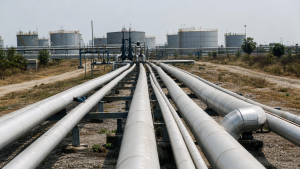
Pipelines are the backbone of India’s oil and gas transport system, moving crude oil, petroleum products, LPG, and natural gas efficiently across long distances. They support energy security, reduce logistics costs, and connect ports, refineries, and consuming regions.
Introduction to Pipeline Infrastructure in India
- Pipelines: The primary mode for transporting bulk liquids and gases across India.
- Advantages: More cost-effective and safer than road and rail transport.
- Crude Oil Dependence: India imports nearly 85% of its crude oil requirements.
- Network Role: Coastal ports are linked directly to landlocked refineries through extensive pipeline systems.
- Benefits: Pipelines minimize transit losses and reduce traffic congestion on roads and railways.
- Regulator: The Petroleum and Natural Gas Regulatory Board (PNGRB) regulates downstream oil and gas activities in India.
Major Crude Oil Pipelines
- Salaya-Mathura Pipeline (SMPL): Connects the marine terminal at Salaya on the Gujarat coast to the refinery at Mathura in Uttar Pradesh. It supplies crude oil to refineries in Koyali and Mathura.
- Mundra-Panipat Pipeline (MPPL): Runs from Mundra port in Gujarat to the refinery in Panipat, Haryana. It handles high-volume crude oil transport to northern India.
- Naharkatia-Nunmati-Barauni Pipeline: One of India’s earliest pipelines, spanning about 1,167 km. It transports domestic crude oil from the Naharkatiya oilfields in Assam to refineries in Nunmati and Barauni.
- Mumbai High-Mumbai-Ankleshwar-Koyali Pipeline: Links the offshore Mumbai High oilfields to the Koyali refinery in Vadodara.
- Paradip-Haldia-Barauni Pipeline: Serves the eastern region by carrying imported crude from Paradip port in Odisha to refineries in Haldia and Barauni.
Major Petroleum Product and LPG Pipelines
- Jamnagar-Loni Pipeline: A long-distance LPG pipeline transporting liquefied petroleum gas from Jamnagar in Gujarat to Loni in Uttar Pradesh.
- Vizag-Vijayawada-Secunderabad Pipeline: Transports refined petroleum products from the Visakhapatnam refinery to domestic distribution terminals in Andhra Pradesh and Telangana.
- New LPG Pipelines: On August 21, 2026, PNGRB authorized about 1,800 km of new LPG common-carrier pipelines, taking India’s common-carrier LPG network to about 9,500 km.
- Cherlapally to Nagpur Pipeline: 556 km across Telangana and Maharashtra.
- Jhansi to Sitarganj Pipeline: 611 km across Uttar Pradesh and Uttarakhand.
- Shikrapur to Goa and Hubli Pipeline: 633 km across Maharashtra, Karnataka, and Goa.
PNGRB authorised the new LPG network as a common-carrier system, meaning multiple users can access it under regulated terms.
The LPG expansion is expected to reduce road transport dependence, tanker accidents, and carbon emissions.
Major Natural Gas Pipelines
- Hazira-Vijaipur-Jagdishpur (HVJ) Pipeline: India’s first cross-country natural gas pipeline, spanning over 1,750 km. It connects Hazira in Gujarat to Jagdishpur in Uttar Pradesh via Madhya Pradesh and Rajasthan.
- Jagdishpur-Haldia-Bokaro-Dhamra Pipeline (JHBDPL): Also known as the Pradhan Mantri Urja Ganga project, it links the northern gas grid to Bihar, Jharkhand, Odisha, and West Bengal.
- East-West Pipeline (EWPL): Connects Kakinada in Andhra Pradesh to Bharuch in Gujarat and carries gas from the Krishna-Godavari basin to western markets.
- Kochi-Koottanad-Bangalore-Mangalore Pipeline (KKBMPL): Transports regasified LNG from the Kochi terminal to industrial units across Kerala, Tamil Nadu, and Karnataka.
- North East Gas Grid (NEGG): A 1,670 km grid operated by Indradhanush Gas Grid Limited (IGGL), linking the eight northeastern states to the national gas network.
The National Gas Grid and Unified Tariff
- Operational Network: As of June 2025, India had 25,429 km of operational natural gas pipelines.
- Expansion Target: The government is working on another 10,459 km of pipelines to reach a total network of about 35,000 km.
- One Nation, One Grid, One Tariff: PNGRB has implemented a unified tariff system across about 90% of the grid.
- Largest Operator: GAIL (India) Limited manages roughly 17,000 km of natural gas pipelines.
Unified tariff makes gas transport costs more uniform and helps distant regions access affordable natural gas.
Transnational Pipeline Projects
- Motihari-Amlekhgunj Pipeline: South Asia’s first cross-border petroleum pipeline, measuring 69 km. It connects Motihari in Bihar to Amlekhgunj depot in Nepal.
- India-Bangladesh Friendship Pipeline (IBFP): A 131.57 km cross-border pipeline from Siliguri in West Bengal to Parbatipur in Bangladesh. It carries High-Speed Diesel.
- Turkmenistan-Afghanistan-Pakistan-India (TAPI) Pipeline: A proposed 1,814 km natural gas pipeline from the Galkynysh gas field in Turkmenistan to Fazilka in India.
- Oman-Gujarat Subsea Gas Pipeline: A proposed deep-sea subsea pipeline spanning 1,600 km to 2,000 km across the Arabian Sea, connecting Ras Al Jifan in Oman to Porbandar in Gujarat.
Comparison of Major Pipelines in India
| Pipeline Name | Type of Fuel | Route / Terminal Points | Length (Approx.) |
| Hazira-Vijaipur-Jagdishpur (HVJ) | Natural Gas | Hazira (Gujarat) to Jagdishpur (Uttar Pradesh) | 1,750 km |
| Naharkatia-Nunmati-Barauni | Crude Oil | Naharkatiya (Assam) to Barauni (Bihar) | 1,167 km |
| India-Bangladesh Friendship (IBFP) | Petroleum (Diesel) | Siliguri (West Bengal) to Parbatipur (Bangladesh) | 131.57 km |
| Motihari-Amlekhgunj | Petroleum | Motihari (Bihar) to Amlekhgunj (Nepal) | 69 km |
| Cherlapally to Nagpur | LPG | Cherlapally (Telangana) to Nagpur (Maharashtra) | 556 km |
| Jhansi to Sitarganj | LPG | Jhansi (Uttar Pradesh) to Sitarganj (Uttarakhand) | 611 km |
| Shikrapur to Goa and Hubli | LPG | Shikrapur (Maharashtra) to Goa and Hubli (Karnataka) | 633 km |
Important Facts and Trivia
- First Crude Pipeline: The Naharkatiya-Nunmati-Barauni pipeline was the first major crude pipeline project in India.
- Cross-Border First: The Motihari-Amlekhgunj pipeline is South Asia’s first cross-border petroleum pipeline.
- Unified Tariff Coverage: The unified tariff system covers nearly 90% of India’s natural gas pipeline grid.
- Common-Carrier Concept: These pipelines allow multiple shippers to use the same infrastructure under regulated access.
- LPG Expansion: The 2026 LPG approvals add major links across Telangana, Maharashtra, Uttar Pradesh, Uttarakhand, Karnataka, and Goa.
Rare Facts for Prelims
- PNGRB Law: PNGRB was created under the Petroleum and Natural Gas Regulatory Board Act, 2006.
- Most Important Cross-Country Gas Line: HVJ is often cited as India’s first major inter-state natural gas trunk pipeline.
- Eastern Gas Connectivity: JHBDPL is popularly known as the Pradhan Mantri Urja Ganga project.
- Northeast Integration: The North East Gas Grid is designed to connect all eight northeastern states to the national network.
- Diesel Export Link: The India-Bangladesh Friendship Pipeline mainly carries High-Speed Diesel from India to Bangladesh.
- Regional Energy Security: Pipelines help improve energy security by reducing dependence on road tankers and imported logistics bottlenecks.
Recent Context
On August 21, 2026, PNGRB approved about 1,800 km of new LPG pipelines for GAIL. The network is planned across six states and will expand India’s common-carrier LPG infrastructure to about 9,500 km.
| Related | |
|---|---|