Major Indian Space and Life-Sciences Institutions
India’s space and life-sciences ecosystem is anchored by a mix of ministries, research councils, autonomous bodies and commercial interfaces. For Prelims revision, the most useful points are their legal basis, administrative control, key mandates and major funding or incubation schemes.
Space Sector Governance and Commercial Interfaces
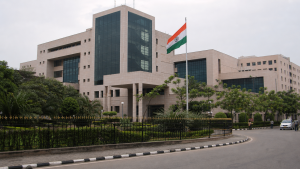
- Department of Space (DoS) and ISRO: The Secretariat of the Department of Space and the ISRO Headquarters operate from Antariksh Bhavan, Bengaluru.
- Top leadership: Dr. V. Narayanan serves as Chairman of ISRO and Secretary of the DoS. S. Somanath was the 10th Chairman of ISRO.
- NSIL: NewSpace India Limited is the commercial arm of the Department of Space and handles space-related commercial operations.
- IN-SPACe: The Indian National Space Promotion and Authorization Centre is the regulatory body under the DoS for promoting and authorizing private space entities.
- IN-SPACe chairmanship: Dr. Pawan Kumar Goenka chairs IN-SPACe.
- Technology transfers: IN-SPACe has facilitated more than 110 technology transfer agreements to support domestic private enterprises.
- Public awareness: ISRO observed the third National Space Day on August 23, 2026, with the theme “Towards Viksit Bharat: Innovating, Collaborating and Aspiring to Global Space Leadership.”
- START programme: The fourth edition of the Space Science and Technology AwaReness Training (START-2026) online programme began on March 11, 2026, for undergraduate and postgraduate students.
Biotechnology Policy and Institutional Structure
- DBT apex restructuring: The Department of Biotechnology consolidated its 14 autonomous research institutes under a single apex body called the Biotechnology Research and Innovation Council (BRIC).
- DBT leadership: Dr. Rajesh Sudhir Gokhale is the Secretary of DBT and Chairman of BIRAC. He also holds additional charge as Director General of CSIR and Secretary of DSIR.
- BioE3 Policy: Approved by the Union Cabinet in August 2024, the BioE3 policy stands for Biotechnology for Economy, Environment and Employment.
- Policy focus: It promotes high-performance biomanufacturing across six thematic sectors: bio-based chemicals, biopolymers, APIs and enzymes; smart proteins and functional foods; precision biotherapeutics; climate-resilient agriculture; carbon capture and utilization; and marine and space research.
- Space-biotech link: Under this policy, DBT signed a framework MoU with ISRO on Space Biotechnology and Space Biomanufacturing.
- Mission participation: The collaboration enabled three DBT-BRIC investigators to participate in the Axiom-4 space mission.
- Bioeconomy target: India’s biotechnology bioeconomy crossed USD 190 billion by mid-2026, with a target of USD 300 billion by 2030.
Anusandhan National Research Foundation (ANRF)
- Legal basis: ANRF was established under the Anusandhan National Research Foundation Act, 2023.
- Apex role: It serves as the national apex body to seed, grow and promote research and development in universities and colleges.
- CEO: Dr. Shivkumar Kalyanaraman is the Chief Executive Officer of ANRF.
- Administrative link: He succeeded Prof. Abhay Karandikar, who is the Secretary of the Department of Science and Technology.
- Foundation Day: ANRF celebrated its inaugural Foundation Day on February 5, 2026, in New Delhi.
- RDI Fund: ANRF administers the Research, Development and Innovation Fund, a ₹1 lakh crore Special Purpose Fund for private sector-led R&D over six years.
- Fund managers: The Technology Development Board and BIRAC are the approved Second Level Fund Managers for implementing the fund.
- Inclusivity Research Grant: The IRG scheme provides up to ₹60 lakh over three years for SC/ST researchers.
- Legacy scheme: IRG subsumes the EMEQ scheme of the dissolved Science and Engineering Research Board (SERB).
- Prime Minister Professorship: ANRF invited proposals for this initiative from September 1 to October 15, 2026, to deploy retired scientists as academic mentors for lower-ranked universities.
Key Life-Sciences Centers and Incubation Hubs
- NCBS: The National Centre for Biological Sciences is located in Bengaluru and functions as a constituent of TIFR under the administrative control of the Department of Atomic Energy.
- NCBS director: Prof. LS Shashidhara directs NCBS.
- C-CAMP: The Centre for Cellular and Molecular Platforms is based in Bengaluru and is led by Director and CEO Dr. Taslimarif Saiyed.
- Climate partnership: In December 2025, C-CAMP partnered with Ashraya Hastha Trust to set up a Centre of Excellence for Sustainability and Climate Action.
- Bio for Climate: The Centre of Excellence runs the Bio for Climate programme.
- NBEC 2026: In May 2026, C-CAMP launched the ninth edition of the National Bio Entrepreneurship Competition.
- NBEC support: The competition offered a combined pool of up to ₹20 crore in cash prizes and investment avenues for deep-tech innovations.
- CSIR-CCMB: The CSIR-Centre for Cellular and Molecular Biology in Hyderabad initiated recruitment for the post of Director in September 2026.
Key Prelims Takeaways
- ISRO and DoS: Both operate from Antariksh Bhavan, Bengaluru; Dr. V. Narayanan is the current Chairman of ISRO and Secretary of DoS.
- Space commercial-regulatory structure: NSIL is the commercial arm, while IN-SPACe regulates and promotes private participation in the space sector.
- IN-SPACe fact: It is chaired by Dr. Pawan Kumar Goenka and has enabled more than 110 technology transfer agreements.
- BioE3 policy: Approved in August 2024, it supports high-performance biomanufacturing across six thematic sectors.
- ANRF Act, 2023: ANRF is the apex body for research promotion in universities and colleges.
- Funding terms: ANRF’s RDI Fund is ₹1 lakh crore over six years; the IRG offers up to ₹60 lakh; NBEC 2026 has a prize pool of up to ₹20 crore.
- Important dates: February 5 is ANRF Foundation Day; August 23 is National Space Day.
Current General Studies comprises current-affairs-based, General Studies-rich study material on policies, laws, institutions, economy, science, environment, governance, international relations, and other varied but important topics for UPSC and State PSC Prelims examinations.
Fortnightly PDF compilations: Available here
Originally written on
April 4, 2026
and last modified on
September 5, 2026.
| Related | |
|---|---|