Rajasthan’s Tribal Communities: Customs and Social Structure
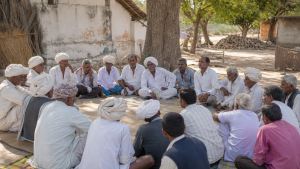
Rajasthan’s tribal communities form an important part of the state’s social and cultural landscape. Their customs, settlement patterns, village councils, marriage practices, and festivals offer a clear view of indigenous life in western India.
Major Tribal Groups and Distribution
Rajasthan has several Scheduled Tribes, with distinct regional concentrations across the southern and eastern belts, as well as parts of the Aravalli and desert regions. The main groups include the Meenas, Bhils, Garasias, Saharias, and Damors.
- Meenas: The largest tribal group in Rajasthan by population. They are mainly found in Jaipur, Dausa, Sawai Madhopur, Karauli, Alwar, and Udaipur.
- Bhils: The second-largest tribal group and one of India’s oldest indigenous communities. They are concentrated in Banswara, Dungarpur, Udaipur, and Chittorgarh.
- Garasias: Mainly located in Abu Road and Pindwara tehsils of Sirohi district, with adjacent areas of Udaipur and Pali.
- Saharias: The only tribe in Rajasthan classified as a Particularly Vulnerable Tribal Group (PVTG). They live almost entirely in Kishanganj and Shahabad tehsils of Baran district.
- Damors: A smaller agricultural tribe settled mainly in Dungarpur, especially in the Simalwara block, and in adjoining areas of Banswara.
Settlement Patterns and Local Identity
Tribal settlements in Rajasthan are often organised around local hamlets, kinship groups, and traditional leadership systems. These patterns help maintain social unity and local self-regulation.
- Bhil settlements: A cluster of huts is called a Phala, and a group of Phalas forms a Pal.
- Meena settlements: Village and clan organisation is traditionally linked to the Khap structure.
- Garasia settlements: Social units are known as Phalia, reflecting a distinct neighbourhood-based pattern.
- Saharia settlements: Their villages are known as Saharanas, with a central community shelter called a Hathai or Chhapri.
- Damor settlements: Their hamlets are commonly known as Phala.
Customary Governance and Village Councils
Tribal governance in Rajasthan depends heavily on customary laws, village headmen, and community councils. These institutions deal with disputes, social discipline, and the use of common resources.
- Bhils: The traditional village headman is called the Gameti, assisted by village elders known as Bhanjgarias.
- Meenas: Their traditional village headman is the Patel, and community authority is associated with the Chaurasi Panchayat.
- Garasias: The village headman is known as the Sahlot or Patel.
- Saharias: The headman is called the Kotwal, and social justice is administered through a three-tier council system.
- Damors: The village headman is the Mukhi.
| Tribal Group | Traditional Headman | Settlement / Clan Unit | Notable Feature |
| Bhils | Gameti | Pal, Phala | Bhaibhand clan solidarity; bow and arrow tradition |
| Meenas | Patel | Khap | Chaurasi Panchayat authority |
| Garasias | Sahlot / Patel | Phalia | Natra and Ghar Jamai traditions |
| Saharias | Kotwal | Saharana, Hathai | Panchtai, Ekadashi, and Chaurasi Panchayats |
| Damors | Mukhi | Phala | Monogamous agricultural focus; equal male dress norms |
Marriage Customs and Social Practices
Marriage customs among Rajasthan’s tribal communities reflect local economic arrangements and social flexibility. Several practices are widely known across Bhil, Garasia, and Damor societies.
- Dapa system: A customary bride-price paid by the groom’s father to the bride’s family.
- Natra Pratha: Allows widowed or divorced individuals to remarry without elaborate religious rituals.
- Ghar Jamai: An arrangement in which the groom lives in the bride’s household and contributes labour.
- Social function: These customs help regulate marriage alliances and family obligations within tribal society.
- Clan solidarity: Marriage rules are closely linked to kinship networks and local customary law.
Fairs, Festivals and Cultural Expressions
Fairs and religious gatherings are central to tribal life in Rajasthan. They serve as places for worship, trade, social exchange, and marriage negotiations.
- Baneshwar Fair: Held at the confluence of the Som, Mahi, and Jakham rivers in Dungarpur district during Magh Purnima. It is known as the Kumbh of the Tribals and is closely associated with the Bhil community.
- Religious observance at Baneshwar: Pilgrims submerge the ashes of ancestors and worship a broken Shiva Lingam at the Baneshwar temple.
- Sita Bari Fair: Held near Kelwara in Baran district during Jyeshtha. It is the largest cultural gathering of the Saharia tribe and also serves as a commercial and matchmaking venue.
- Chitra Vichitra Fair: Organised in the Kotra block of Udaipur district shortly after Holi. It is celebrated by the Garasia and Bhil communities.
- Ritual role of fairs: Many gatherings include ancestral rituals, community worship, and partner selection.
Performing Arts and Community Life
Tribal dances and ritual performances are closely tied to seasonal festivals and religious observances. They are important markers of community identity.
- Ghoomar / Gair Dance: Performed by Bhil men during Holi, using wooden sticks in rhythmic circular movements.
- Gavari (Rai) Dance-Drama: A 40-day ritual dance-drama performed exclusively by Bhil men during August and September, dedicated to Goddess Parvati (Gauri).
- Valar Dance: A circular dance performed by Garasia men and women without musical instruments, based on vocal rhythm and beat tracking.
- Ritual importance: These art forms are not only cultural expressions but also part of community worship and social cohesion.
Key Prelims Takeaways
- Tribal population: Scheduled Tribes account for 13.48% of Rajasthan’s population as per the 2011 Census.
- Largest tribal group: The Meenas are the most populous Scheduled Tribe in Rajasthan.
- Second-largest tribal group: The Bhils are the next largest tribal community in the state.
- Highest tribal concentration: Banswara has the highest percentage of tribal population in Rajasthan.
- Lowest tribal concentration: Bikaner has the lowest proportion of tribal population in the state.
- PVTG status: The Saharia tribe is the only PVTG in Rajasthan.
- Important fair: Baneshwar Fair is held in Dungarpur during Magh Purnima and is called the Kumbh of the Tribals.
| Related | |
|---|---|