Scientists Demonstrate Eight-Letter Genetic Alphabet Reading
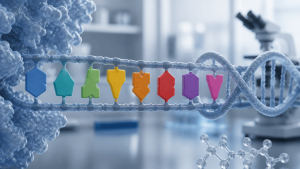
Researchers at the University of California San Diego demonstrated that Escherichia coli RNA polymerase can read and transcribe a synthetic eight-letter genetic alphabet. The study was published on 2 September 2026 in Nature Communications and was led by Dong Wang of the Skaggs School of Pharmacy and Pharmaceutical Sciences.
Hachimoji DNA
Hachimoji DNA is a synthetic genetic system with eight letters. It includes the four natural DNA bases, adenine, thymine, cytosine and guanine, and four synthetic bases, P, Z, B and S. The term “hachimoji” comes from Japanese and means “eight letters”.
RNA Polymerase and Transcription
RNA polymerase is an enzyme that synthesises RNA from a DNA template during transcription. In the experiment, the bacterial enzyme recognised the synthetic base pairs using biochemical signals similar to those used for natural bases. The PZ base pair was processed at a transcription speed about two times slower than a natural GC base pair.
Structural Methods and Related Study
The research used high-resolution cryo-electron microscopy and biochemical experiments to capture structural snapshots of the enzyme interacting with synthetic bases. A companion study published on 12 August 2026 in the Proceedings of the National Academy of Sciences showed that the same UC San Diego team also identified transcription of another synthetic base pair that lacks hydrogen bonds.
Important Facts for Exams
- Escherichia coli is a Gram-negative bacterium widely used in molecular biology and genetics.
- RNA polymerase is a key enzyme in gene expression and is present in both prokaryotes and eukaryotes.
- Cryo-electron microscopy is a structural biology technique used to study biomolecules at near-atomic resolution.
- Hachimoji DNA was developed as a synthetic genetic system beyond the standard four-letter DNA code.
The experiments were conducted in vitro and not inside a living eight-letter organism. The findings were based on synthetic DNA templates and laboratory transcription systems.
| Related | |
|---|---|