Powers of Chief Ministers, MLAs and MPs
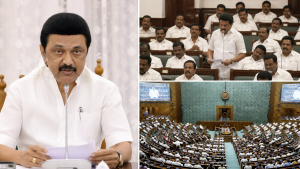
India follows a parliamentary system at both the Union and state levels, so the roles of the Chief Minister, MLAs and MPs are defined by constitutional distribution of executive and legislative power. Their powers differ by sphere: the Chief Minister leads state administration, MLAs shape state laws and hold the government accountable, while MPs work at the national level through Parliament.
Chief Minister: real executive head of the state
- De facto executive: The Chief Minister is the real head of government in a state, while the Governor is the nominal head.
- Appointment: Under Article 164, the Governor appoints the Chief Minister and other ministers are appointed on the Chief Minister’s advice.
- Cabinet leadership: The Chief Minister heads the Council of Ministers, presides over Cabinet meetings and directs overall state policy.
- Portfolio control: The Chief Minister allocates and reshuffles portfolios among ministers and may ask any minister to resign.
- Communication to Governor: Article 167 requires the Chief Minister to communicate all decisions of the Council of Ministers on state administration and legislative proposals to the Governor.
- Important appointments: The Chief Minister advises the Governor on appointments such as the Advocate General, Chairman and members of the State Public Service Commission, and the State Election Commissioner.
- Legislative role: The Chief Minister advises the Governor on summoning and proroguing the State Legislature and may recommend dissolution of the Legislative Assembly before the expiry of its term.
- Political role: The Chief Minister is the political leader of the ruling party in the state and represents the state in bodies such as the Inter-State Council and NITI Aayog Governing Council.
Exam fact: A person who is not a member of the state legislature can be appointed Chief Minister, but must become a member of either House within six months under Article 164(4).
MLA: state legislature, budget and oversight
- Constituency representative: An MLA is elected from a specific Assembly constituency to the State Legislative Assembly (Vidhan Sabha).
- Constitutional basis: Qualifications and disqualifications of MLAs are governed by Articles 173 and 191.
- Lawmaking: MLAs debate, amend and pass laws on subjects in the State List and Concurrent List.
- Financial control: MLAs examine the state budget and vote on Demands for Grants.
- Money Bill procedure: A Money Bill can be introduced only in the Legislative Assembly with the prior recommendation of the Governor.
- Executive accountability: MLAs use parliamentary devices such as Question Hour, adjournment motions, calling attention motions and No-Confidence motions to hold the Council of Ministers accountable.
- Local representation: MLAs raise public grievances and monitor local development works in their constituencies, including projects funded under the Member of Legislative Assembly Local Area Development scheme (MLALAD).
MP: national lawmaking and constitutional powers
- National representative: An MP represents citizens in either the Lok Sabha or the Rajya Sabha.
- Constitutional basis: Qualifications for MPs are under Article 84, while disqualifications are under Article 102 and the Tenth Schedule.
- Union lawmaking: MPs enact laws on the Union List and Concurrent List.
- Money Bills: Lok Sabha MPs have exclusive control over Money Bills under Article 110.
- Constitutional amendment: MPs take part in amending the Constitution under Article 368, which requires special majorities in both Houses.
- Electoral powers: MPs vote in the election of the President under Article 54 and the Vice-President under Article 66.
- Removal powers: MPs have statutory powers relating to impeachment of the President and removal of judges of the Supreme Court and High Courts, as well as the Comptroller and Auditor General.
- Local development: MPs receive allocations under the Members of Parliament Local Area Development Scheme (MPLADS) for works in their constituencies or states.
Chief Minister, MLA and MP: quick comparison
| Feature | Chief Minister | MLA | MP |
| Primary sphere | State executive and Cabinet head | State Legislature (Vidhan Sabha) | Union Parliament (Lok Sabha / Rajya Sabha) |
| Constitutional basis | Articles 163 and 164 | Articles 168 and 170 | Articles 79 and 81/80 |
| Minimum age | 25 years for Assembly / 30 years for Council | 25 years | 25 years for Lok Sabha / 30 years for Rajya Sabha |
| Jurisdiction | State-wide policy execution | One Assembly constituency | One parliamentary constituency or a state |
| Local development fund | MLALAD / State discretionary grants | MLALAD scheme | MPLADS scheme |
Important constitutional and governance facts
- State cabinet size: The total number of ministers, including the Chief Minister, cannot exceed 15% of the total strength of the Legislative Assembly under Article 164(1A).
- Minimum size of cabinet: The 91st Constitutional Amendment Act, 2003 provides that the total number of ministers in a state cabinet, including the Chief Minister, shall not be less than 12.
- Privileges: Article 194 defines the powers, privileges and immunities of State Legislatures and their members, similar to Article 105 for MPs.
- Anti-defection: The Tenth Schedule applies to both MPs and MLAs who voluntarily give up party membership or vote against the party whip.
- Disqualification: Under Articles 191(1)(a) and 102(1)(a), a person can be disqualified if he or she holds an office of profit.
Key Prelims Takeaways
- Chief Minister: Real executive authority in a state; Governor is the nominal head.
- Article 164: Basis for appointment of the Chief Minister and other ministers.
- Article 167: Requires the Chief Minister to keep the Governor informed of Cabinet decisions.
- MLAs: Primarily deal with state laws, budget control and oversight of the state government.
- MPs: Handle Union legislation, constitutional amendments and national-level parliamentary powers.
- Money Bills: Introduced in the Assembly with Governor’s recommendation at state level; controlled by Lok Sabha at the Union level.
- Tenth Schedule: Anti-defection rules apply to both MPs and MLAs.
Current General Studies comprises current-affairs-based, General Studies-rich study material on policies, laws, institutions, economy, science, environment, governance, international relations, and other varied but important topics for UPSC and State PSC Prelims examinations.
Fortnightly PDF compilations: Available here
Originally written on
May 13, 2026
and last modified on
September 6, 2026.
| Related | |
|---|---|