Powers of Chief Ministers and State Governments
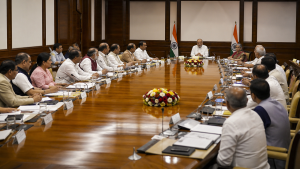
The Chief Minister is the real executive authority at the state level and heads the Council of Ministers, while the Governor is the nominal executive head. The state executive works largely on parliamentary lines, with collective responsibility to the Legislative Assembly and constitutional provisions under Part VI of the Constitution.
Constitutional Framework
- Part VI: The constitutional framework for the state executive is laid down mainly in Part VI of the Constitution of India.
- Articles 153 to 167: These provisions form the legal basis of state administration.
- Article 163: Provides for a Council of Ministers with the Chief Minister at its head to aid and advise the Governor, except in matters where the Governor acts in discretion.
- Article 164: Deals with appointment of the Chief Minister by the Governor and appointment of other ministers on the advice of the Chief Minister.
- Article 164(1A): Inserted by the 91st Constitutional Amendment Act, 2003, it limits the total number of ministers, including the Chief Minister, to 15% of the total strength of the Legislative Assembly, with a minimum of 12 ministers.
- Article 164(2): States that the Council of Ministers is collectively responsible to the Legislative Assembly.
- Article 166: Provides that all executive action of the State Government shall be expressed to be taken in the name of the Governor.
- Article 167: Lays down the Chief Minister’s duty to communicate with the Governor on administrative and legislative matters.
Powers and Functions of the Chief Minister
- Principal adviser: The Chief Minister is the chief adviser to the Governor and the spokesperson of the State Government.
- Head of Council: As leader of the Council of Ministers, the Chief Minister directs government policy and administration.
- Appointment of ministers: Recommends the names of ministers to the Governor; the Governor appoints only those persons recommended by the Chief Minister.
- Portfolio allocation: Allocates and reshuffles portfolios among ministers.
- Cabinet leadership: Presides over Cabinet meetings and coordinates the work of departments.
- Control over ministers: Can ask a minister to resign or advise the Governor to dismiss a minister in case of serious differences.
- Continuity of ministry: On the Chief Minister’s resignation or death, the entire ministry resigns.
- Dissolution advice: May advise the Governor to dissolve the Legislative Assembly.
- Legislative interface: Announces government policies on the floor of the Assembly and advises the Governor on summoning and proroguing the State Legislature.
Chief Minister and the Governor
- Channel of communication: Under Article 167, the Chief Minister is the chief channel of communication between the Council of Ministers and the Governor.
- Information to Governor: Communicates all decisions of the Council of Ministers relating to state administration and legislative proposals.
- Key appointments: Advises the Governor on appointments such as the Advocate General, the Chairman and members of the State Public Service Commission, and the State Election Commissioner.
- Nominal and real executive: The Governor is the de jure executive head, while the Chief Minister is the de facto executive head.
- Advice-based governance: In normal circumstances, the Governor acts on the advice of the Council of Ministers headed by the Chief Minister.
Relation with the Legislature and Council of Ministers
- Collective responsibility: The Council of Ministers is collectively responsible to the Legislative Assembly, ensuring democratic accountability.
- Majority support: The Chief Minister must command the support of the majority in the Legislative Assembly.
- Non-member appointment: A person who is not a member of either House of the State Legislature can be appointed Chief Minister, but must get elected within six months.
- Bicameral states: The Chief Minister may belong to either the Legislative Assembly or the Legislative Council.
- Oath of office: The Governor administers the oath of office and oath of secrecy.
- Salary and allowances: These are determined by the State Legislature under Article 164(5).
Institutional Roles and Federal Bodies
- Inter-State Council: The Chief Minister is a member of the Inter-State Council established under Article 263, which is chaired by the Prime Minister.
- NITI Aayog Governing Council: The Chief Minister is a member of the Governing Council along with Union Cabinet Ministers and Chief Ministers of States and Union Territories with legislatures.
- Zonal Councils: The Chief Minister acts as Vice-Chairman of the respective Zonal Council by rotation for one year.
- State Planning Body: The Chief Minister serves as the ex-officio Chairman of the State Planning Board or Development Board.
Comparative Overview
| Constitutional Position | Governor | Chief Minister |
| Executive status | Nominal (de jure) executive | Real (de facto) executive |
| Headship | Head of State | Head of Government |
| Mode of appointment | Appointed by the President | Appointed by the Governor, usually as leader of the majority party |
| Role in Council of Ministers | Acts on the advice of the Council | Heads and directs the Council |
Key Prelims Takeaways
- Real executive: The Chief Minister is the real executive authority in the state.
- Collective responsibility: The Council of Ministers is collectively responsible to the Legislative Assembly under Article 164(2).
- Ministerial ceiling: Under Article 164(1A), total ministers cannot exceed 15% of the Assembly strength.
- Governor’s role: The Governor is the nominal executive and generally acts on ministerial advice.
- Article 167: Makes the Chief Minister the main link between the Council of Ministers and the Governor.
- Six-month rule: A non-member Chief Minister must become a member of the legislature within six months.
- Federal forums: The Chief Minister participates in the Inter-State Council, NITI Aayog Governing Council and Zonal Councils.
Important Facts
- Sarkaria Commission and Srikrishna Committee: Favoured the convention of inviting the leader of the single largest party or a pre-poll alliance first for Chief Ministership.
- First woman Chief Minister: Sucheta Kripalani became the first female Chief Minister of an Indian state in Uttar Pradesh in October 1963.
- Longest-serving Chief Minister: Pawan Kumar Chamling of Sikkim served for over 24 years from 1994 to 2019.
Current General Studies comprises current-affairs-based, General Studies-rich study material on policies, laws, institutions, economy, science, environment, governance, international relations, and other varied but important topics for UPSC and State PSC Prelims examinations.
Fortnightly PDF compilations: Available here
Originally written on
May 24, 2026
and last modified on
September 6, 2026.
| Related | |
|---|---|