Major Wildlife Reintroduction Projects in India
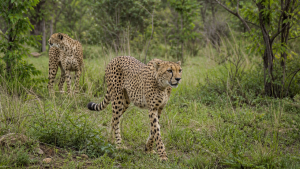
Wildlife reintroduction has become an important conservation tool in India to revive species that were lost locally or pushed to very low numbers. These projects combine habitat restoration, scientific monitoring and legal protection to rebuild viable populations and improve biodiversity across protected areas.
Project Cheetah: India’s Most Visible Reintroduction Drive
Project Cheetah was launched on September 17, 2022, with the translocation of eight cheetahs from Namibia to Kuno National Park in Madhya Pradesh. The aim was to reintroduce cheetahs to India after the Asiatic cheetah (Acinonyx jubatus venaticus) became extinct in the country in 1952.
The project uses the African cheetah (Acinonyx jubatus jubatus) as a proxy species. Subsequent additions from South Africa and Botswana have expanded the population and the genetic base.
- Scientific name: Acinonyx jubatus
- Speed: About 100 km per hour in short bursts
- IUCN status: Vulnerable
- Primary site: Kuno National Park, Sheopur and Morena districts, Madhya Pradesh
- National park status: Kuno was officially notified as a national park in 2018
- Nodal agency: National Tiger Conservation Authority (NTCA)
Why Reintroduction Matters
Reintroduction is not merely about moving animals from one place to another. It is meant to restore ecological function, revive species in their former range and strengthen long-term conservation outcomes. For exam purposes, the key idea is that such projects support biodiversity conservation, species recovery and habitat management.
- Ecological balance: Reintroduced species can help rebuild lost predator-prey relationships.
- Population recovery: Small or fragmented populations get a better chance to expand.
- Extinction risk reduction: Creating more than one population lowers vulnerability to disease, poaching and disasters.
- Habitat use: Projects often require protection and improvement of grasslands, prey bases and water sources.
- Conservation visibility: Flagship species help build public awareness and policy support.
Other Major Reintroduction Efforts in India
India has used reintroduction across several species and landscapes. These efforts are often based on transferring animals from healthy populations to sites where the species had disappeared or been reduced to a very small number.
- Tiger reintroduction in Sariska: Tigers were reintroduced to Sariska Tiger Reserve in Rajasthan in 2008 after the local population was wiped out. The animals were translocated from Ranthambore National Park.
- Tiger recovery in Panna: Similar restoration efforts were carried out in Panna Tiger Reserve in Madhya Pradesh.
- Gaur reintroduction: The Indian gaur (Bos gaurus) was reintroduced to Bandhavgarh National Park in Madhya Pradesh in 2011 after disappearing from the area in the early 1990s.
- Indian Rhino Vision 2020: This programme aimed to increase the wild population of the one-horned rhinoceros in Assam through translocation.
- Rhino translocation sites: Rhinos were moved from Kaziranga National Park and Pobitora Wildlife Sanctuary to Manas National Park, where poaching and insurgency had reduced numbers.
- Swamp deer reintroduction: The hardground swamp deer (Rucervus duvaucelii duvaucelii) was reintroduced from Kanha National Park to Van Vihar National Park in Madhya Pradesh to establish another population.
- Eastern swamp deer: Another initiative involved reintroducing the eastern swamp deer subspecies to Dudhwa National Park in Uttar Pradesh.
- Asiatic lion relocation proposal: The proposal to move Asiatic lions (Panthera leo leo) from Gir National Park in Gujarat to Kuno has been a long-standing conservation issue.
- Supreme Court approval: The Supreme Court approved the relocation in 2013 to create a second free-ranging population and reduce the risk from epidemics or natural calamities in one habitat.
Institutions and Legal Framework
Wildlife reintroduction projects in India depend on a legal and institutional framework that supports protection, planning and monitoring. The main focus is scientific feasibility, legal safeguard and post-release care.
- Wildlife Protection Act, 1972: Provides the legal basis for protecting wild animals, birds and plants. Reintroduced species are typically covered under Schedule I, which gives the highest level of protection.
- National Tiger Conservation Authority (NTCA): A statutory body under the Ministry of Environment, Forest and Climate Change, established in 2005. It has played a central role in tiger conservation and in planning carnivore reintroductions such as the cheetah.
- Wildlife Institute of India (WII): An autonomous institution under the same ministry. It provides scientific expertise, feasibility studies and monitoring support for reintroduction programmes.
- Ministry linkage: Both NTCA and WII support conservation planning, research and field-level monitoring.
How Reintroduction Projects Are Managed
Successful reintroduction requires more than release alone. Sites must be prepared in advance, and released animals need close monitoring after release. The process is usually built around habitat quality, prey availability and conflict reduction.
- Habitat assessment: Sites are evaluated for prey density, water availability and threat levels before animals are released.
- Habitat preparation: Measures may include grassland restoration and anti-poaching protection.
- Prey base management: Predator survival depends on a stable prey population and suitable habitat for herbivores.
- Post-release tracking: Animals are fitted with radio collars or GPS trackers to monitor movement, health and adaptation.
- Veterinary care: Disease surveillance, treatment and research are essential after translocation.
- Community engagement: Awareness programmes, livelihood support and anti-poaching cooperation help reduce human-wildlife conflict.
- Adaptive management: Monitoring data is used to adjust release and protection strategies.
Key Prelims Takeaways
- Project Cheetah was launched on September 17, 2022.
- The Asiatic cheetah became extinct in India in 1952.
- Kuno National Park in Madhya Pradesh is the main site for cheetah reintroduction.
- African cheetahs from Namibia, South Africa and Botswana are being used as proxy animals.
- The cheetah’s scientific name is Acinonyx jubatus, and it is the fastest land animal.
- The cheetah is listed as Vulnerable on the IUCN Red List.
- NTCA is the nodal agency for Project Cheetah and key tiger-related reintroductions.
- The Wildlife Protection Act, 1972 provides the main legal framework for protection.
- Sariska saw tiger reintroduction from Ranthambore in 2008.
- Bandhavgarh received reintroduced gaur in 2011.
- Manas National Park is associated with rhino translocation under Indian Rhino Vision 2020.
- Van Vihar and Dudhwa are important sites for swamp deer reintroduction.
- The proposed Asiatic lion relocation from Gir to Kuno remains a major conservation debate.
- Reintroduction projects usually combine habitat restoration, prey management and post-release monitoring.
Recent Context
On September 21, 2026, Namibian cheetah Gaurav, a 10-year-old male, died at Kuno National Park after a period of treatment for weakness. Following his death and recent births, Kuno housed 51 cheetahs, including 36 Indian-born individuals, while India’s total cheetah population stood at 55.
| Related | |
|---|---|