Major Sedimentary Basins of India
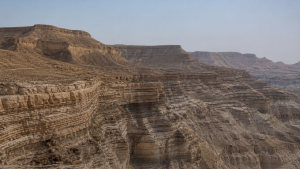
India has 26 sedimentary basins across onshore, shallow-water and deepwater regions. They are important repositories of hydrocarbons and other resources, and support exploration that contributes to energy security. Their development also calls for careful resource management and attention to environmental sustainability.
Understanding Sedimentary Basins
Sedimentary basins are depressions in the Earth’s crust where layers of sand, silt, clay and organic matter accumulate over geological time. Heat and pressure can transform buried organic matter into petroleum and natural gas. These basins also contain resources such as coal, groundwater and other minerals.
- Extent: India’s 26 basins cover approximately 3.36–3.4 million square kilometres, including areas within the Exclusive Economic Zone (EEZ).
- Distribution: About 49% of the sedimentary area is on land, 12% in shallow water and 39% in deepwater.
Hydrocarbon Potential and Classification
The Directorate General of Hydrocarbons (DGH) classifies basins according to hydrocarbon prospectivity and maturity. The categories help guide exploration and assessment of India’s resource potential.
- Category-I: Proven petroliferous basins with established commercial hydrocarbon production and potential for increased recovery.
- Category-II: Basins with known hydrocarbon accumulations where commercial production has not commenced; resources remain contingent on development.
- Category-III: Basins with prospective resources awaiting discovery. They have limited hydrocarbon indications but are considered prospective on geological grounds.
Seven basins are classified as Category-I. They cover about 30% of the total basinal area and hold 85% of India’s unrisked conventional hydrocarbon in place.
Major Category-I Basins
Krishna-Godavari Basin
- Setting and geology: A pericratonic passive-margin basin along the eastern coast, associated with the Krishna and Godavari deltas and extending offshore into the Bay of Bengal. It has onshore and offshore areas, with sediment thickness of about 5 km, ranging from Late Carboniferous to Pleistocene.
- Hydrocarbons: A proven hydrocarbon-bearing basin known particularly for natural gas, including discoveries in blocks such as KG-D6. Its estimated resource base is 1,130 million metric tonnes (MMT), of which 555 MMT is assessed for the offshore region.
Mumbai Offshore Basin
- Setting and fields: Located on the western continental shelf in the Arabian Sea, about 160 km west of Mumbai. Major fields include Mumbai High (formerly Bombay High), Bassein, Neelam, Heera, Panna, Mukta and Ratna.
- Production: ONGC discovered the Mumbai High oilfield in February 1974. It reached peak production of 20 million tonnes per year in 1998 and continues to contribute about 25% of ONGC’s total oil and gas output. The basin is India’s most productive hydrocarbon basin.
Assam-Arakan Basin
- Setting and geology: This complex basin includes the Assam Shelf and Assam-Arakan Fold Belt. It covers parts of Assam, Arunachal Pradesh, Nagaland and Manipur, extends into Myanmar, and lies in the Brahmaputra valley. It contains thick Tertiary sediments.
- Oil and gas: Oil was discovered at Digboi in 1889, making it one of the world’s earliest oilfields and India’s oldest producing basin. Major fields include Digboi, Nahorkathiya, Moran, Rudrasagar, Lakwa, Geleki, Dirok and Kharsang. Hydrocarbons occur in the Barail Group and Tipam Group formations.
Rajasthan Basin
- Setting and divisions: An onshore pericratonic basin in the Thar Desert, forming part of the Indus geosyncline and covering about 1.26 lakh square kilometres. Its sub-basins are Jaisalmer, Bikaner-Nagaur and Barmer-Sanchor.
- Fields and output: It produces crude oil and natural gas and contributes about 22–23% of India’s crude oil production. Barmer includes the Mangala oilfield, along with Bhagyam, Aishwarya, Saraswati, Raageshwari and Kameshwari. OIL has discovered gas fields at Tanot, Dandewala and Bagitibba in Jaisalmer district.
Cauvery Basin
- Setting and geology: A pericratonic rift basin extending along the southeastern coast, across parts of Tamil Nadu and adjacent offshore areas. Its horst-and-graben structures contain Mesozoic rocks and a thick wedge of Tertiary sediments.
- Hydrocarbons: The basin contains oil and gas. Narimanam and Kovilappal are among its fields and contribute to regional energy supply.
Cambay Basin
- Setting and geology: A productive onshore rift basin in Gujarat, formed during the Paleogene. Hydrocarbons occur in Miocene, Oligocene and Eocene formations; the Eocene Cambay Shale is a significant source rock.
- Discovery and fields: ONGC discovered oil in the basin in 1958, and production began in 1961. Major fields include Ankleshwar, Kalol and Cambay.
Key Prelims Takeaways
- India has 26 sedimentary basins covering approximately 3.36–3.4 million square kilometres.
- About 49% of the sedimentary area is on land, 12% in shallow water and 39% in deepwater.
- DGH basin categories are based on hydrocarbon prospectivity and maturity; seven basins are Category-I.
- Category-I basins cover about 30% of the basinal area and hold 85% of unrisked conventional hydrocarbon in place.
- Mumbai High was discovered by ONGC in 1974; Digboi’s oil discovery dates to 1889.
- ONGC and Oil India Limited are key public-sector participants in hydrocarbon exploration and production.
Recent Context
On October 23, 2026, Oil India Limited (OIL), a Maharatna CPSE under the Ministry of Petroleum and Natural Gas, announced a gas discovery in the KG-DSF/GSKW/2018 block. The Godavari-1 appraisal well confirmed hydrocarbons in the Matsyapuri formation; OIL is the block’s sole operator.
| Related | |
|---|---|