Major Astronomy and Space Institutions in India
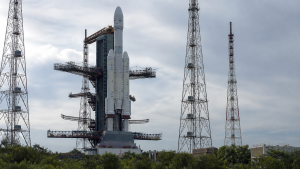
India’s space and astronomy ecosystem is built around a network of research centres, observatories and launch facilities that support satellite development, planetary studies and astronomical research. These institutions operate mainly under the Department of Space, the Department of Science and Technology and the Department of Atomic Energy, while global agencies drive major exploration and Earth-observation missions.
Indian Space Research Organisation Centres
- Vikram Sarabhai Space Centre (VSSC), Thiruvananthapuram: The lead centre for launch vehicle design and development, including PSLV, GSLV and LVM3.
- Satish Dhawan Space Centre (SDSC-SHAR), Sriharikota: India’s main spaceport for satellite launches.
- U R Rao Satellite Centre (URSC), Bengaluru: Responsible for the design, fabrication and integration of communication, remote sensing and scientific satellites.
- Liquid Propulsion Systems Centre (LPSC), Thiruvananthapuram and Bengaluru: Develops liquid and cryogenic propulsion stages for launch vehicles and satellites.
- Space Applications Centre (SAC), Ahmedabad: Develops payloads for communication, navigation and remote sensing satellites.
- National Remote Sensing Centre (NRSC), Hyderabad: Handles satellite data acquisition, processing and aerial remote sensing operations.
- Physical Research Laboratory (PRL), Ahmedabad: Conducts research in astronomy, astrophysics, solar physics and planetary sciences.
- Master Control Facility (MCF), Hassan and Bhopal: Monitors and controls geostationary and interplanetary satellites.
Autonomous Astronomy Institutes in India
- Indian Institute of Astrophysics (IIA), Bengaluru: Operates the Indian Astronomical Observatory at Hanle, Ladakh, and the Vainu Bappu Observatory at Kavalur, Tamil Nadu.
- Inter-University Centre for Astronomy and Astrophysics (IUCAA), Pune: An autonomous institution for teaching and research in astronomy; it co-leads the AstroSat and Aditya-L1 payloads.
- Tata Institute of Fundamental Research (TIFR), Mumbai: Under the Department of Atomic Energy, it works in high-energy physics, cosmic rays and astronomy.
- National Centre for Radio Astrophysics (NCRA-TIFR), Pune: Set up and operates the Giant Metrewave Radio Telescope (GMRT) at Khodad near Pune.
- Aryabhatta Research Institute of Observational Sciences (ARIES), Nainital: Specializes in observational astronomy and atmospheric physics, and operates the Devasthal Optical Telescope.
- Raman Research Institute (RRI), Bengaluru: Focuses on radio astronomy, theoretical physics and cosmic-ray astrophysics.
Major Indian Observatories and Telescopes
- Indian Astronomical Observatory (IAO), Hanle: Located at an altitude of 4,500 metres in Ladakh, it is one of the world’s highest observatories.
- Himalayan Chandra Telescope (HCT): Installed at Hanle, it is a major 2-metre telescope used for optical and infrared observations.
- Major Atmospheric Cherenkov Experiment (MACE): Also at Hanle, it is used for gamma-ray astronomy.
- Devasthal Observatory, Nainital: Operated by ARIES at an elevation of 2,450 metres.
- Devasthal Optical Telescope (DOT): The 3.6-metre DOT is India’s largest steerable optical telescope.
- International Liquid Mirror Telescope (ILMT): A 4-metre telescope at Devasthal.
- Giant Metrewave Radio Telescope (GMRT), Khodad near Pune: Consists of 30 fully steerable parabolic antennas operating at meter wavelengths to study pulsars, galaxies and neutral hydrogen.
- Kodaikanal Solar Observatory (KSO), Tamil Nadu: Under IIA, it has recorded continuous solar activity, sunspots and chromospheric data since 1901.
- Vainu Bappu Observatory, Kavalur: Located in the Jawadi Hills of Tamil Nadu and operated by IIA, it uses the 2.34-metre Vainu Bappu Telescope for optical stellar observations.
- Udaipur Solar Observatory (USO), Rajasthan: Under PRL, it operates the Multi-Application Solar Telescope (MAST) to study solar magnetic fields and flares.
- High Altitude Gamma Ray (HAGAR) Telescope, Hanle: An atmospheric Cherenkov telescope array for gamma-ray astronomy.
Key International Space Agencies
- NASA: Established in 1958 in the United States, it leads deep-space exploration, the Apollo and Artemis lunar programmes, Mars rover missions and space telescope missions.
- European Space Agency (ESA): An intergovernmental organisation of 22 European member states headquartered in Paris, France.
- ESA missions: Includes Rosetta, Gaia and the Ariane rocket programme.
- Roscosmos: The national space corporation of Russia, managing Soyuz crew transportation, the Vostochny and Baikonur cosmodromes, and Russian segments of space stations.
- China National Space Administration (CNSA): Manages the Tiangong space station, the Chang’e lunar exploration series and the Tianwen Mars missions.
- Japan Aerospace Exploration Agency (JAXA): Formed by merging ISAS, NAL and NASDA; it works on asteroid sample returns, X-ray astronomy and H3 launch vehicles.
- Canadian Space Agency (CSA): Known for space robotics and the Canadarm, Canadarm2 and Canadarm3 systems.
Institution-Function Snapshot
| Institution | Location | Governing Body | Primary Specialization |
| VSSC | Thiruvananthapuram, Kerala | Department of Space (ISRO) | Launch vehicle design and engineering |
| IIA | Bengaluru, Karnataka | Department of Science and Technology | Optical and solar observational astronomy |
| NCRA-TIFR | Pune, Maharashtra | Department of Atomic Energy | Low-frequency radio astronomy and pulsars |
| ARIES | Nainital, Uttarakhand | Department of Science and Technology | Optical astronomy and atmospheric science |
| PRL | Ahmedabad, Gujarat | Department of Space | Planetary sciences and solar physics |
| SAC | Ahmedabad, Gujarat | Department of Space (ISRO) | Spaceborne sensor and payload design |
Key Prelims Takeaways
- SDSC-SHAR, Sriharikota is India’s main launch centre, while VSSC is the lead design centre for launch vehicles.
- URSC handles satellite design and integration, and LPSC develops liquid and cryogenic propulsion stages.
- PRL is a major centre for astronomy, astrophysics, solar physics and planetary sciences.
- IIA runs two major observatories: Hanle in Ladakh and Kavalur in Tamil Nadu.
- GMRT near Pune is one of India’s most important radio astronomy facilities and studies pulsars, galaxies and neutral hydrogen.
- Devasthal hosts the 3.6-metre DOT, identified here as India’s largest steerable optical telescope.
- NASA, ESA, Roscosmos, CNSA, JAXA and CSA are the major global agencies frequently asked in prelims.
Current General Studies comprises current-affairs-based, General Studies-rich study material on policies, laws, institutions, economy, science, environment, governance, international relations, and other varied but important topics for UPSC and State PSC Prelims examinations.
Fortnightly PDF compilations: Available here
Originally written on
June 29, 2026
and last modified on
September 6, 2026.
| Related | |
|---|---|