Critically examine why achieving true functional and financial autonomy remains a challenge for Prasar Bharati despite legislative mandates. Point out key structural reforms.
Prasar Bharati was meant to function as an autonomous public broadcaster, but legislative intent has been diluted by executive control, weak institutions and financial dependence.
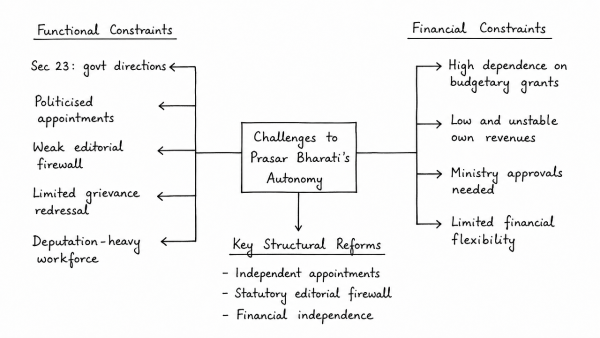
- Functional constraints: Section 23 permits binding government directions on sovereignty, security and public order, allowing political influence over sensitive content. Delays and politicisation in board appointments weaken collective decision-making. An inadequate editorial firewall, limited grievance redressal and a deputation-heavy workforce further restrict professional independence.
- Financial constraints: The organisation depends heavily on budgetary grants, while own revenues remain limited and unstable. Ministry approvals are often needed for staffing, recruitment and asset-related decisions. Legacy liabilities, including dues and loans, reduce fiscal flexibility and long-term planning.
- Structural reforms: Establish a time-bound, transparent appointment process for leadership; create a statutory editorial charter and an independent complaints authority; devolve routine financial and personnel powers to the Board; replace ad hoc grants with a stable public funding mechanism; and rationalise manpower while strengthening digital monetisation.
True autonomy will remain elusive unless legal safeguards are matched by institutional reform, protected funding and a clear separation between public broadcasting and governmental control.
Originally written on
May 21, 2026
and last modified on
September 12, 2026.