Key Indian Mountaineering Expeditions and Records
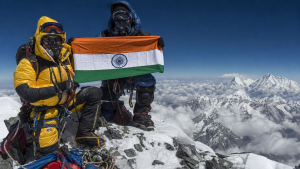
India’s mountaineering story is closely tied to the Himalayas, high-altitude training, and record-setting expeditions. From early ascents on Everest and Nanda Devi to institutional support and armed forces participation, Indian climbers have built a strong legacy in exploration, endurance and adventure sports.
Pioneering Feats in Indian Mountaineering
India’s mountaineering history began with a mix of international expeditions, local support and later, nationally led climbs. The ascent of Mount Everest by Sherpa Tenzing Norgay with Sir Edmund Hillary on 29 May 1953 remains a landmark moment closely associated with India’s mountaineering tradition. Tenzing Norgay was an Indian citizen, and his achievement inspired generations of climbers.
The first Indian expedition to Mount Everest, led by Captain M.S. Kohli in 1965, created a world record at the time when nine climbers reached the summit from a single expedition. It became one of the most celebrated examples of coordinated planning, physical endurance and national ambition in high-altitude exploration.
- Mount Everest, 1953: Tenzing Norgay and Edmund Hillary became the first to summit Everest on 29 May 1953.
- Indian Everest Expedition, 1965: Led by Captain M.S. Kohli, with nine summiters from one expedition.
- Nanda Devi: First ascent by Noel Odell and H.W. Tilman in 1936.
- Other major peaks: Indian teams later achieved ascents on Nanda Devi, Kamet and other difficult Himalayan peaks.
Institutions for Training and Safety
India developed dedicated institutions to promote mountaineering skills, rescue capability and disciplined adventure training. These institutions have helped formalise exploration policy by combining physical training with risk management, technical instruction and safety protocols.
- Himalayan Mountaineering Institute (HMI), Darjeeling: Established in 1954, soon after the first Everest ascent.
- Tenzing Norgay: Served as the first Director of Field Training at HMI.
- Jawaharlal Nehru: Was the first President of HMI.
- Nehru Institute of Mountaineering (NIM), Uttarkashi: Founded in 1965; offers basic and advanced mountaineering courses.
- NIM training areas: Includes adventure and rescue training in addition to mountaineering instruction.
- National Institute of Mountaineering and Adventure Sports (NIMAS), Dirang: Functions under the Ministry of Defence.
- NIMAS leadership: Colonel Ranveer Singh Jamwal is the Director, and the Defence Minister is its President.
Record-Breaking Indian Everest Achievements
Mount Everest has remained a key benchmark for Indian climbers. Indian mountaineers, especially women climbers, have set several firsts and records on the world’s highest peak. These achievements are often cited in prelims questions because they combine geography, sports and national records.
- Bachendri Pal: First Indian woman to summit Mount Everest on 23 May 1984.
- Santosh Yadav: First woman in the world to climb Mount Everest twice, in 1992 and 1993.
- Love Raj Singh Dharmshaktu: Indian civilian with seven Everest summits, the highest by an Indian civilian.
- Arunima Sinha: First female amputee to climb Mount Everest, in 2013.
- Malavath Poorna: Youngest Indian and youngest Indian female to summit Everest, at 13 years and 11 months in 2014.
- Premlata Agrawal: Oldest Indian woman to climb Everest, at 48 years in 2011.
Armed Forces and High-Altitude Exploration
The Indian Armed Forces have played a major role in mountaineering, both as a training ground and as a practical extension of operational readiness. Their engagement is not limited to sport; it also supports reconnaissance, rescue operations and survival in extreme terrain. High-altitude capability is important for military preparedness in border regions and for developing disciplined climbing culture.
- Training role: The Army maintains specialised high-altitude warfare and mountaineering training units.
- Operational value: Mountaineering skills assist in reconnaissance, logistics and rescue missions.
- Adventure culture: Armed forces expeditions continue to encourage exploration and physical endurance.
- Institutional link: NIMAS reflects the defence establishment’s continuing involvement in adventure sports.
Government Promotion of Adventure Sports
The government has linked mountaineering with youth fitness, national achievement and safe adventure participation. Expeditions above 6,000 metres are classified as high-altitude climbs in adventure sports, which makes them important from both training and policy perspectives. Such climbs require planning, acclimatisation and strict risk management.
- High-altitude climbs: Expeditions above 6,000 metres are treated as high-altitude adventure activities.
- Fit India movement: Launched by Prime Minister Narendra Modi on 29 August 2019 to promote fitness and sports participation.
- Ladakh: A Union Territory formed on 31 October 2019; administered by a Lieutenant Governor.
- Adventure hub: Ladakh’s terrain makes it a prominent region for mountaineering and endurance sports.
Key Prelims Takeaways
- Tenzing Norgay and Edmund Hillary: First ascent of Mount Everest in 1953.
- Captain M.S. Kohli: Led the first Indian Everest expedition in 1965; nine summiters.
- HMI, Darjeeling: Established in 1954; Tenzing Norgay was the first Director of Field Training.
- NIM, Uttarkashi: Founded in 1965.
- NIMAS, Dirang: Functions under the Ministry of Defence; Director is Colonel Ranveer Singh Jamwal.
- Bachendri Pal: First Indian woman to summit Everest in 1984.
- Arunima Sinha: First female amputee to climb Everest in 2013.
Recent Context
Rajnath Singh flagged in the First Ascent Mountaineering Expedition in New Delhi, highlighting the continuing policy focus on adventure sports and national achievement. The NIMAS-led team from Dirang reportedly achieved first summits on 20 unclimbed peaks above 6,000 metres in Ladakh, underlining India’s growing emphasis on exploration, endurance and organised risk management.
| Related | |
|---|---|