Important Types of Power Plants in India
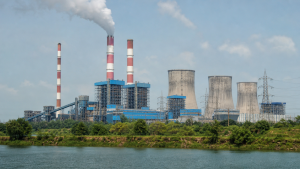
India’s power system is built on a mixed basket of conventional, hydel, nuclear and renewable sources. For Prelims, it is important to know the main types of power plants, their fuel base, operating features and the institutions linked to them. Captive power plants also matter because they support industrial users and the broader reliability of the grid.
Conventional Thermal Power Plants
Thermal power plants form the backbone of India’s electricity generation and remain the main source of baseload power. They produce steam by burning fuel, and the steam drives turbines connected to generators. These plants are crucial for large-scale, continuous supply, especially when demand is high.
- Coal-based plants: These are the dominant thermal plants in India and account for the largest share of installed capacity. They use domestic coal and, in some cases, imported coal. Modern plants increasingly use supercritical and ultra-supercritical technologies for better efficiency and lower emissions.
- Fly ash utilisation: Fly ash is a major byproduct of coal-based power generation, and its utilisation is legally mandated.
- NTPC Limited: It is India’s largest thermal power generating company and a key player in the sector.
- Gas-based plants: These plants use natural gas or naphtha as fuel. They generally emit less than coal-based plants and often use combined cycle gas turbine technology, which improves efficiency by using exhaust heat to generate additional steam power.
- Diesel-based plants: These are mainly used for peak load support, emergency backup, or in remote areas with limited grid connectivity. Their operating cost is high, so they are not the preferred source for regular power supply.
Hydroelectric Power Plants
Hydroelectric plants convert the kinetic and potential energy of flowing water into electricity. They are renewable, relatively clean and useful for grid balancing. In addition to power generation, large hydro projects often support irrigation, flood control and water storage.
- Run-of-river projects: These use the natural flow of a river with little or no water storage. Generation depends directly on river discharge.
- Storage-based projects: These involve dams and reservoirs that store water for controlled release. They allow flexible generation based on demand.
- Bhakra Nangal Dam: It is a well-known example of a storage-based hydroelectric project.
- Pumped-storage projects: These act as large-scale energy storage systems. Water is pumped to an upper reservoir during off-peak hours and released later to generate power during peak demand.
- Grid support: Hydro plants help in meeting sudden changes in demand and improve grid stability.
- NHPC Limited: It is a major Public Sector Undertaking involved in the development and operation of hydroelectric projects in India.
Nuclear Power Plants
Nuclear power is a strategic non-fossil fuel source that supports long-term energy security. It provides low-carbon baseload electricity and reduces dependence on fossil fuels. In India, nuclear power remains an important part of the diversified energy mix.
- Fuel source: Uranium is the primary fuel used in India’s nuclear power program. It is sourced both domestically and through international agreements.
- PHWR technology: Pressurized Heavy Water Reactors (PHWRs) are the mainstay of India’s nuclear program. They use natural uranium as fuel and heavy water (D2O) as both moderator and coolant.
- NPCIL: The Nuclear Power Corporation of India Limited is responsible for the design, construction, commissioning and operation of commercial nuclear power plants.
- AERB: The Atomic Energy Regulatory Board is an independent statutory body that ensures nuclear and radiation safety.
- DAE: The Department of Atomic Energy is the overarching department for nuclear research, technology development and power-related activities.
- Operating plants: India has nuclear power plants at Tarapur, Rawatbhata, Kakrapar, Kalpakkam, Kaiga and Kudankulam.
- Three-stage programme: India is developing a long-term nuclear power strategy with emphasis on thorium-based resources.
Renewable Energy Sources
Renewables are expanding rapidly as India works to improve energy security, reduce emissions and meet rising electricity demand. The Ministry of New and Renewable Energy (MNRE) is the nodal ministry for this sector. These sources are important not only for climate goals but also for decentralised and flexible power supply.
- Solar power: It includes large grid-connected solar parks, rooftop solar systems and floating solar projects. Photovoltaic (PV) systems directly convert sunlight into electricity.
- Concentrated Solar Power (CSP): This uses mirrors to concentrate sunlight and produce heat, which is then used to generate steam for turbines.
- Wind power: India is among the leading countries in wind power generation. Major onshore wind farms are located in Tamil Nadu, Gujarat, Karnataka and Rajasthan.
- Offshore wind: Offshore potential is also being explored as part of future capacity expansion.
- Biomass power: Electricity is generated from agricultural residues, forestry waste, bagasse from sugar mills and municipal solid waste.
- Waste-to-energy plants: These are a part of biomass-based generation and help utilise urban waste.
- Small hydro power: Small hydro projects usually have capacities up to 25 MW and are developed on small rivers and canals for decentralised generation.
Captive Power Plants
Captive power plants are set up mainly for the self-use of the owner or an associated industrial unit. They are important for industrial power security, cost control and continuity of operations. In sectors with high energy needs, captive generation reduces dependence on the grid.
- Main users: Large industrial consumers such as aluminium smelters, steelmakers, cement factories and oil refineries use captive plants extensively.
- Purpose: These plants are designed primarily for self-consumption, not for open market sale.
- Section 11, Electricity Act, 2003: This provision empowers the government to direct generating companies, including captive plants, to operate and maintain stations in extraordinary circumstances.
- Emergency use: The provision is used for public interest, grid stability and supply shortages.
- CEA oversight: The Central Electricity Authority is a statutory body under the Ministry of Power and monitors the power sector, including captive generation.
- Surplus power: Any electricity generated beyond self-consumption can be sold through power exchanges.
- Power exchanges: These platforms facilitate short-term electricity trading in India.
Key Prelims Takeaways
- Coal-based thermal power remains the largest contributor to India’s electricity mix and a key source of baseload power.
- NTPC Limited is India’s largest thermal power generating company.
- NHPC Limited is a major developer and operator of hydroelectric projects.
- PHWRs are the backbone of India’s nuclear power programme, using natural uranium and heavy water.
- NPCIL operates commercial nuclear power plants, while AERB handles nuclear and radiation safety.
- MNRE is the nodal ministry for renewable energy development in India.
- Captive power plants are meant mainly for industrial self-consumption, not open market supply.
- Section 11 of the Electricity Act, 2003 gives the government emergency powers to direct generating stations.
- CEA is a statutory body under the Ministry of Power.
- Power exchanges provide a platform for short-term electricity trading.
Recent Context
On September 25, 2026, the Ministry of Power directed over 100 captive coal-fired power plants of at least 50 MW capacity to maximise generation from October 1 to December 31, 2026. The order invoked Section 11(1) of the Electricity Act, 2003, amid rising demand, El Niño-linked hot weather and low coal stocks. Affected generators must report weekly to the CEA and sell surplus power through exchanges.
| Related | |
|---|---|