Kakatiya Dynasty and Heritage Sites in Telangana
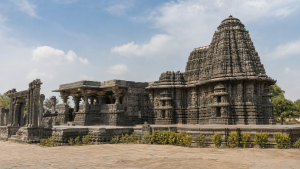
The Kakatiyas were a powerful medieval dynasty of the eastern Deccan, remembered for strong administration, temple-building, water management, and a rich architectural legacy in present-day Telangana.
Historical Origin and Prominent Rulers
The Kakatiya dynasty ruled the eastern Deccan region between the 12th and 14th centuries. Their territory covered modern-day Telangana, Andhra Pradesh, and parts of eastern Karnataka and southern Odisha. They began as feudatories of the Rashtrakutas and Western Chalukyas before becoming independent rulers.
- Prola II (1116–1157 CE): He laid the foundation for Kakatiya independence by challenging Western Chalukya control.
- Rudradeva or Prataparudra I (1158–1195 CE): He was the first fully sovereign ruler of the dynasty. He declared independence in 1163 CE and built the Thousand Pillar Temple at Hanamkonda.
- Ganapatideva (1199–1262 CE): He ruled for more than sixty years, united the Telugu-speaking regions, and shifted the capital from Hanamkonda to Orugallu (modern Warangal).
- Rudrama Devi (1262–1289 CE): She was one of the few women to rule a kingdom in medieval India. To bypass social resistance, she took the male title Rudradeva Maharaja. Marco Polo visited her kingdom and praised her governance. She also defended the empire against Yadava invasions.
- Prataparudra II (1289–1323 CE): He was the last sovereign ruler of the dynasty. He faced repeated invasions from the Delhi Sultanate. In 1323 CE, Ulugh Khan later known as Muhammad bin Tughlaq, defeated him. Prataparudra II died by suicide near the Narmada River while being taken to Delhi as a prisoner.
Administrative Setup and Economic Systems
The Kakatiya polity combined centralized monarchy with decentralized military control.
- Social Fluidity: Unlike many contemporary medieval dynasties, the Kakatiyas proudly claimed Shudra varna origin in their inscriptions. This indicates a relatively fluid social structure.
- The Nayankara System: The kingdom was divided into military fiefs called Nayankara. The king assigned these territories to military leaders called Nayakas, who collected local taxes and maintained infantry, cavalry, and elephants for royal defense.
- The Motupalli Charter: King Ganapatideva issued the famous Motupalli Abhaya Sasanam. It protected foreign merchants from arbitrary seizures and reduced customs duties to encourage trade.
- Mineral Wealth: The Kollur Mines, associated with the famous Kohinoor diamond, operated during the Kakatiya period.
Architectural and Engineering Innovations
The Kakatiyas developed a distinct temple style that blended Dravidian and Nagara elements.
- Sandbox Technology: Builders dug deep foundation pits and filled them with a mixture of sand, water, and plant extracts. This sand cushion acted as an earthquake absorber.
- Floating Bricks: Lightweight bricks were made by mixing clay with sawdust, rice husk, and charcoal. These porous bricks reduced the weight on supporting pillars.
- Dolerite and Basalt Carving: Craftsmen used hard black basalt and dolerite stones, polished them to a mirror-like finish, and carved detailed jewelry, dancers, and door jambs.
- Trikutachala Plan: Many major temples have three shrines built around a central shared hall (mandapa), with the shrines facing different directions and sharing one entrance.
Key Kakatiya Heritage Sites in Telangana
Several monuments in Telangana preserve the artistic and engineering achievements of the Kakatiya period.
Ramappa Temple (Rudreshwara Temple)
- Location and History: Located in Palampet, Mulugu district. It was built in 1213 CE by Recharla Rudra, a general under King Ganapatideva.
- Unique Nomenclature: It is the only temple in India named after its chief sculptor, Ramappa.
- Global Recognition: It was inscribed as a UNESCO World Heritage Site in 2021.
- Structure: It stands on a six-foot-high star-shaped platform and has highly detailed brackets depicting celestial dancers (Madanikas) carved in black basalt.
Thousand Pillar Temple (Rudreshwara Temple)
- Location and History: Located in Hanamkonda. It was commissioned by King Rudradeva in 1163 CE.
- Structure: It is a Trikutachala temple dedicated to Shiva, Vishnu, and Surya.
- Key Features: It contains one thousand richly carved pillars designed so they do not block the view of the deities from any angle. A massive single-stone black basalt Nandi bull sits at the entrance.
Warangal Fort
- Location and History: Located in Warangal. It was started by King Ganapatideva and completed by Queen Rudrama Devi.
- Defensive Structure: The fort had three concentric defensive walls made of mud, stone, and water moats.
- Kakatiya Kala Thoranam: The fort contains four massive stone gateways with detailed carvings. The Government of Telangana uses this iconic gateway in its official state emblem.
Gollala Gudi Temple
- Location and History: Located in Palampet, Mulugu district, southwest of the Ramappa Temple. It is broadly attributed to the Kakatiya period, though its exact date and original dedication remain under study.
- National Recognition: The Union Ministry of Culture published Gazette Notification No. S.O. 4802(E) on August 31, 2026, officially declaring it a monument of national importance.
- Structure: It is a Trikutalaya temple with an east-facing mandapa connected to three garbhagrihas.
- Artistic Features: The temple has carvings of hamsas, jali screens, dvarapalas, and wall niches with images of Vishnu, Lakshmi, Ganesha, and Mahishasuramardini.
- Protection: It is now protected under Section 4(3) of the Ancient Monuments and Archaeological Sites and Remains Act, 1958.
Ghanpur Temples (Kota Gullu)
- Location and Details: This is a complex of over twenty temples built by King Ganapatideva in Ghanpur, Mulugu district.
- Architectural Value: Although heavily damaged by early invasions, the ruins display classic Kakatiya features such as stone brackets and porticos.
Kakatiya Water Management and Tanks
The Kakatiyas followed a pro-people governance model that emphasized agriculture. They transformed the semi-arid Deccan plateau through a chain-tank system.
- The Chain-Tank System: Interconnected reservoirs were built at different elevations so that overflow from a higher tank drained into a lower tank, reducing water loss and soil erosion.
- Ramappa Lake: Built in 1213 CE near the Ramappa Temple, it continues to irrigate thousands of acres of farmland.
- Laknavaram Lake: This large lake covers about 10,000 acres and has thirteen small islands connected today by suspension bridges for tourism.
- Pakhal Lake: Built in 1213 CE by Jagadala Mummadi, a general of Ganapatideva, this lake lies amidst dense forests and serves as a major water source.
- Modern Resurgence: The Telangana government named its lake restoration project Mission Kakatiya after this historical water management system.
Kakatiya Dynasty Fact Sheet
| Aspect | Key Details |
| Geographical Extent | Eastern Deccan, including Telangana, Andhra Pradesh, and parts of Karnataka and Odisha |
| Chronology | 12th to 14th century CE; sovereign rule from 1163 to 1323 CE |
| Capitals | Hanamkonda as the first capital; Orugallu/Warangal as the second capital |
| Varna Claim | Shudra |
| Key Rulers | Prola II, Rudradeva, Ganapatideva, Rudrama Devi, Prataparudra II |
| Major Religions Patronized | Shaivism, especially Veerashaivism, along with Vaishnavism and Jainism |
| Core Military System | Nayankara System |
| Primary Trade Port | Motupalli |
| Key Inscription/Charter | Motupalli Abhaya Sasanam |
| Engineering Innovations | Sandbox Technology, Floating Bricks, Chain-Tank Irrigation |
| Prominent Heritage Status | Ramappa Temple, UNESCO World Heritage Site since 2021 |
| Recent Recognition | Gollala Gudi Temple, ASI Monument of National Importance since August 2026 |
Recent Context
Gollala Gudi in Palampet was preliminarily notified in March 2026 and finally declared a monument of national importance on August 31, 2026. The ASI Hyderabad Circle will handle conservation, visitor access, and waterlogging issues.
Rare Facts for Prelims
- Marco Polo and Rudrama Devi: Marco Polo’s account is one of the best-known foreign references to a Kakatiya ruler.
- Warangal Emblem Link: The Kakatiya Kala Thoranam is not just a monument; it also appears in Telangana’s state emblem.
- Ramappa’s Platform: The Ramappa Temple is built on a star-shaped raised platform, which is uncommon in South Indian temple architecture.
- Motupalli Trade: Motupalli was important because it served as a maritime trade center linking the Deccan with overseas merchants.
- Kakatiya Identity: Their inscriptions are notable because they openly mention a Shudra social origin, which is unusual for ruling dynasties of the period.
- ASI Coverage in Telangana: The declaration of Gollala Gudi increased the number of centrally protected ASI monuments in Telangana to 10.
| Related | |
|---|---|