Flightless Birds and Their Adaptations
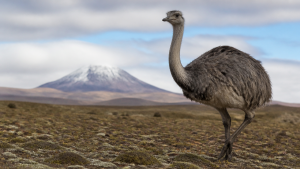
Flightless birds are avian species that lost the ability to fly through evolution. They survive by developing strong legs, specialized feathers, and other adaptations suited to running, swimming, digging, or living on predator-free islands.
Evolutionary Path to Flightlessness
- Predator-free habitats: Birds evolved flightlessness mainly in environments with few or no land predators.
- Island isolation: Islands such as New Zealand, Mauritius, and the Galápagos lacked mammalian predators for long periods, reducing the need for flight.
- Energy saving: Flight is highly energy-intensive, so losing it allowed birds to divert energy to growth, reproduction, and digestion.
- Convergent evolution: Different bird lineages independently lost flight under similar ecological conditions.
Anatomical Adaptations of Flightless Birds
The Keel and Sternum
- Flying birds: They have a keeled sternum, which provides attachment for strong flight muscles.
- Most flightless birds: Ratites usually have a flat sternum without a keel, so flight muscles cannot anchor effectively.
- Exception: Penguins retain a keeled sternum for powerful swimming muscles.
Skeletal and Muscle Structure
- Bone structure: Flying birds have hollow, pneumatic bones to reduce weight.
- Flightless birds: They often have heavy, solid bones with marrow.
- Function of heavy bones: These bones provide strength for running or act as ballast for diving.
- Muscles: Chest muscles are reduced, while leg muscles are strong and well developed.
Feather Modifications
- Flying birds: Their feathers have microscopic hooks called barbules that lock together to form a wind-resistant surface.
- Flightless birds: They often have loose, hair-like feathers because lift is unnecessary.
- Purpose: These feathers may help with insulation or camouflage.
Major Groups of Flightless Birds
The Ratites
- Definition: Ratites are the largest group of flightless birds and lack a keel.
- Examples: Ostrich, emu, cassowary, rhea, and kiwi.
Penguins (Sphenisciformes)
- Flightless swimmers: All 18 species of penguins are flightless.
- Special feature: Unlike ratites, they possess a keeled breastbone.
- Adaptation: Their wings have evolved into stiff flippers for fast and agile swimming.
Other Flightless Species
- Kakapo: The world’s only flightless parrot, nocturnal, heavy, and herbivorous.
- Takahe: A large flightless rail from New Zealand, rediscovered in 1948 after being thought extinct.
- Flightless cormorant: The only cormorant species that cannot fly; it is an excellent underwater hunter.
Key Flightless Birds and Their Geographic Distribution
| Bird Name | Scientific Name | Primary Region | Key Adaptive Feature |
| Ostrich | Struthio camelus | African savannahs | Largest living bird; runs up to 70 km/h; two-toed feet |
| Emu | Dromaius novaehollandiae | Australia | Three-toed feet; strong calf muscles; specialized tracheal pouch for vocalization |
| Southern Cassowary | Casuarius casuarius | New Guinea, Northeast Australia | Bony casque on head; inner toe with a sharp dagger-like claw for defense |
| Kiwi | Apteryx species | New Zealand | Smallest ratites; nostrils at the tip of the bill; heavy marrow-filled bones |
| Emperor Penguin | Aptenodytes forsteri | Antarctica | Dense feathers for insulation; heavy bones for deep diving |
| Kakapo | Strigops habroptila | New Zealand | Heavy herbivorous parrot; strong legs for climbing; nocturnal |
| Flightless Cormorant | Nannopterum harrisi | Galápagos Islands | Stunted wings; large webbed feet for swimming; dense plumage |
Locomotion and Defense Mechanisms
- Cursorial adaptation: Ostriches and emus have long, powerful legs; ostriches can reach speeds of 70 kilometers per hour.
- Physical defense: Cassowaries use dagger-like inner claws, which can grow up to 12 centimeters long, to kick and injure threats.
- Camouflage: Kiwis have brown, hair-like feathers that blend with the forest floor.
- Aquatic agility: Penguins use streamlined bodies and flippers to escape marine predators.
Ecological Importance and Conservation Status
- Seed dispersal: Large ratites help disperse seeds of native plants.
- Forest-floor role: Kakapo and kiwi help maintain ecosystem balance by feeding on insects, seeds, and fungi.
- Vulnerability: Flightless birds are especially vulnerable to introduced predators because they evolved in predator-free environments.
- Threats: Rats, cats, stoats, and dogs have severely reduced many island populations.
- Conservation: Protection includes predator-free sanctuaries, captive breeding, and pest control.
Fast Facts and Trivia
- Largest egg: The extinct elephant bird (Aepyornis) of Madagascar laid the largest eggs of any known animal, with a capacity of about 9 liters.
- Largest egg among living birds: The ostrich lays the largest egg among living birds.
- Proportional egg size: The kiwi lays the largest egg relative to its body size; it can weigh up to 25% of the female’s body weight.
- Sense of smell: The kiwi is the only bird with nostrils at the very tip of its bill.
- Extinct giants: Moas of New Zealand included species over 3.6 meters tall and were hunted to extinction by humans by the 1400s.
- The Dodo: The dodo (Raphus cucullatus) was endemic to Mauritius and became extinct in the 17th century.
Recent Context
The kākāpō population reached 325 birds on September 1, 2026, after 90 fledged chicks were added. It was the first time the species crossed 300 birds in about 75 years.
The Kākāpō Recovery Programme began in 1995 when only 51 birds survived. In 2026, 79 females nested, 258 eggs were laid, and 90 chicks survived to 150 days.
Rare Facts for Prelims
- Only flightless parrot: The kākāpō is the only known flightless parrot in the world.
- Deep-diving adaptation: Penguin bones are denser than those of most birds, helping them stay submerged while swimming.
- Unique bill sensing: Kiwis use touch and smell, not vision alone, to find insects and worms in soil.
- Defense weapon: Cassowaries are often cited among the most dangerous birds because of their powerful legs and clawed feet.
- Rediscovery example: The takahe is a classic case of a species believed extinct and later rediscovered in the wild.
- Island evolution: Flightlessness is especially common on islands because isolation reduces predator pressure.
Current General Studies comprises current-affairs-based, General Studies-rich study material on policies, laws, institutions, economy, science, environment, governance, international relations, and other varied but important topics for UPSC and State PSC Prelims examinations.
Fortnightly PDF compilations: Available here
Originally written on
September 3, 2026
and last modified on
September 3, 2026.
| Related | |
|---|---|