Important Railway Gauge Systems in India and Abroad
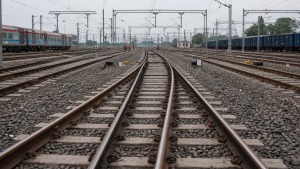
A railway track gauge is the clear minimum perpendicular distance between the inner faces of the two running rails. It shapes the size, speed, stability, and freight capacity of trains, and has played a major role in the development of railway networks in India and abroad.
Understanding Railway Track Gauge
A railway track gauge is the clear minimum perpendicular distance between the inner faces of the two running rails. It determines the physical dimensions of the locomotives, coaches, and wagons that can operate on a rail network. Historically, different countries and regions developed varied gauge systems based on local terrain, economic conditions, and engineering philosophies.
The choice of gauge affects several core technical parameters:
- Construction Cost: Narrower tracks require less land acquisition, smaller tunnels, and sharper curves. This makes them less expensive to build in hilly areas.
- Speed Potential: Wider gauges generally provide better lateral stability. This allows trains to run safely at higher speeds.
- Haulage Capacity: Broad gauge tracks support heavier axle loads and wider rolling stock. This helps move larger quantities of freight.
Railway Gauge Systems in India
India currently operates four distinct railway gauges across its national rail and urban transit networks.
Broad Gauge (1,676 mm)
This is the widest gauge in regular passenger use globally. It measures 1,676 mm (5 feet 6 inches) and forms the backbone of the Indian Railways network. It covers more than 96% of the total route kilometers. Broad gauge tracks facilitate heavy freight movement and high-speed passenger operations, such as the Vande Bharat and Gatimaan Express.
Metre Gauge (1,000 mm)
Introduced during the British colonial era as a cost-effective alternative to broad gauge, it measures exactly 1,000 mm (3 feet 3.37 inches). Mainline metre gauge routes are almost entirely phased out or converted. Today, this gauge persists primarily on select heritage lines.
Narrow Gauge (762 mm and 610 mm)
Narrow gauge systems are utilized in mountainous terrains where laying wider tracks is economically and geographically impractical.
- 762 mm (2 feet 6 inches): This width is found on routes like the Kalka-Shimla Railway.
- 610 mm (2 feet): This width is found on routes like the Darjeeling Himalayan Railway and the Matheran Hill Railway.
Standard Gauge (1,435 mm)
Standard gauge measures 1,435 mm (4 feet 8.5 inches). While it is not the primary gauge for mainline Indian Railways, it is the standard for almost all urban rapid transit (Metro) networks in India. These include the Delhi Metro, Bengaluru Metro, and Mumbai Metro. It is also chosen for dedicated high-speed rail corridors, such as the Mumbai–Ahmedabad High-Speed Rail corridor.
| Gauge Type | Metric Width | Imperial Width | Primary Use in India |
| Broad Gauge | 1,676 mm | 5 ft 6 in | Mainline passenger and freight network |
| Standard Gauge | 1,435 mm | 4 ft 8.5 in | Metro rail networks and high-speed rail |
| Metre Gauge | 1,000 mm | 3 ft 3.37 in | Heritage routes and select regional lines |
| Narrow Gauge (A) | 762 mm | 2 ft 6 in | Hill railways (e.g., Kalka-Shimla) |
| Narrow Gauge (B) | 610 mm | 2 ft 0 in | Toy trains and hill railways (e.g., Darjeeling) |
History and Project Unigauge of Indian Railways
The debate over the optimal gauge for India began in the mid-19th century. Lord Dalhousie, the Governor-General of India, advocated for a uniform broad gauge of 5 feet 6 inches in his famous Railway Minute of July 4, 1850. He argued that a uniform gauge would prevent the logistical problems of transshipment and ease trade across the subcontinent. However, to save on construction costs in less populated or difficult terrains, subsequent administrations allowed the introduction of metre and narrow gauges.
This multi-gauge system created immense operational challenges. It required passengers and goods to change trains at junction points where different gauges met. This process caused transport delays, increased labor costs, and damaged fragile freight.
To address these inefficiencies, Indian Railways launched Project Unigauge in 1991-92. The program aims to convert all metre gauge and narrow gauge tracks into uniform broad gauge.
The main benefits of Project Unigauge include:
- Elimination of Transshipment Bottlenecks: Goods and passengers can travel across the country without changing trains.
- Enhanced Freight Movement: Broad gauge allows for higher wagon capacity and faster transport times.
- Improved Safety and Speed: Heavy pre-stressed concrete sleepers and standardized track specifications reduce derailment risks and permit higher operational speeds.
UNESCO Mountain Railways of India and Their Gauges
Several historic mountain railways in India are preserved as UNESCO World Heritage Sites. These lines serve as excellent examples of historic narrow and metre gauge engineering.
- Darjeeling Himalayan Railway: Located in West Bengal, this line utilizes a 610 mm narrow gauge. Completed in 1881, it climbs from near sea level to Ghum, the highest railway station on the line.
- Nilgiri Mountain Railway: Located in Tamil Nadu, this line operates on a 1,000 mm metre gauge. It is famous for its unique rack-and-pinion system, which helps the train climb steep gradients.
- Kalka-Shimla Railway: Located in Himachal Pradesh, this line uses a 762 mm narrow gauge. It features over 800 bridges and 100 tunnels through rugged mountain terrain.
Major Railway Gauge Systems Worldwide
Railway networks across the world are highly diverse. Standard gauge is the most widely used system globally, accounting for approximately 55% to 60% of all operational lines. Other countries utilize broad or narrow gauges based on defense needs, historical alliances, or geographic challenges.
- Standard Gauge (1,435 mm): This is the international standard. It is used extensively in North America, Western Europe, China, and Australia. It is the preferred choice for modern high-speed rail systems globally due to the widespread availability of standardized rolling stock.
- Russian Gauge (1,520 mm / 1,524 mm): This broad gauge is used across the post-Soviet countries and Finland. The Russian Empire adopted this gauge to distinguish its network from Western Europe and secure its borders.
- Iberian Gauge (1,668 mm): This broad gauge is used in Spain and Portugal. Both countries build their new high-speed rail lines using standard gauge to match the rest of Europe.
- Cape Gauge (1,067 mm): This narrow gauge system is widely used in Southern Africa, Japan, New Zealand, and Taiwan. It allows for cheaper construction in rugged terrains.
- Irish Gauge (1,600 mm): This broad gauge is used in Ireland and Northern Ireland. It is also found in parts of Australia, specifically in the state of Victoria.
| Global Gauge Name | Metric Width | Key Countries and Regions |
| Indian Gauge | 1,676 mm | India, Pakistan, Bangladesh, Sri Lanka, Argentina, Chile |
| Iberian Gauge | 1,668 mm | Spain, Portugal |
| Irish Gauge | 1,600 mm | Republic of Ireland, Northern Ireland, Victoria (Australia) |
| Russian Gauge | 1,520 mm | Russia, Ukraine, Belarus, Central Asian Republics, Finland, Mongolia |
| Standard Gauge | 1,435 mm | USA, Canada, China, Western Europe, Middle East, global metros |
| Cape Gauge | 1,067 mm | South Africa, Japan (regular lines), New Zealand, Taiwan, Queensland (Australia) |
| Metre Gauge | 1,000 mm | East Africa, parts of Southeast Asia, South American regional lines |
Choosing Between Broad and Standard Gauge for High-Speed Rail
When developing high-speed rail (HSR) networks, countries evaluate the trade-offs between broad gauge (such as India’s 1,676 mm) and standard gauge (1,435 mm).
- Technology Availability: Most global high-speed train manufacturers build trains designed specifically for 1,435 mm standard gauge tracks.
- Weight and Stability: Standard gauge high-speed coaches are lighter than broad-gauge coaches. This lower weight reduces the structural load on elevated viaducts and bridges, lowering construction costs.
- Curvature and Land Use: Standard gauge trains can navigate tighter curves at higher speeds compared to broad-gauge trains, requiring less land acquisition.
- Network Compatibility: In India, while the primary passenger network runs on broad gauge, new high-speed systems like the Mumbai-Ahmedabad Bullet Train use standard gauge to utilize existing international train designs without expensive modifications.
Technical Trivia and Quick Facts
- First Broad Gauge Train: The first broad gauge train in India ran between Bori Bunder and Thane in 1853.
- Highest Railway Station: Ghum railway station on the Darjeeling Himalayan Railway is the highest railway station in India, sitting at an altitude of 2,258 meters.
- The 1520 Club: This term refers to the association of countries using the 1,520 mm Russian gauge. It forms an integrated rail network across Northern Eurasia.
- Dual Gauge Tracks: Some regions use dual-gauge tracks with three rails to allow trains of different gauges to share the same track. This is common in border transit areas.
Rare Facts for Prelims
- RCF Export to Bangladesh: On 12 August 2026, the Rail Coach Factory, Kapurthala rolled out the first rake of LHB broad gauge passenger coaches for Bangladesh Railway.
- Export Contract Size: The 19-coach rake is part of a ₹915 crore contract signed in May 2024 for 200 broad gauge passenger coaches across seven variants.
- Passenger Coach Export Gap: This delivery resumed Indian passenger coach exports to Bangladesh after a gap of about ten years.
- Coach Composition: The first rake includes three AC sleeper cars, three AC chair cars, 11 non-AC chair cars, and two power cars.
- Safety Standards: The exported coaches were redesigned to meet European Standard EN 15227 crashworthiness norms.
- Customized Features: The Bangladesh coaches include a Prayer Room, a Baby Care Room, CCTV surveillance, a passenger alarm system, and reclining seats with stainless steel armrests and footrests.
| Related | |
|---|---|