Japan Launches ¥10 Billion Cyberattack Response Package
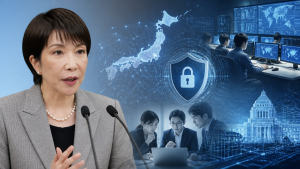
Japan launched a ¥10 billion emergency package on Friday, 6 November 2026, to respond to cyberattacks and data breaches affecting businesses and government agencies. Prime Minister Sanae Takaichi announced measures to strengthen the country’s response to attacks in the AI era.
Funding and response measures
The package, funded from fiscal 2026 reserve funds, includes about ¥2 billion for AI-assisted vulnerability assessments of critical government systems and around ¥4.1 billion for police cybercrime investigations. It also provides for security measures partly using artificial intelligence, stronger investigations and support for victims.
A planned cyber rescue team of government and private-sector experts would provide initial assistance to affected companies. The Ministry of Economy, Trade and Industry is expected to establish a specialist “top gun” team by the end of November 2026. It will use AI to counter hackers and identify system vulnerabilities.
Cybersecurity context
Japan also plans to strengthen active cyber defense, legalised in October 2026, which allows authorities to access servers used by attackers. The measures follow breaches including a ransomware attack on GMO Internet Group. Reports said the Chinese AI cybersecurity tool Artex was used in several recent hacks of Japanese companies.
Important Facts for Exams
- Cybersecurity Act responsibilities: Japan’s 2014 Basic Act on Cybersecurity assigns roles not only to central and local government but also to critical-infrastructure operators and businesses engaged in cyberspace-related services.
- JPCERT/CC coordination role: JPCERT/CC is a non-profit coordination centre that helps organisations handle incidents and coordinates vulnerability disclosures; it has no criminal investigative authority.
- Police Cyber Force: The National Police Agency’s Cyber Force provides specialist technical support to prefectural police and monitors cyberspace for cyber threats.
- Strategic Headquarters: Japan’s Cybersecurity Strategic Headquarters is chaired by the prime minister and coordinates cross-ministerial policy, rather than operating as an incident-response unit.
| Related | |
|---|---|