India’s Non-Fossil Fuel Power Capacity Crosses 300 GW
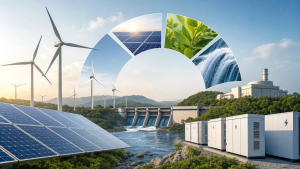
India’s installed non-fossil fuel-based power capacity reached 300.50 GW as of 31 July 2026, crossing the 300 GW mark. This capacity formed more than 54% of India’s total installed electricity generation capacity of about 552 GW on the same date.
Non-Fossil Fuel Power Capacity in India
Non-fossil fuel power capacity includes electricity generated from solar energy, wind energy, hydropower, bio-power, and nuclear power. India’s 300.50 GW non-fossil capacity as of 31 July 2026 covered more than 60% of the national target of 500 GW of non-fossil fuel-based capacity by 2030.
Solar energy was the largest component of the non-fossil basket at 164.59 GW. Wind energy stood at 58.14 GW, while large and small hydropower together accounted for 57.24 GW.
Major Components of the Capacity Mix
Bio-power contributed 11.75 GW to the non-fossil total. Nuclear power accounted for 8.78 GW of installed capacity.
Solar capacity rose from 2.8 GW in 2014 to 164.59 GW in 2026. Wind capacity increased from 21 GW in 2014 to 58.14 GW in 2026.
Annual Addition and Manufacturing Base
India added 55.29 GW of non-fossil capacity in the 2025–26 financial year, which was the highest annual addition recorded by the country. This addition included 44.6 GW of solar capacity and 6 GW of wind capacity.
India’s renewable electricity generation reached 477.79 billion units in 2025–26, compared with 190.96 billion units in 2014–15. Domestic manufacturing capacity for solar PV modules under the Approved List of Models and Manufacturers crossed 200 GW in 2026.
Important Facts for Exams
- India’s total installed electricity generation capacity stood at about 552 GW on 31 July 2026.
- India’s target for non-fossil fuel-based capacity is 500 GW by 2030.
- The Approved List of Models and Manufacturers is linked to domestic solar manufacturing in India.
- The Production Linked Incentive scheme supports manufacturing in sectors such as solar PV modules.
Static GK on Renewable Energy
Solar energy is derived from sunlight and is converted into electricity through photovoltaic cells or solar thermal systems. Wind energy is generated by wind turbines that convert kinetic energy into electrical power.
Hydropower uses flowing water to produce electricity, while bio-power is generated from biomass and organic waste. Nuclear power is produced through controlled nuclear fission in reactors.
| Related | |
|---|---|