Indian Systems of Medicine: Regulators and Councils
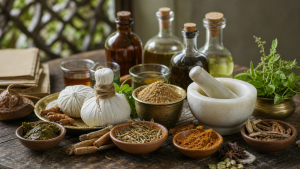
India’s AYUSH regulatory framework covers Ayurveda, Unani, Siddha, Sowa-Rigpa, Homoeopathy, Yoga and Naturopathy through statutory commissions, pharmacopoeial bodies, technical boards and research councils. These institutions standardize education, maintain practitioner registers, regulate drug quality and support research across traditional medicine systems.
Statutory Commissions for AYUSH Education and Practice
- National Commission for Indian System of Medicine (NCISM): Set up under the National Commission for Indian System of Medicine Act, 2020, replacing the Central Council of Indian Medicine (CCIM) under the Indian Medicine Central Council Act, 1970.
- Jurisdiction of NCISM: Covers medical education and professional practice in Ayurveda, Unani, Siddha and Sowa-Rigpa.
- Structure of NCISM: Comprises 29 members appointed by the Central Government, including a Chairperson and heads of autonomous boards.
- Board of Ayurveda: Regulates undergraduate and postgraduate medical education in Ayurveda.
- Board of Unani, Siddha and Sowa-Rigpa: Oversees academic standards and curriculum design for these disciplines.
- MARB-ISM: The Medical Assessment and Rating Board for Indian System of Medicine grants permission for new medical institutions, assesses standards and rates existing colleges.
- BER-ISM: The Board of Ethics and Registration for Indian System of Medicine maintains the National Register of practitioners and enforces the professional code of ethics.
- Key exams under NCISM: NEET is used for undergraduate admissions, Next-Ex for licensing, and NTET for teaching positions.
National Commission for Homoeopathy
- National Commission for Homoeopathy (NCH): Constituted under the National Commission for Homoeopathy Act, 2020, replacing the Central Council of Homoeopathy (CCH) under the Homoeopathy Central Council Act, 1973.
- Jurisdiction of NCH: Regulates homoeopathic medical education, clinical practice and institutional standards nationwide.
- Homoeopathy Education Board: Formulates curriculum guidelines and minimum standards for undergraduate and postgraduate homoeopathy degree courses.
- Medical Assessment and Rating Board for Homoeopathy: Conducts inspections, permits course expansion and rates homoeopathic colleges.
- Board of Ethics and Registration for Homoeopathy: Maintains the National Register of Homoeopathy Practitioners and handles professional misconduct issues.
Pharmacopoeial and Drug Quality Control Bodies
- Pharmacopoeia Commission for Indian Medicine and Homoeopathy (PCIM&H): A subordinate office under the Ministry of Ayush, formed by merging the Pharmacopoeia Commission for Indian Medicine & Homoeopathy with the Ayurvedic Pharmacopoeia Laboratory (APL) and Homoeopathic Pharmacopoeia Laboratory (HPL).
- Location of PCIM&H: Ghaziabad, Uttar Pradesh.
- Core function: Lays down official quality standards, identity benchmarks and purity limits for raw drugs and finished formulations of Ayurveda, Unani, Siddha and Homoeopathy.
- Key publications: Ayurvedic Pharmacopoeia of India (API), Unani Pharmacopoeia of India (UPI), Siddha Pharmacopoeia of India (SPI) and Homoeopathic Pharmacopoeia of India (HPI).
- Drugs Technical Advisory Board (DTAB): Constituted under the Drugs and Cosmetics Act, 1940.
- ASUDTAB: The Ayurveda, Siddha and Unani Drugs Technical Advisory Board advises the Central and State Governments on technical matters relating to manufacture, sale and quality compliance of traditional drugs.
- GMP compliance: Good Manufacturing Practices are prescribed under Schedule T of the Drugs and Cosmetics Rules, 1945 for Ayurvedic, Siddha and Unani medicines.
Apex Research Councils and National Institutes
- CCRAS: The Central Council for Research in Ayurvedic Sciences, headquartered in New Delhi, leads research in clinical studies, safety pharmacology and medicinal plant science.
- CCRUM: The Central Council for Research in Unani Medicine coordinates clinical trials, drug standardization and validation of Unani formulations.
- CCRS: The Central Council for Research in Siddha, headquartered in Chennai, focuses on validating classical Siddha literature and herbal remedies.
- CCRH: The Central Council for Research in Homoeopathy conducts basic and clinical research, proving of homoeopathic drugs and public health studies.
- CCRYN: The Central Council for Research in Yoga and Naturopathy coordinates scientific studies and standardization in mind-body medicine and naturopathic therapies.
- Yoga Certification Board (YCB): Functions under the Morarji Desai National Institute of Yoga (MDNIY) to certify Yoga professionals and accredit institutions.
- Naturopathy Registration Board (NRB): Operates under the National Institute of Naturopathy (NIN), Pune, and maintains the central register for Naturopathy practitioners.
NCISM and NCH: Quick Comparison
| Parameter | NCISM | NCH |
| Parent Act | NCISM Act, 2020 | NCH Act, 2020 |
| Predecessor body | Central Council of Indian Medicine (CCIM) | Central Council of Homoeopathy (CCH) |
| Systems covered | Ayurveda, Unani, Siddha, Sowa-Rigpa | Homoeopathy |
| Specific boards | Board of Ayurveda; Board of Unani, Siddha and Sowa-Rigpa; MARB-ISM; BER-ISM | Homoeopathy Education Board; MARB-H; BER-H |
| Advisory council | Advisory Council for Indian System of Medicine | Advisory Council for Homoeopathy |
| Primary goal | Standardize education, ratings and ethics in Indian systems | Standardize education, ratings and ethics in Homoeopathy |
Core Facts for Revision
- NCISM operational date: 11 June 2021.
- NCH operational date: 2 September 2020.
- Sowa-Rigpa: Officially included under NCISM for education and registration oversight.
- PCIM&H: Central laboratory and office situated at Ghaziabad, Uttar Pradesh.
- NTET: Mandatory exam introduced by NCISM for inducting teaching faculty in AYUSH colleges.
- Ayush Grid: A digital initiative of the Ministry of Ayush integrating regulatory, educational, clinical and research datasets across traditional medicine systems.
Key Prelims Takeaways
- NCISM and NCH are the two apex statutory commissions for AYUSH medical education and registration.
- NCISM covers Ayurveda, Unani, Siddha and Sowa-Rigpa; NCH covers Homoeopathy.
- MARB and BER are common regulatory functions: assessment/rating and ethics/registration.
- PCIM&H is the key pharmacopoeial body for standards and purity of AYUSH drugs.
- ASUDTAB deals with technical issues relating to manufacture, sale and quality compliance of traditional drugs.
- GMP under Schedule T is important for Ayurvedic, Siddha and Unani medicines.
- CCRAS, CCRUM, CCRS, CCRH and CCRYN are the main research councils under the Ministry of Ayush.
Current General Studies comprises current-affairs-based, General Studies-rich study material on policies, laws, institutions, economy, science, environment, governance, international relations, and other varied but important topics for UPSC and State PSC Prelims examinations.
Fortnightly PDF compilations: Available here
Originally written on
May 7, 2026
and last modified on
September 6, 2026.
| Related | |
|---|---|