India Biennale 2026 to Open Across 22 Delhi Venues
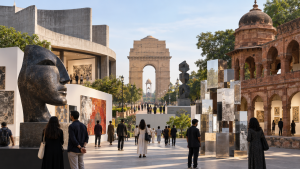
The second India Art, Architecture and Design Biennale (IAADB) will run from December 4, 2026, to March 21, 2027, across 22 venues in Delhi. Organised by the Ministry of Culture, the 108-day event is planned on a larger scale than the inaugural 2023 edition.
Theme and exhibitions
The theme is “Tat Tvam Asi – Reconnecting in an Age of Distraction”, drawing on Upanishadic insights. More than 20 countries, including France, Italy, Hungary, Switzerland and Sri Lanka, are expected to participate. Exhibitions will range from handmade crafts to digital and immersive new-media art. Planned works include “A Woven Line of Control” at Purana Qila and “Varanasi the Timeless” at Qutub Minar.
Venues and visitor access
Purana Qila will be the principal hub. Other confirmed venues include the Red Fort, Qutub Minar, Jantar Mantar, Humayun’s Tomb, Safdarjung Tomb, Lodhi Garden, the National Museum and the National Gallery of Modern Art. Organisers aim to attract about five million visitors and double footfall at participating heritage destinations, with expected benefits for tourism and hospitality. A Biennale Pass will provide access to participating monuments and exhibitions in place of regular entry tickets.
Important Facts for Exams
- Upanishadic theme: The Biennale’s Upanishadic theme draws on texts that form the Vedas’ most recent layer and address meditation, philosophy, consciousness and ontological knowledge.
- Digital-media distinction: The Biennale’s digital-art programme can include works made for digital media, distinct from art created with digital tools that may exist outside digital spaces.
- ASI institutional status: The Archaeological Survey of India is an attached office of the Ministry of Culture, responsible for archaeological research and centrally protected monuments.
- Monument buffer zones: India’s monuments law generally prohibits construction within 100 metres of a centrally protected monument and regulates construction in the next 200 metres.
| Related | |
|---|---|