Major Wetlands, Bird Sanctuaries and Ramsar Sites
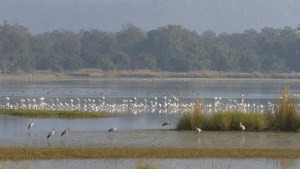
Wetlands are among the most productive ecosystems on Earth. They support biodiversity, regulate water flow, recharge groundwater, reduce floods, and provide critical habitats for resident and migratory birds.
India has a wide network of inland, coastal, and human-made wetlands. Many of these are protected under the Ramsar Convention, which recognizes wetlands of international importance.
Ramsar Convention and Legal Framework
- Adoption: The Ramsar Convention on Wetlands was adopted on 2 February 1971 in Ramsar, Iran.
- Entry into force: The treaty came into force in 1975.
- World Wetlands Day: Celebrated every year on 2 February.
- India’s accession: India signed the convention on 1 February 1982.
- Purpose: The convention provides a framework for national action and international cooperation for the conservation and wise use of wetlands.
- Montreux Record: A register of Ramsar sites where ecological character has changed, is changing, or is likely to change due to pollution, technological developments, or human interference.
- Indian sites on Montreux Record: Keoladeo National Park (Rajasthan) and Loktak Lake (Manipur).
- Chilika Lake: Was listed in 1993 and removed in 2002 after successful ecological restoration.
Wetlands (Conservation and Management) Rules, 2017
- Regulatory framework: These rules replaced the 2010 regulations and aim to decentralize wetland management.
- State Wetland Authorities (SWAs): To be constituted in every State and Union Territory, headed by the Environment Minister of the respective government.
- SWA functions: Identify, notify, and manage wetlands within the jurisdiction.
- National Wetland Committee (NWC): Advises the Ministry of Environment, Forest and Climate Change (MoEFCC) and monitors implementation of the rules.
- Prohibited activities: Industrial expansion, dumping of untreated waste, effluent discharge, solid waste dumping, and conversion for non-wetland uses.
- Wise use principle: Allows sustainable activities that do not alter the natural ecological character of the wetland.
Major Ramsar Sites and Bird Sanctuaries
| Wetland / Sanctuary | State | Type / Key Features |
| Chilika Lake | Odisha | Brackish water lagoon; India’s largest coastal lagoon; habitat of Irrawaddy dolphins; first Indian Ramsar site. |
| Keoladeo National Park | Rajasthan | Freshwater, human-made wetland; UNESCO World Heritage site; former breeding ground of the Siberian Crane. |
| Loktak Lake | Manipur | Freshwater lake known for phumdis; associated with the endangered Sangai deer in Keibul Lamjao National Park. |
| Sundarban Wetland | West Bengal | Mangrove wetland; India’s largest Ramsar site; habitat of the Royal Bengal Tiger and saltwater crocodile. |
| Vembanad-Kol | Kerala | Estuarine/backwater system; longest lake in India; known for the Nehru Trophy Boat Race. |
| Wular Lake | Jammu & Kashmir | One of the largest freshwater lakes in Asia; fed by the Jhelum River. |
| Harike Wetland | Punjab | Human-made wetland at the confluence of the Beas and Sutlej; wintering site for Northern Pintail and Bar-headed Geese. |
| Point Calimere | Tamil Nadu | Coastal salt marsh; important wintering ground for Greater Flamingos along the Central Asian Flyway. |
| Nalsarovar Bird Sanctuary | Gujarat | Natural freshwater wetland; largest natural wetland in the Thar desert region; habitat of Rosy Pelicans and storks. |
| Renuka Lake | Himachal Pradesh | Freshwater lake; smallest Ramsar site in India by surface area; sacred water body named after Mother Renuka. |
| Deepor Beel | Assam | Permanent freshwater lake near Guwahati; important wetland for birds and aquatic biodiversity. |
| Koolankulam Bird Sanctuary | Tamil Nadu | Major breeding centre for migratory waterbirds; supported by community protection from local villagers. |
| Bhitarkanika Mangroves | Odisha | High density of saltwater crocodiles; borders the Gahirmatha turtle sanctuary. |
Flyways and Coastal Wetland Importance
- Central Asian Flyway (CAF): India is a major destination on this migratory route that stretches between the Arctic and Indian Oceans.
- Migratory birds: Millions of birds travel across the flyway every winter and depend on Indian wetlands for shelter and feeding.
- Key species: Bar-headed Goose, Demoiselle Crane, Amur Falcon, and Eurasian Wigeon.
- Blue carbon: Coastal wetlands store large amounts of carbon and help mitigate climate change.
- Storm protection: Mangroves protect inland areas from cyclones and storm surges.
- Important mangrove belts: Sundarbans (West Bengal), Bhitarkanika (Odisha), Pichavaram (Tamil Nadu), and Coringa (Andhra Pradesh).
Important Facts for Prelims
- First Ramsar sites in India: Chilika Lake and Keoladeo National Park, designated in October 1981.
- State with maximum Ramsar sites: Tamil Nadu.
- Next highest: Uttar Pradesh.
- Largest Ramsar site: Sundarban Wetland, over 4,200 sq km.
- Smallest Ramsar site: Renuka Lake, about 0.2 sq km.
- Only floating national park: Keibul Lamjao National Park on Loktak Lake, Manipur.
- Wetland coverage in India: Around 4.6% of the country’s geographical area.
- Key role: Wetlands act as natural sponges, help prevent floods, and recharge groundwater.
Key Prelims Takeaways
- Ramsar Convention: Adopted in 1971 at Ramsar, Iran; came into force in 1975.
- India’s accession: India joined the convention in 1982.
- World Wetlands Day: Observed on 2 February.
- Montreux Record in India: Keoladeo National Park and Loktak Lake are currently listed.
- First Indian Ramsar sites: Chilika Lake and Keoladeo National Park.
- Largest Ramsar site: Sundarban Wetland in West Bengal.
- Smallest Ramsar site: Renuka Lake in Himachal Pradesh.
Current General Studies comprises current-affairs-based, General Studies-rich study material on policies, laws, institutions, economy, science, environment, governance, international relations, and other varied but important topics for UPSC and State PSC Prelims examinations.
Fortnightly PDF compilations: Available here
Originally written on
May 21, 2026
and last modified on
September 6, 2026.
| Related | |
|---|---|