Important Marine Fish Species of India
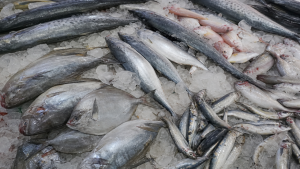
India’s marine fisheries are a major source of food, employment and export earnings. The country’s long coastline and broad Exclusive Economic Zone support a wide range of pelagic, demersal and oceanic species. For prelims revision, it is important to remember the leading fish groups, key institutions, conservation laws and the pressures shaping marine biodiversity.
Overview of Marine Fisheries in India
India has a coastline of 8,118 km and an Exclusive Economic Zone (EEZ) of 2.02 million sq km. This vast marine area supports commercially important fish species and makes marine fisheries central to nutrition, livelihoods and the coastal economy. India is the second-largest fish producer globally after China. Total fish production was 14.1 million tonnes in 2021, of which marine fish production was about 3.2 million tonnes. The marine fishery potential in Indian waters is estimated at 5.31 million tonnes. Of this, pelagic resources account for about 49.5%, demersal resources 43.3%, and oceanic groups 4.3%. The sector provides direct employment to over 1.5 million people. In 2025, marine fish production reached 35.7 lakh tonnes, a 3% rise over 2024. Tamil Nadu led marine fish production in 2025 with 6.85 lakh tonnes, followed by Gujarat and Kerala.
Pelagic Fish Species
Pelagic fishes live in the open water column, near the surface or in mid-water layers. They are active swimmers and often occur in schools. These species form the largest share of marine fish landings in India, especially along the west coast.
- Indian Oil Sardine (Sardinella longiceps): A major pelagic species found mainly along the southwest coast, especially Kerala, Karnataka and Goa. It often forms the largest single-species fishery in India and contributes around 15% of total marine fish catches. In Kerala, it was the top resource in 2025 with 1.68 lakh tonnes.
- Indian Mackerel (Rastrelliger kanagurta): A dominant coastal pelagic fish found throughout Indian waters. It travels in large shoals and feeds on plankton. In 2025, it was the most landed resource in the country at 2.70 lakh tonnes.
- Tunas: High-value migratory fishes important for export markets. Yellowfin tuna and skipjack tuna are among the key species, usually caught in oceanic waters using longlines and pole-and-line methods.
- Bombay Duck (Harpadon nehereus): A major species along the northwest coast, especially in Gujarat and Maharashtra.
- Ribbonfish, Anchovies and Hilsa: Other important pelagic fishes that support regional fisheries and local markets.
Demersal Fish Species
Demersal fishes are associated with the sea floor and are usually caught by bottom trawling. They include finfish, crustaceans, molluscs and several high-value export resources.
- Threadfin Breams (Nemipterus spp.): Among the most abundant demersal fishes in Indian waters, especially along the southwest coast. They contributed over 22% of all demersal landings. Key species include Nemipterus japonicus and N. mesoprion. Landings grew sharply in 2025.
- Croakers (Sciaenidae): Commercially important along the northwest and northeast coasts and well demanded in domestic and export markets.
- Catfish: Marine and estuarine catfishes are common along Gujarat, Maharashtra and parts of the east coast.
- Perches, Lizardfish, Silver Bellies, Pomfret, Flatfish and Groupers: Important demersal groups. High-value species such as pomfret and Indian halibut command premium prices.
- Crustaceans: Penaeid and non-penaeid prawns, crabs and lobsters are vital marine resources. Prawns are among India’s most valuable marine exports.
- Molluscs: Squids and cuttlefish are important demersal catches and are increasingly demanded globally.
- Elasmobranchs: Sharks and rays are represented by about 110 species in India. They form around 3.3% of the demersal finfish catch, but many species are of high conservation concern.
Key Institutions for Fisheries Management
Several institutions support research, surveys, stock assessment and development in marine fisheries.
- Central Marine Fisheries Research Institute (CMFRI): Established in 1947 under the Ministry of Agriculture and Farmers Welfare, with headquarters in Kochi, Kerala. It monitors and assesses marine fisheries resources, conducts basic and strategic research in mariculture, maintains geo-spatial information, and supports human resource development.
- Fishery Survey of India (FSI): Founded in 1983 and headquartered in Mumbai. It is the nodal agency for surveying, assessing and monitoring marine fishery resources in the Indian EEZ through exploratory surveys, charting fishing grounds and collecting stock data.
- National Fisheries Development Board (NFDB): Established in 2006 and headquartered in Hyderabad under the Department of Fisheries, Ministry of Fisheries, Animal Husbandry and Dairying. It promotes fisheries and aquaculture, supports infrastructure, technology adoption, marketing, export promotion and resource conservation.
Conservation and Policy Frameworks
India has developed a legal and policy framework for marine biodiversity protection and sustainable fishing.
- Marine Protected Areas (MPAs): India has notified 31 major MPAs under the Wildlife (Protection) Act, 1972. These protect coral reefs, mangroves, estuaries and seagrass beds and support biodiversity as well as fish breeding and nursery habitats.
- Wildlife (Protection) Act, 1972: Protects several marine animals. The Whale Shark became the first fish species included in the schedules in 2001, making its hunting illegal. Seahorses have also been listed in Schedule I since 2001.
- Coastal Regulation Zone (CRZ) Notification: Restricts harmful development and waste disposal in fragile coastal ecosystems.
- Biological Diversity Act, 2002: Provides a framework for conservation of biodiversity and related advisory functions.
- Pradhan Mantri Matsya Sampada Yojana (PMMSY): A flagship scheme for sustainable and responsible development of the fisheries sector.
- National Policy on Marine Fisheries (2017) and Draft National Fisheries Policy (2020): These include the idea of fish refugia to protect critical habitats needed for fish life cycles and stock recovery.
Threats to Marine Fish Biodiversity
Marine fish species in India face multiple stresses that affect abundance, distribution and habitat quality.
- Overfishing: Intensive harvest pressure has led to resource decline in several areas. A 2022 CMFRI report noted that 4.4% of fish stocks were subject to overfishing and 8.2% were already overfished. Demersal resources are especially affected by trawling.
- Habitat degradation: Coral reefs, mangroves and seagrass beds are damaged by coastal development, pollution and climate change.
- Pollution: Industrial, agricultural and urban pollutants degrade marine ecosystems and affect fish health and survival.
- Bycatch: Non-target species, including endangered forms, are often accidentally captured in fishing operations.
- Climate change: Rising sea temperatures, altered currents and ocean acidification affect fish distribution, breeding and food availability.
Key Prelims Takeaways
- Coastline and EEZ: India has an 8,118 km coastline and a 2.02 million sq km EEZ.
- Fish groups: Pelagic fishes live in open waters; demersal fishes are associated with the sea floor.
- Major pelagic species: Indian oil sardine, Indian mackerel, tuna, Bombay duck, ribbonfish, anchovies and hilsa are important for marine landings.
- Major demersal groups: Threadfin breams, croakers, catfish, pomfret, flatfish, groupers, prawns, squid and cuttlefish are key resources.
- Key institutions: CMFRI, FSI and NFDB are the main research, survey and development bodies.
- Conservation laws: The Wildlife (Protection) Act, CRZ norms, Biological Diversity Act and PMMSY support marine protection and sustainable use.
- Exam fact: India has 31 major Marine Protected Areas, and the Whale Shark and Seahorses are protected under Schedule I.
Recent Context
Bathymyrus perplexus is a newly identified fish species from the Bay of Bengal, part of the north-eastern Indian Ocean. Its scientific identification was completed by the ZSI unit at Gopalpur on September 30, 2026, after examination of a specimen collected in 2025; the first specimen had been collected off Paradip in 2021. The findings, published in the Bulletin of Marine Science on September 24, 2026, add to marine resource mapping and coastal biodiversity studies.
| Related | |
|---|---|