Important Concepts in Mining Leases and Captive Mines
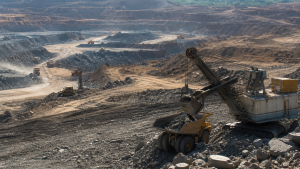
The MMDR Act, 1957 is the main law governing mineral concessions in India. It covers mining leases, captive mines, royalties, exploration rights, and recent reforms aimed at improving resource allocation and industrial competitiveness.
Legal Framework for Mineral Concessions
The Mines and Minerals (Development and Regulation) Act, 1957 (MMDR Act) governs the mineral sector in India. This primary legislation regulates the development, exploration, and extraction of minerals across the country. Over time, amendments have moved the sector from a discretionary allocation system to a competitive bidding-based regime.
To understand how mineral resources are managed, it is essential to look at the different types of mineral concessions granted under the legal framework:
- Reconnaissance Permit (RP): Granted for preliminary prospecting of a mineral. It involves regional, aerial, geophysical, or geochemical surveys and geological mapping.
- Prospecting License (PL): Issued for exploring, locating, or proving mineral deposits in a specified area.
- Mining Lease (ML): Granted for active mining operations and extraction of minerals from a leased area.
- Composite License (PL-cum-ML): A two-stage concession that allows the holder to prospect for minerals first and then obtain a mining lease once deposits are proved.
- Exploration License (EL): Introduced under the MMDR Amendment Act, 2023, specifically to engage private entities in discovering critical and deep-seated minerals.
Understanding a Mining Lease
A mining lease is a legal contract between the government (the lessor) and the mineral developer (the lessee). This lease grants the right to extract specific minerals from a designated area for a defined period.
Key aspects of a mining lease in India include:
- Duration of the Lease: As per the MMDR Amendment Act, 2015, all mining leases for non-coal and non-atomic minerals are granted for a fixed period of 50 years.
- Auction-based Allocation: Discretionary allocation of mining leases was ended in 2015. State governments now grant mining leases exclusively through transparent electronic auctions (e-auctions).
- Area Limits: Section 6 of the MMDR Act prescribes maximum area limits for mineral concessions. However, the Central Government can increase these limits for specific states or minerals to promote systematic exploration. For instance, the government has increased the area limits up to 90 square kilometers for coal blocks in states like Chhattisgarh and Jharkhand.
- Lapse of Lease: Under Section 4A(4) of the MMDR Act, if a lessee fails to commence mining operations within two years of lease execution, or stops operations for a continuous period of two years, the lease automatically lapses.
Mining leases for non-coal and non-atomic minerals are now granted for 50 years.
Captive Mines and Merchant Mines
The Indian mining sector classifies mines into captive and non-captive (merchant or commercial) mines based on the utilization of the extracted mineral.
Captive Mines
Captive mines are mineral blocks allocated to a company for its own consumption.
- End-use Restriction: The lessee must use the entire extracted mineral exclusively in its own manufacturing or industrial plant, such as a cement kiln or a steel manufacturing facility.
- Historical Allocation: Before 2015, the government reserved several mineral blocks for captive purposes to ensure raw material security for core industries.
Merchant (Non-Captive) Mines
Merchant mines are commercial extraction operations.
- Market Sales: Bidders extract minerals to sell them directly on the open market to any buyer.
- No End-use Restrictions: The operators do not need to own a processing or manufacturing plant.
Structural Differences
| Parameter | Captive Mines | Merchant Mines |
| Primary Purpose | Internal raw material consumption by parent plant | Sale of mineral ore in the open market |
| End-Use Constraints | Tied to a specific plant (e.g., steel, power, cement) | No end-use restrictions |
| Transferability | Historically restricted; permitted under strict terms | Transferable through open auction rules |
| Pricing | Internal transfer pricing | Market-driven demand and supply pricing |
Policy Shift in Captive Mining
The MMDR Amendment Act, 2021 introduced policy changes that dismantled the strict barrier between captive and merchant mines. These changes targeted underutilized resources and aimed to bring additional raw materials into the open market.
- Removal of End-Use Restrictions: The government discontinued the reservation of mineral blocks for captive end-use. All future mine auctions are conducted without captive restrictions.
- Permissible Open Market Sales: Existing captive mines can now sell up to 50% of their annual mineral production in the open market after meeting the requirements of their linked end-use plant.
- Additional Payments: For selling captive minerals in the open market, the lessee must pay additional royalty charges to the state government as specified under the Sixth Schedule of the MMDR Act.
- Transition of Cleared Licenses: On the expiry of a lease, statutory clearances (such as environmental and forest clearances) transfer automatically to the new bidder. The MMDR Amendment Act, 2021 made these transferred clearances valid for the entire life of the new lease, ensuring continuous mining operations.
Existing captive mines may sell up to 50% of annual production in the open market, subject to payment of additional royalty.
Critical Minerals and the 2023 Regulatory Reforms
The MMDR Amendment Act, 2023 introduced a specialized regulatory framework for critical and strategic minerals. These minerals are vital for industries like telecommunications, clean energy, space, and defense.
Important changes under the 2023 amendment include:
- Exclusive Central Auctions: The Central Government is empowered to exclusively conduct e-auctions for mining leases and composite licenses for 24 critical and strategic minerals (such as lithium, cobalt, nickel, and rare earth elements).
- Revenue Allocation: Although the Central Government conducts the auctions, the entire revenue generated from these bids goes to the respective State Government where the mineral block is located.
- Omission from Atomic Minerals List: The amendment declassified six minerals (including lithium, beryllium, niobium, titanium, tantalum, and zirconium) from the atomic minerals list. This allows private sector participation in the exploration and mining of these resources.
- Exploration Licenses for Deep-Seated Minerals: Private companies can bid for a 5-year Exploration License to discover deep-seated minerals like gold, silver, copper, and platinum group minerals. The exploration company receives a share of the auction premium paid by the eventual mining lease holder.
Key Fiscal and Welfare Concepts in Mining Leases
Every mining lease holder in India must comply with specific statutory financial payments and developmental contributions.
Royalties and Dead Rent
- Royalty: A payment made by the leaseholder to the state government for the right to extract minerals. It is calculated as a percentage of the Average Sale Price (ASP) of the mineral.
- Dead Rent: If the mine is idle or production is low, the lessee must pay a minimum guaranteed rent called “dead rent” to the state government. A lessee pays either the royalty or the dead rent, whichever is higher, but not both.
District Mineral Foundation (DMF)
- Welfare Focus: Established as a non-profit trust in every district affected by mining-related operations.
- Funding: Funded directly by contributions from mining leaseholders. For leases granted through auctions after 2015, holders contribute 10% of the royalty amount to the DMF. For older leases, the contribution is up to 30% of the royalty.
- Utilization: Funds are utilized under the Pradhan Mantri Khanij Kshetra Kalyan Yojana (PMKKKY) for high-priority areas such as drinking water, healthcare, education, environment preservation, and infrastructure development in mining-affected communities.
National Mineral Exploration Trust (NMET)
- Exploration Funding: A central trust established to fund regional and detailed mineral exploration in the country.
- Contribution: Mining leaseholders contribute a sum equivalent to 2% of the royalty paid to the state government. NMET funds modern exploration technologies, geophysical mapping, and the activities of notified exploration agencies.
Recent Context
The Mines and Minerals (Development and Regulation) Amendment Bill, 2026 was passed by both Houses of Parliament on August 13, 2026 and is awaiting Presidential assent under Article 111.
The Bill strengthens central control over mineral-bearing lands and removes the 50% cap on captive mine sales, while also allowing existing leaseholders to add multiple critical minerals to their leases.
Rare Facts for Prelims
- Section 6 Limit: The MMDR Act places area caps on mineral concessions to prevent excessive concentration of mineral holdings.
- Automatic Lapse: A mining lease can lapse automatically if mining does not begin within two years of execution.
- DMF Link: DMF is funded from royalty contributions, not from general taxation.
- NMET Rate: The NMET contribution is fixed at 2% of royalty.
- Exploration License Period: The Exploration License introduced for deep-seated minerals is for 5 years.
- State Revenue: Even when the Centre conducts auctions for critical minerals, the auction revenue goes to the State where the block is located.
| Related | |
|---|---|