Important Agricultural Biotechnology Applications
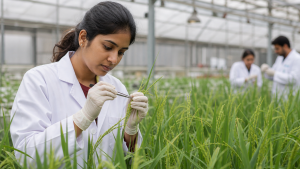
Agricultural biotechnology uses scientific tools to improve plants, animals and microorganisms for farming. It supports higher yields, better nutrition, pest resistance and more sustainable production, while biological control offers a natural way to manage crop pests and reduce dependence on chemicals.
Understanding Agricultural Biotechnology
Agricultural biotechnology covers modern biological techniques used to develop products and processes for agriculture. It draws on molecular biology, genetics, biochemistry and microbiology to improve efficiency, cut environmental impact and strengthen food security.
- Genetic engineering: Modifying genes to introduce desirable traits in crops or livestock.
- Molecular breeding: Using molecular markers to identify and select useful traits faster than conventional breeding.
- Tissue culture: Growing plant cells, tissues or organs in sterile conditions for propagation or genetic work.
- Diagnostics: Developing rapid tools to detect plant and animal diseases.
- Bio-pesticides and bio-fertilizers: Using living organisms or their products to manage pests and improve nutrient availability.
- Biological control: Employing natural enemies to suppress pest populations.
Biological Control in Agriculture
Biological control is a pest-management method that uses living organisms to reduce pest populations. These agents, known as biological control agents or natural enemies, help lower dependence on synthetic pesticides and reduce residue in food.
- Predators: Organisms that hunt and consume pests, such as ladybugs feeding on aphids.
- Parasitoids: Insects that lay eggs inside or on a host; the host is eventually killed. Trichogramma wasps are a key example.
- Pathogens: Microorganisms such as bacteria, fungi or viruses that infect pests.
- Antagonists: Microbes that suppress plant pathogens and limit disease spread.
Biological control is one of the most important exam-linked applications of agricultural biotechnology because it combines pest suppression with environmental sustainability.
Integrated Pest Management and Crop Protection
Integrated Pest Management (IPM) is a coordinated approach that combines different pest-control methods to manage pest populations while reducing health and environmental risks. Biological control is a central component of IPM.
- Biological methods: Use of natural enemies to control pests.
- Cultural methods: Crop rotation, resistant varieties and proper field sanitation.
- Mechanical methods: Physical removal of pests, traps and barriers.
- Chemical methods: Judicious and targeted use of pesticides when needed, usually as a last resort.
In practice, IPM is useful because it combines prevention, monitoring and selective intervention. This makes pest control more efficient and supports long-term soil and ecosystem health.
Specific Applications and Important Agents
A major example of biotechnology-based biocontrol is the use of Trichogramma species, which are tiny parasitoid wasps used against insect eggs in several crop systems. By preventing larvae from hatching, they reduce crop damage at an early stage.
- Trichogramma spp.: Parasitoid wasps used for egg parasitism in insect pest management.
- Trichogramma galloi: A specific parasitoid wasp used in biological control programmes.
- Helicoverpa armigera: Its emergence in 2013 accelerated the use of biological agents in Brazil.
These applications show how agricultural biotechnology is not limited to genetic modification alone. It also includes field-level biological solutions that can be deployed over large areas and integrated with crop-protection systems.
Global Trends, Market Growth and Technology Adoption
The global market for agricultural biologicals is expanding as farmers seek sustainable alternatives to chemical-intensive farming. Brazil stands out as a major adopter, especially in tropical agriculture, where biocontrol fits large-scale crop systems well.
- Farm adoption in Brazil: About 55% of farms use biocontrol methods.
- Farm adoption in the United States: About 6% of farms use biocontrol methods.
- Sugarcane sector: Around 90% of Brazil’s sugarcane area uses natural enemies for pest control.
- Brazilian market value: The agricultural biologicals market was valued at USD 914.20 million in 2025.
- Market projection: It is expected to reach USD 1,332.75 million by 2034.
- Growth rate: The market is projected to grow at a compound annual growth rate of 4.28% from 2026 to 2034.
- First half of 2026: The biological control market generated BRL 1.82 billion, up 9.6% from the same period in 2025.
- Treated acreage: It expanded to 46.2 million hectares, an 18.3% year-on-year increase.
Technology is also changing how biocontrol agents are applied. Drones, automation and artificial intelligence are improving precision and making large-scale distribution of beneficial organisms more practical. This is especially relevant in extensive farming systems where speed and coverage matter.
Why Agricultural Biotechnology Matters for Prelims
For exam preparation, agricultural biotechnology is important because it links scientific innovation with food production, pest management and sustainability. The subject often appears through examples such as biocontrol agents, IPM, molecular breeding and bio-based inputs.
- Crop improvement: Biotechnology helps raise yield and improve nutritional quality.
- Pest resistance: It supports resistance to pests and diseases through both genetic and biological tools.
- Sustainability: It reduces dependence on synthetic chemicals and supports eco-friendly farming.
- Precision agriculture: New tools such as drones and AI improve delivery of biological agents.
- Large-scale application: Biocontrol is increasingly used in commercial farming, especially in tropical regions.
Key Prelims Takeaways
- Agricultural biotechnology uses scientific techniques to improve plants, animals and microorganisms for agricultural use.
- Biological control manages pests through natural enemies such as predators, parasitoids, pathogens and antagonists.
- IPM combines biological, cultural, mechanical and chemical methods in a coordinated pest-control strategy.
- Trichogramma species are parasitoid wasps used against insect eggs in crop protection.
- Trichogramma galloi is an important example of a parasitoid wasp used in biocontrol.
- Helicoverpa armigera helped accelerate biocontrol adoption in Brazil in 2013.
- Brazil is a global leader in biocontrol adoption, with about 55% of farms using these methods and around 90% of sugarcane area covered.
Recent Context
Brazil is expanding biological control technologies for tropical agriculture through the Advanced Research Center on Biological Control (SPARCBio) in Piracicaba. The centre works with ESALQ/USP, FAPESP and Koppert to develop biological agents, new products and IPM tools, while also exploring drones, automation and AI for large-scale pest management.
| Related | |
|---|---|