ICT in Governance: E-Governance Applications and Databases
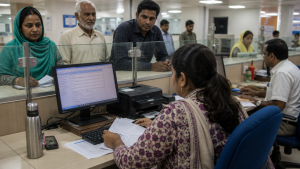
Information and communication technology has become central to governance by helping public authorities deliver services faster, store records securely, and reduce manual delays. In India, e-governance now covers digital identity, online service portals, public databases, and interoperable platforms that connect citizens with departments.
Evolution of E-Governance and Policy Frameworks
The National e-Governance Plan forms the core framework for electronic service delivery across central and state departments. It focuses on mission mode projects that cover high-impact services such as land records, passports, income tax, and commercial taxes.
- National e-Governance Plan (NeGP): Approved by the central government in May 2006.
- Mission Mode Projects: Designed to deliver priority services through time-bound digital systems.
- State Data Centers: Provide secure hosting for government applications and databases.
- State Wide Area Networks: Enable secure transmission of data across administrative levels.
- National e-Governance Division: Acts as the central program management unit for digital transformation initiatives.
Legal Recognition and Electronic Records
The Information Technology Act, enacted in 2000, gives statutory recognition to electronic records, digital signatures, and electronic commerce transactions. This legal framework allows government departments to accept digital filings and records without requiring paper copies.
- Digital signatures: Validated through licensed Certifying Authorities to ensure authenticity and integrity.
- Electronic records: Recognised for official and legal use under the IT Act.
- Electronic data interchange: Supports the exchange of statutory and legal documents in digital form.
Core Digital Public Infrastructure and Citizen Databases
Digital governance in India relies on shared public infrastructure and secure databases that support identification, authentication, and document verification. These systems reduce duplication, improve service delivery, and strengthen welfare targeting.
- Aadhaar: A 12-digit unique identity number issued on the basis of biometric and demographic data.
- Unique Identification Authority of India (UIDAI): Manages the Aadhaar system under the Aadhaar Act, 2016.
- Central Identity Data Repository: Stores encrypted biometric records under statutory access controls.
- Authentication: Uses fingerprint and iris verification to reduce fraudulent identity claims.
- Direct Benefit Transfer: Uses Aadhaar-linked systems to route subsidies directly to verified bank accounts.
- DigiLocker: A cloud-based platform for storing, issuing, and verifying official certificates electronically.
- Issuing authorities: Includes educational boards, transport departments, and civil registries.
- Specialised databases: Such as the National Database of Criminal Offences, used for police verification and judicial record management.
Citizen Service Delivery Mechanisms
E-governance aims to make services accessible even where people do not have personal digital devices or stable internet access. For this reason, the system combines online portals with physical access points and mobile-based services.
- Common Service Centers (CSCs): Physical access points in rural and remote areas for digital services.
- Mobile governance: Brings bill payments, grievance registration, and certificate requests to smartphones.
- Unified service portals: Integrate departmental websites into single-window interfaces for easier access.
- Administrative clearances: Can be processed through online systems that reduce time and paperwork.
Open Data, Procurement, and Accountability
Digital governance is also used to improve transparency and public accountability. Open datasets, online procurement, and complaint-tracking systems make government functioning more visible and easier to monitor.
- Open Government Data Platform India: Publishes non-sensitive datasets from ministries in machine-readable formats.
- Government e-Marketplace: A transparent online procurement portal for government purchases from verified vendors.
- Online grievance redressal: Tracks complaints from submission to resolution.
| Digital Platform | Primary Function | Governing Ministry or Agency |
| Aadhaar | Biometric and demographic identity verification | Unique Identification Authority of India |
| DigiLocker | Cloud-based authentic document storage and sharing | Ministry of Electronics and Information Technology |
| Government e-Marketplace | Transparent public procurement of goods and services | Ministry of Commerce and Industry |
| Common Service Centers | Rural access points for digital citizen services | Ministry of Electronics and Information Technology |
Key Prelims Takeaways
- NeGP: Approved in May 2006 as the basic framework for e-governance deployment.
- IT Act, 2000: Provides legal recognition to electronic records and digital signatures.
- Aadhaar: A 12-digit unique identity number linked to biometric and demographic data.
- UIDAI: Established under the Aadhaar Act, 2016.
- DigiLocker: Used for storing and verifying official documents in digital form.
- State Data Centers: Host key departmental servers and databases securely.
- CSC model: Helps bridge the digital divide by providing access in underserved areas.
| Related | |
|---|---|