Digital Identity Systems and Interoperability in India
India’s digital identity ecosystem combines secure identification, cloud-based document storage, electronic signatures, and interoperable public digital infrastructure. Together, these systems reduce paperwork, support paperless verification, and enable faster service delivery across government and private platforms.
Core Identification Infrastructure
- Aadhaar identity: Aadhaar is a twelve-digit unique identity number issued to residents by the Unique Identification Authority of India (UIDAI) on the basis of biometric and demographic data.
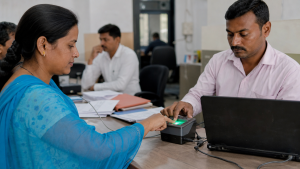
- Authentication system: It enables real-time online authentication through fingerprint and iris scans, allowing instant verification across nationwide networks.
- Statutory basis: UIDAI functions under the Aadhaar Act, 2016.
- Data security: The system stores demographic and biometric data in a centralized data vault protected by encryption protocols.
- Privacy protection: Aadhaar authentication allows verification without exposing raw biometric data to requesting agencies.
UIDAI was given statutory status on September 12, 2016.
Aadhaar Authentication, Virtual IDs and e-KYC
- Virtual ID: A Virtual ID is a temporary, revocable sixteen-digit random number mapped to a specific Aadhaar number to improve privacy during transactions.
- e-KYC: Aadhaar supports paperless identity verification for banking, telecommunications, and welfare entitlement onboarding.
- Biometric locking: Residents can temporarily restrict authentication operations to prevent unauthorized access.
- Service utility: These features make Aadhaar useful not only for identity verification but also for secure digital onboarding.
DigiLocker and Electronic Records
- DigiLocker platform: DigiLocker is a cloud-based platform for issuing, storing, sharing, and verifying authentic digital documents and certificates.
- Paperless workflow: It reduces dependence on physical documents by linking with authentic issuers such as educational boards, transport departments, and revenue agencies.
- Resident storage: Each user gets dedicated cloud storage linked to a verified identity profile.
- Legal validity: Documents stored in the system have legal validity equivalent to original physical certificates under the Information Technology Act.
- Issuer integration: The platform works through direct integration with issuing authorities, which strengthens document authenticity.
eSign Framework
- Digital signing: eSign enables citizens to sign documents online using Aadhaar-based electronic Know-Your-Customer authentication.
- Legal backing: It is supported by the Information Technology Act and provides a secure method for binding digital agreements without physical tokens.
- Certifying Authorities: Licensed Certifying Authorities manage cryptographic key pairs and issue digital signature certificates on demand.
- E-governance use: The service integrates with online applications for form submissions, tax filings, and contract execution.
India Stack and Interoperability
- India Stack: India Stack is a unified set of open application programming interfaces and digital public goods that support identity, data, and payment interoperability.
- Presence layer: Aadhaar serves as the identity layer for instant digital verification across public and private applications.
- Paperless layer: DigiLocker and eSign together reduce the need for physical documentation.
- Cashless layer: Interoperable payment rails such as the Unified Payments Interface connect bank accounts and payment gateways.
- Open APIs: Authorized third-party applications can integrate with identity and data databases through open APIs.
- Interoperable governance: These protocols help state and central government portals communicate more smoothly with one another.
Data Sharing, Consent and Governance
- Consent architecture: Consent managers are specialised entities governed by regulatory frameworks to handle user authorization for data sharing.
- Data empowerment: The data empowerment and protection architecture allows individuals to securely transfer financial, health, or educational records between institutions.
- Interoperability value: Such systems reduce duplication of records and make service delivery more efficient.
- Foundational legal framework: The Information Technology Act, 2000 provides the legal recognition for electronic records and digital signatures in India.
| Digital System | Primary Function | Governing Authority |
| Aadhaar | Biometric and demographic identity verification | Unique Identification Authority of India |
| DigiLocker | Cloud-based authentic document storage and sharing | Ministry of Electronics and Information Technology |
| eSign | Aadhaar-based online electronic signature generation | Controller of Certifying Authorities |
| India Stack | Interoperable open API framework for identity and data | Ministry of Electronics and Information Technology |
Key Prelims Takeaways
- Aadhaar: Twelve-digit unique identity number based on biometric and demographic data.
- UIDAI: Statutory authority under the Aadhaar Act, 2016.
- Virtual ID: Temporary, revocable sixteen-digit random number linked to Aadhaar.
- DigiLocker: Cloud platform for issue, storage, sharing and verification of documents.
- eSign: Aadhaar-based electronic signature service legally backed by the Information Technology Act.
- India Stack: Open API-based digital public infrastructure for identity, data and payments.
- IT Act, 2000: Core legal recognition for electronic records and digital signatures in India.
Current General Studies comprises current-affairs-based, General Studies-rich study material on policies, laws, institutions, economy, science, environment, governance, international relations, and other varied but important topics for UPSC and State PSC Prelims examinations.
Fortnightly PDF compilations: Available here
Originally written on
June 6, 2026
and last modified on
September 6, 2026.
| Related | |
|---|---|