Framework around Disaster Management in India
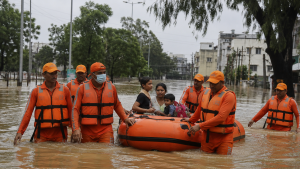
India’s disaster management framework is built on a multi-hazard, legally backed system that emphasizes preparedness, mitigation, response, and recovery. The shift from a relief-centric approach to a proactive model was shaped by major disasters that exposed gaps in coordination, planning, and resource mobilization.
Disaster Management Act, 2005
The Disaster Management Act, 2005 provides the legal and institutional foundation for disaster governance in India. It marked a clear shift from post-disaster relief to pre-disaster mitigation, capacity building, and risk reduction.
- Date of enactment: December 23, 2005.
- Three-tier framework: Establishes coordination at the national, state, and district levels.
- Planning mandate: Requires disaster management plans at all levels of government.
- Integration with development: Ministries and departments must factor risk reduction into developmental projects.
- Special powers: Authorities can issue binding directions, requisition resources, and penalize willful obstruction or false reporting during emergencies.
- Dedicated mechanisms: Provides for specialized response forces and financial arrangements for relief and rehabilitation.
National Disaster Management Authority (NDMA)
The NDMA is the apex statutory body for disaster management in India and functions under the Ministry of Home Affairs. It is responsible for policy formulation, planning, and guidance at the national level.
- Chairperson: The Prime Minister serves as the ex-officio Chairperson.
- Composition: A Vice-Chairperson and up to nine other members appointed by the Chairperson.
- Main role: Lays down policies, plans, and guidelines for disaster management.
- Plan approval: Approves the National Disaster Management Plan and related sectoral and regional plans submitted by central ministries.
- Coordination: Coordinates disaster response and mitigation efforts across central and state agencies.
- Standards: Issues guidelines for minimum standards of relief, including ex-gratia assistance for loss of life and property.
- Capacity building: Promotes research, public awareness, and technical training.
State Disaster Management Authorities (SDMAs)
SDMAs are the principal policy-making and coordinating bodies at the state level. They translate the national framework into state-specific plans based on local vulnerabilities and priorities.
- Head: The Chief Minister of the state acts as Chairperson.
- Support body: A State Executive Committee, chaired by the Chief Secretary, assists in day-to-day coordination and execution.
- State plan: Prepares the State Disaster Management Plan in alignment with the national framework.
- Resource planning: Reviews preparedness and directs line departments to allocate resources for risk mitigation.
- Local integration: Links disaster management with state-level development and sectoral planning.
District Disaster Management Authorities (DDMAs)
DDMAs are the grassroots operational units of the disaster management system. They are responsible for local planning, coordination, and immediate response during emergencies.
- Head: The District Collector, District Magistrate, or Deputy Commissioner serves as Chairperson.
- Local participation: The elected head of the local authority often serves as co-chair.
- District plan: Prepares the District Disaster Management Plan, identifying local vulnerabilities such as flood-prone river basins, industrial clusters, or landslide zones.
- Response role: Coordinates rescue operations, relief camps, and local emergency services.
- Operational focus: Acts as the primary field-level body for mitigation, preparedness, and response.
Funds and Response Forces
The disaster management system is supported by dedicated funds and specialized response forces to ensure timely relief and operational readiness.
- National Disaster Response Fund (NDRF): Used to meet expenditure on emergency response, relief, and rehabilitation during severe calamities.
- State Disaster Response Fund (SDRF): Created in every state as the main fund for immediate relief expenditure.
- Funding pattern: SDRFs are funded jointly by the Centre and the states in prescribed ratios.
- National Disaster Response Force (NDRF): A specialized force formed under Section 44 of the Act.
- Training areas: Includes water rescue, collapse structure search and rescue, and response to chemical, biological, radiological, and nuclear emergencies.
- Administrative control: The NDRF operates under the administrative control of the NDMA.
Why the Framework Matters
India’s disaster governance system was shaped by the need for stronger coordination after major catastrophes such as the 1999 Odisha Super Cyclone and the 2004 Indian Ocean Tsunami. These events highlighted the limits of a relief-only approach and made institutional preparedness a central priority.
- Multi-hazard approach: Suitable for India’s diverse geo-climatic conditions.
- Decentralized structure: Ensures action at national, state, and district levels.
- Preparedness-driven model: Focuses on prevention, mitigation, and response planning.
- Legal backing: Gives authorities enforceable powers during emergencies.
- Institutional coordination: Brings together ministries, states, and districts under a common framework.
Key Prelims Takeaways
- Disaster Management Act, 2005: The core legal framework for disaster management in India.
- NDMA Chairperson: The Prime Minister is the ex-officio Chairperson.
- SDMA Chairperson: The Chief Minister heads the State Disaster Management Authority.
- DDMA Chairperson: The District Collector, District Magistrate, or Deputy Commissioner heads the district authority.
- NDRF: A specialized response force under Section 44 of the Act.
- SDRF: A state-level fund for immediate relief expenditure.
- Key shift: Indian disaster policy moved from post-disaster relief to mitigation and preparedness.
| Related | |
|---|---|