Page-9 of Indian Art, Culture and Heritage

Kartarpur Sahib
Kartarpur Sahib is a historic town in the Punjab province of Pakistan, located on the banks of the River Ravi in Narowal District. It holds immense religious significance...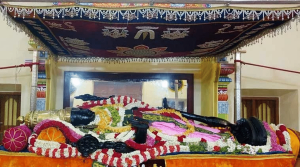
Athi Varadar
A special festival of Athi Varadar is being celebrated in the temple town of Kanchipuram. Kanchipuram is located 72 km from Chennai. The temple town has been gearing...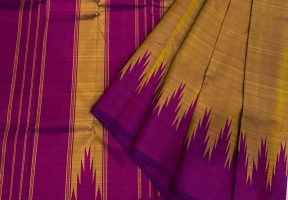
Arani Silk Saree
The Arani Silk Saree is a high-quality ladies saree which is produced on a handloom. It has a good market demand worldwide. Why is it in the news?...
Idol smuggling in India
Given India’s long history and it’s rich social culture, there is no wonder that several pieces of priceless art have been created in the past. However, while these...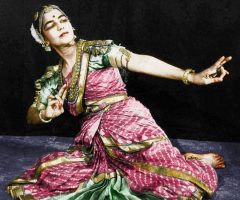
Rukmini Devi Arundale
Rukmini Devi Arundale (1904–1986) was an eminent Indian classical dancer, cultural reformer, and animal welfare activist, widely recognised for her pivotal role in reviving Bharatanatyam and for her...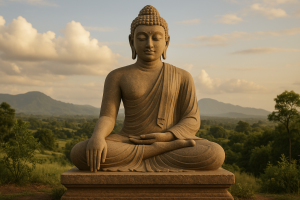
Bhumisparsha Mudra
The Bhumisparsha Mudra, meaning “Earth-Touching Gesture,” is one of the most iconic and profound hand gestures associated with the Buddha. Symbolising the moment of enlightenment, this mudra represents...2019 edition of International Yoga Day (IYD)
The fifth edition of International Yoga day (IYD-2019) is celebrated across the country and abroad on 21st June with theme ‘Yoga for Climate Action’. The aim of the...
Shagunotsav
The Central government will undertake a mammoth school census programme called Shagunotsav . About the Programme The programme will assess and grade about 12 lakh government and government-aided...2019 edition of International Museum Day (IMD)
The International Museum Day (IMD) is observed every year on May 18 to raise awareness about the importance of museums as means of cultural exchange, enrichment of cultures...The 2019 edition of International Jazz Day (IJD)
The International Jazz Day (IZD) is celebrated around the world on April 30 every year to raise awareness in the international community of the virtues of jazz as...2019 International Dance Day (IDD)
The International Dance Day (IDD) is observed every year on 29th of April to celebrate the birth anniversary of Jean-Georges Noverre (1727–1810), the creator of modern ballet. The...