Climate Scientist Krishna AchutaRao Dies at 62
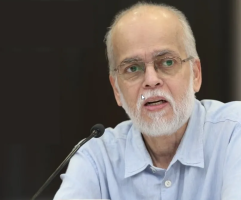
Krishna AchutaRao, an Indian climate scientist and professor at the Indian Institute of Technology Delhi, died at the age of 62 after a prolonged illness. He joined IIT Delhi in 2007 and worked there for nearly two decades in teaching, research, and academic administration.
Academic and Research Career
Krishna AchutaRao earned a Bachelor’s degree from Birla Institute of Technology and Science, Pilani, and a Ph.D. from Tulane University in New Orleans. He also worked at Lawrence Livermore National Laboratory in California before returning to India in 2007.
Institutional Roles at IIT Delhi
At IIT Delhi, he served as Dean of Faculty and Head of the Centre for Atmospheric Sciences. He also helped establish the Centre of Excellence for Climate Change Adaptation, which is associated with climate research and adaptation studies.
Work on Climate Science and IPCC
AchutaRao was a lead author for the Fifth Assessment Report and the Sixth Assessment Report of the Intergovernmental Panel on Climate Change Working Group I. The IPCC is the United Nations body for assessing climate change science, impacts, and response options.
Important Facts for Exams
- The Intergovernmental Panel on Climate Change was established in 1988 by the World Meteorological Organization and the United Nations Environment Programme.
- IPCC Working Group I deals with the physical science basis of climate change.
- The Centre for Atmospheric Sciences at IIT Delhi is a major academic unit for atmospheric and climate research in India.
- Climate models are used to study regional climate change, extreme weather attribution, and future climate scenarios.
International Scientific Engagement
He was a member of the World Climate Research Programme Joint Scientific Committee and the CLIVAR Scientific Steering Group. CLIVAR is a programme linked to climate variability, predictability, and the global water cycle.
Research Focus
His research used climate models to study regional climate change, assess risks, and attribute extreme weather events to human and natural causes. Such work is part of climate attribution science and numerical climate modelling.
| Related | |
|---|---|