Brazil Expands Biological Control in Agriculture
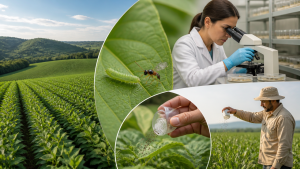
Brazil is expanding biological control technologies for tropical agriculture through the Advanced Research Center on Biological Control, known as SPARCBio, in Piracicaba. The centre works with the University of São Paulo’s Luiz de Queiroz School of Agriculture, the São Paulo Research Foundation, and Koppert on biological agents, new products, and knowledge for Integrated Pest Management.
Biological Control in Agriculture
Biological control is the use of living organisms such as predators, parasitoids, pathogens, and parasites to reduce pest populations. Integrated Pest Management combines biological, cultural, mechanical, and chemical methods to manage pests in a coordinated manner.
SPARCBio and Research Focus
SPARCBio is based in Piracicaba in the state of São Paulo. Researchers at the centre are studying drones, automation, and artificial intelligence for pest control and for the distribution of biological agents across large farm areas.
The centre plans to use drones to distribute biological agents such as Trichogramma galloi wasps over millions of hectares. Trichogramma species are parasitoid wasps used against insect eggs in several crop systems.
Brazilian Biocontrol Market
Brazil’s biological-control market generated BRL 1.82 billion in the first half of 2026. This was a 9.6% increase from the same period in 2025, and treated acreage reached 46.2 million hectares, which was an 18.3% year-on-year increase.
The agricultural biologicals market in Brazil was valued at USD 914.20 million in 2025. It is projected to reach USD 1,332.75 million by 2034, with a compound annual growth rate of 4.28% from 2026 to 2034.
Important Facts for Exams
- Brazil is a global leader in biocontrol usage, with 55% of farms using these methods.
- The United States has about 6% farm adoption of biocontrol methods.
- About 90% of Brazil’s sugarcane area already uses natural enemies for pest control.
- The emergence of Helicoverpa armigera in 2013 accelerated the use of biological agents in Brazil.
Regulatory Context
Industry leaders noted in September 2026 that the average approval period for biological products had increased to about 20 months. Brazil’s biocontrol expansion is linked to tropical agriculture, pest management, and the use of biological agents in large-scale farming systems.
| Related | |
|---|---|