Bangka Slow Loris Rediscovered After Nearly a Century
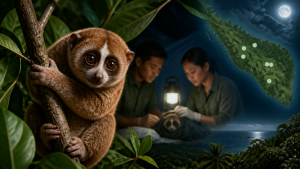
The Bangka slow loris (Nycticebus bancanus) is a nocturnal primate found on Bangka Island, Indonesia. It was last scientifically documented between 1930 and 1932. A study published in the journal Spixiana in 2026 confirmed that the species survives on the island.
Rediscovery and distribution
Between 2015 and 2025, the Indonesian conservation organisation Alobi Wildlife Rescue Center documented more than 90 Bangka slow lorises from different localities on Bangka. The animals had been encountered in places including houses, gardens, plantations and roads. The records came from several parts of the island, rather than a single known locality.
Timon Glaw, a graduate student in nature conservation and biodiversity management at Haus des Meeres Aqua Terra Zoo in Vienna, Austria, was among the authors of the study. The historical scientific records discussed in the study date to 1930–1932.
Conservation status and rescue
In 2020, the International Union for Conservation of Nature (IUCN) classified the Bangka slow loris as critically endangered and possibly extinct. After recovery, 86 of the more than 90 animals documented by the rescue centre were released into suitable natural habitats. Some rescued individuals had injuries, including injuries caused by electrical wires.
Habitat loss on Bangka is associated with tin mining and land clearing for oil palm plantations. Systematic field surveys are needed to establish the species’ distribution and population size.
Biological characteristics
The Bangka slow loris is a small, tree-dwelling primate with reddish-brown fur, large eyes and distinctive facial markings. It moves slowly through trees and is active at night. Slow lorises are unusual among mammals because they produce venom: specialised glands near the elbows release a secretion that the animal mixes with saliva before biting.
A slow loris has a toothcomb, formed by forward-projecting lower teeth. It is used in grooming and can help deliver venom during a bite. A specialised second tongue beneath the main tongue helps clean the toothcomb.
Important Facts for Exams
- Nycticebus bancanus is the scientific name of the Bangka slow loris.
- Bangka Island is part of Indonesia and lies off the southeastern coast of Sumatra.
- The Bangka slow loris was last scientifically documented in the early 1930s before its confirmed rediscovery.
- Slow lorises produce venom using a secretion from specialised glands near their elbows.
Habitat and research
Tin mining and the expansion of oil palm plantations have reduced natural forest habitat on Bangka. The study confirming the species’ continued existence was published in Spixiana in 2026.
| Related | |
|---|---|