Types of Policy Rates in India
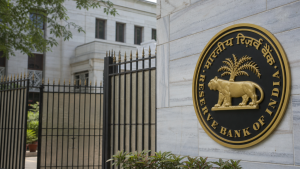
The RBI uses policy rates and reserve requirements to influence liquidity, borrowing costs and inflation. These instruments shape banks’ lending and deposit rates and form part of the monetary policy framework, whose primary objective is price stability while keeping growth in view.
Monetary Policy Framework
India follows a flexible inflation-targeting framework, formally adopted through an agreement between the Government of India and the RBI. The central government sets the Consumer Price Index (CPI)-based inflation target every five years in consultation with the RBI.
- Target: Retail inflation is targeted at 4%, with a tolerance band of 2% to 6%.
- Failure condition: Inflation outside the tolerance band for three consecutive quarters constitutes a failure of the framework. The RBI must then explain the reasons and propose remedial actions.
- Policy objective: The RBI uses interest rates and liquidity operations to maintain price stability while considering the objective of growth.
Monetary Policy Committee
The statutory Monetary Policy Committee (MPC) fixes the policy repo rate. Its decisions are central to the framework because changes in the repo rate influence the cost of funds across the banking system.
- Legal basis: The MPC was constituted under Section 45ZB of the Reserve Bank of India Act, 1934, as amended by the Finance Act, 2016.
- Composition: It has six members: three RBI officials and three external members nominated by the Government of India.
- Chairperson and voting: The RBI Governor is the ex-officio chairperson. The Governor has a casting vote if votes are tied.
Key Policy Rates
The RBI’s policy rates influence the price and availability of short-term funds. Their functions differ according to whether they inject liquidity into banks or absorb surplus funds from them.
- Repo rate: The rate at which the RBI lends short-term funds to commercial banks against government securities. It is a key instrument for liquidity management and inflation control.
- Reverse repo rate: The rate at which the RBI borrows funds from banks, generally against securities. It can absorb surplus liquidity: a higher rate makes parking funds with the RBI more attractive to banks.
- Marginal Standing Facility (MSF) rate: Introduced in 2011–12, the MSF allows scheduled commercial banks to borrow overnight from the RBI in emergencies. Banks may access it after exhausting eligible securities under the Liquidity Adjustment Facility (LAF), by dipping into their Statutory Liquidity Ratio (SLR) portfolio. It is typically 25 basis points above the repo rate and forms the corridor’s upper limit.
- Bank Rate: Defined under Section 49 of the RBI Act, 1934, as the standard rate at which the RBI is prepared to buy or rediscount bills of exchange or other commercial papers. The bill-discounting function became dormant after the LAF was introduced. The Bank Rate is now aligned with the MSF rate and is primarily used to calculate penalties for defaults in maintaining CRR and SLR.
- Standing Deposit Facility (SDF) rate: Introduced in April 2022, the SDF enables eligible banks to place surplus funds with the RBI overnight without collateral. It replaced the fixed-rate reverse repo as the main liquidity-absorption floor and is positioned 25 basis points below the repo rate.
Reserve Ratios and Liquidity Corridor
Reserve ratios require banks to hold a prescribed share of their Net Demand and Time Liabilities (NDTL) as reserves or liquid assets. Unlike policy rates, they operate through mandatory balance-sheet requirements.
- Cash Reserve Ratio (CRR): The share of NDTL banks must maintain as cash reserves with the RBI. Banks do not earn interest on CRR balances. The RBI can use changes in CRR to influence liquidity and money supply.
- Statutory Liquidity Ratio (SLR): The share of NDTL banks must maintain in liquid assets such as cash, gold or approved government securities. These assets are held by the banks, which earn interest on them. Section 24 of the Banking Regulation Act, 1949, provides for SLR; its statutory ceiling is 40%.
- LAF: The RBI’s liquidity operations include overnight and term repo/reverse repo transactions, as well as the SDF and MSF.
- Corridor: The MSF rate is the ceiling, the repo rate is the midpoint, and the SDF rate is the floor. With the two rates typically 25 basis points on either side of the repo rate, the corridor is generally 50 basis points wide.
Monetary Transmission
A policy-rate change affects the economy through interest-rate channels. A repo-rate increase raises the cost of short-term funds for banks and can feed through to lending and deposit rates; a reduction can ease funding costs. The speed and extent of this transmission depend on how banks adjust their rates and credit supply. Tighter credit conditions can moderate borrowing, spending and inflationary pressures, while easier conditions can support credit demand and economic activity. Reserve ratios also affect banks’ lendable resources: higher CRR or SLR requirements can constrain funds available for lending. These channels help the RBI balance price stability with growth.
Key Prelims Takeaways
- Repo: RBI lends short-term funds to banks against government securities.
- Reverse repo and SDF: Both absorb liquidity; the SDF is collateral-free and forms the corridor floor.
- MSF and Bank Rate: MSF is the overnight emergency borrowing rate and corridor ceiling; the Bank Rate is aligned with it.
- CRR and SLR: CRR is held with the RBI without interest; SLR assets are held by banks and earn interest.
- MPC: Six members fix the repo rate; the RBI Governor chairs the committee.
- Inflation target: CPI inflation target is 4%, with a 2%–6% tolerance band. One basis point is 0.01 percentage points; 25 basis points equal 0.25 percentage points.
Recent Context
On October 7, 2026, the RBI raised the repo rate by 25 basis points to 5.50%, its first hike since February 2023, and shifted its stance from neutral to calibrated tightening. The MPC cited persistent inflation pressures, geopolitical risks, elevated crude oil prices and a weaker rupee.
| Related | |
|---|---|