Adolphe Quetelet
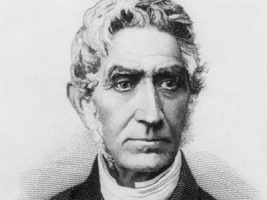
Lambert Adolphe Jacques Quetelet (1796–1874) was a Belgian astronomer, mathematician, statistician and sociologist whose work laid the foundations of modern statistical social science. As founder and first director of the Royal Observatory of Belgium, he played a major role in the institutional development of science in the nineteenth century. His pioneering application of statistical methods to human characteristics led to the creation of anthropometry and the formulation of the body mass index (BMI), originally known as the Quetelet Index. Central to his thought was the concept of l’homme moyen—the “average man”—which influenced fields ranging from criminology to public health and, controversially, early theories of eugenics.
Early Life and Education
Quetelet was born in Ghent on 22 February 1796, at the time part of the First French Republic. He was the fifth of nine children of François-Augustin-Jacques-Henri Quetelet, originally from Picardy in France, and Anne Françoise Vandervelde, a Flemish woman. His father, after time spent in Britain and Italy in the service of a Scottish nobleman, settled in Ghent, where several of his children died young and where Quetelet himself grew up. His father’s death when Adolphe was only seven placed early responsibilities on the family.
Gifted in mathematics, Quetelet studied at the Ghent Lycée and began teaching the subject at the age of nineteen. In 1819 he earned a doctorate in mathematics from the University of Ghent with a thesis on geometrical loci and focal curves. That same year he moved to Brussels, where he taught at the Athenaeum and worked to secure support for the establishment of an astronomical observatory—an endeavour that succeeded in 1828.
Professional Career and Scientific Roles
Quetelet became a member of the Royal Academy of Belgium in 1820 and lectured widely, including at the Belgian Military School. He forged strong connections with scientific institutions across Europe: he became a correspondent of the Royal Institute of the Netherlands in 1825, a full member in 1827, and later a foreign member of its successor, the Royal Netherlands Academy of Arts and Sciences. Between 1839 and 1850 he gained honorary membership of other learned bodies, including the American Philosophical Society and the Royal Swedish Academy of Sciences.
His career included leading roles in international cooperation. He helped establish statistical societies and journals, advocated for a statistical section within the British Association for the Advancement of Science and became its first overseas member. He chaired both the first International Statistical Congress and the International Meteorological Organization in 1853. Despite a stroke in 1855, he continued to write and work until his death in Brussels on 17 February 1874. He married Cécile-Virginie Curtet in 1825 and is buried in Brussels Cemetery.
Scientific Work and Intellectual Contributions
Quetelet’s research extended across meteorology, astronomy, mathematics, statistics, demography, sociology, criminology and the history of science. He also wrote extensively for a general audience and shaped emerging ideas about the systematic study of society.
His methodological innovation lay in applying probability theory—initially used to correct observational error in astronomy—to human populations. By analysing aggregated data, he argued that social phenomena such as marriage rates, crime rates and suicide rates exhibited statistical regularities analogous to physical laws. He termed this approach physique sociale, or social physics, and outlined it in his influential 1835 treatise Sur l’homme et le développement de ses facultés ou Essai de physique sociale.
Central to his vision was the concept of l’homme moyen, the average man, defined by the mean values of human traits distributed around a normal curve. He considered the average to embody an ideal form, with deviations representing imperfections. Although pioneering in its application of statistical reasoning, this idea later influenced thinkers such as Francis Galton in ways that contributed to the development of eugenic thought—an association that marks one of the more problematic legacies of Quetelet’s work.
Quetelet’s reach extended to many fields. His student Pierre François Verhulst developed the logistic function as a model of population growth. His appropriation of the term “social physics” led Auguste Comte to coin the term “sociology” in order to distinguish his own theoretical ambitions. Florence Nightingale, who met Quetelet in 1860, was strongly influenced by his statistical philosophy, which she interpreted in the service of public health and effective administration.
Criminology
Quetelet exerted a profound influence on early criminology. Alongside André-Michel Guerry, he helped found the positivist and crime-mapping traditions through the application of aggregated statistics. His investigations revealed strong correlations between crime and factors such as age and gender, while also considering climate, poverty and education. His work Of the Development of the Propensity to Crime became a key text for statisticians and early criminological theorists.
Anthropometry and the Body Mass Index
Quetelet was a pioneer of anthropometry—the statistical measurement of human physical characteristics. In exploring human variability, he noted that many biological traits approximated a normal distribution. His proposal for a simple index comparing weight to height—the Quetelet Index, later known as the body mass index (BMI)—became one of his most enduring legacies. Though not designed for individual clinical assessment, the BMI remains widely used in public health statistics and consumer product design.
Awards and Honours
Quetelet was elected a Fellow of the Royal Society in 1839. Other honours include the naming of asteroid 1239 Queteleta and the establishment of the Quetelet Professorship at Columbia University. His influence persists in modern statistical practice, anthropometry and the quantitative study of society.
Selected Publications
- Recherches statistiques sur le royaume des Pays-Bas (1829)
- The Propensity to Crime (1831)
- Astronomie élémentaire (1834)
- Sur l’homme et le développement de ses facultés ou Essai de physique sociale (1835)
- De l’influence des saisons sur la mortalité (1838)
- Catalogue des principales apparitions d’étoiles filantes (1839)
- Sur le climat de la Belgique (1845–1851)
- Du système social et des lois qui le régissent (1848)
- Histoire des sciences mathématiques et physiques chez les Belges (1864)