Teghaza 001 Reveals Ancient Water History of Mars
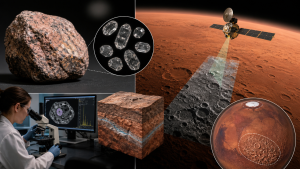
A study published in Science on 29 October 2026 examines Teghaza 001, a Martian meteorite discovered in Mali’s Sahara Desert in 2022. The rose-coloured rock weighs about 800 grams and is more than 4.1 billion years old, placing it among the three most ancient Martian meteorites found on Earth.
Composition and water history
NASA-funded researchers found that Martian water altered the rock around 4.1 billion years ago, offering evidence of a dynamic water cycle on early Mars. Its single-rock-type composition and zircon crystals provide clues to the planet’s early crust. Its mineral composition resembles material in Mars’s cratered southern highlands observed by the Mars Reconnaissance Orbiter.
Researchers at the University of New Mexico initially identified the meteorite as Martian. Study lead author Yang Liu is a researcher at NASA Jet Propulsion Laboratory; Alicia Cruz-Uribe of the University of Maine also contributed to the analysis. One reviewer called the meteorite a “Rosetta Stone for Mars”.
Important Facts for Exams
- Ejection pathway: Martian meteorites reach Earth after an impact ejects rock from Mars; fragments then cross interplanetary space before landing.
- Rock groups: Martian meteorites are grouped as shergottites, nakhlites and chassignites—the SNC groups—while some specimens remain ungrouped.
- Water evidence: Some basaltic shergottites contain hydrated carbonates and sulfates, indicating exposure to liquid water on Mars before ejection into space.
| Related | |
|---|---|