Schemes Promoting Women’s Sports in India
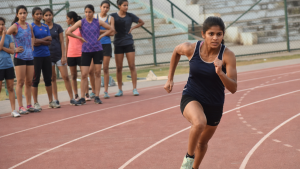
Women’s participation in sports is increasingly viewed as a key driver of health, empowerment and equal opportunity. In India, the Centre supports this space through targeted schemes, talent pathways and training institutions, while states retain primary responsibility for sports under the Constitution.
Constitutional and Institutional Framework
Sports is a State subject under Entry 33 of the State List (List II) in the Seventh Schedule of the Constitution of India. Even so, the Union Government supplements state efforts through the Ministry of Youth Affairs and Sports (MYAS) and the Sports Authority of India (SAI).
- Central role: Supporting talent identification, elite training, scholarships and infrastructure.
- Focus areas: Equal access to training, safety in sports environments and representation of women in decision-making bodies.
- Implementing bodies: MYAS, SAI, Mission Olympic Cell and National Sports Federations (NSFs).
Statutory Provisions and Governance Reforms
Recent governance rules have strengthened women’s representation and safety in sports administration and training systems.
- National Sports Governance Act, 2025: Replaced executive guidelines with statutory mandates for recognised NSFs.
- Women in NSF committees: Every recognised NSF must reserve seats for women in its internal executive committee structure.
- Sportspersons of Outstanding Merit (SOM) parity: 50% of active or retired elite sportspersons in general bodies and decision-making committees of NSFs must be female athletes.
- Safe Sports Policy Framework: Requires recognised sports bodies to maintain operating codes against gender discrimination, contractual exploitation and sexual harassment.
- POSH Act, 2013: The safe sports framework works in tandem with the Prevention of Sexual Harassment law.
Core Schemes for Female Athletes
The Union Government has created multiple support layers for female sportspersons, from grassroots leagues to Olympic preparation.
- Khelo India – Sports for Women vertical: A dedicated sub-component to reduce gender gaps in access to competitive infrastructure.
- ASMITA initiative: Expanded from the Khelo India Women’s League as Achieving Sports Milestone by Inspiring Women Through Action; it conducts structured leagues across multiple disciplines.
- ASMITA objective: Provides match exposure and talent identification opportunities for young female competitors.
- Khelo India scholarship: Selected female athletes under the Long-Term Athlete Development (LTAD) pathway receive annual support of ₹6,28,400, including an Out-of-Pocket Allowance (OPA) of ₹1,20,000 per annum.
- Target Olympic Podium Scheme (TOPS): Supports elite and developmental female athletes preparing for the Olympic and Paralympic Games.
- TOPS assistance: Includes foreign coaching, sports science support, equipment and monthly OPA of ₹50,000 for Core Group athletes and ₹25,000 for Development Group athletes.
SAI Training and High-Performance Network
SAI provides specialised training hubs for grooming female talent through residential coaching, scientific support and structured progression.
- National Centres of Excellence (NCoE): High-performance residential training hubs with sports science support, nutrition management and world-class equipment.
- Women-only NCoE: SAI has established an exclusive NCoE for women in Dharamshala, Himachal Pradesh.
- Sports Training Centres (STCs): Regional centres that groom young female talent in the age group of 12 to 18 years.
- Women-only STCs: Operate at Badal (Punjab) and Solalgaon.
- Specialised expansion centres: Also functional at Varanasi (Uttar Pradesh).
- Training support: Residential coaching, dietary support and sports science inputs are key features of these centres.
Other Funding and Support Channels
- National Sports Development Fund (NSDF): Provides project-based financial support for high-performance female athletes and customised foreign exposure.
- Institutional support: The combined framework links grassroots discovery, scholarships, elite training and international exposure.
- Development pathway: Female athletes can progress from STCs and leagues to NCoEs and then to TOPS support.
- Administrative emphasis: Greater female participation is also being promoted through representation in sports bodies and safe training environments.
Important Facts for Prelims
- Karnam Malleswari: First Indian woman to win an Olympic medal, with a weightlifting bronze at the Sydney 2000 Olympic Games.
- P.T. Usha: First female athlete to serve as President of the Indian Olympic Association (IOA).
- Entry 33: Sports is listed under the State List (List II) in the Seventh Schedule.
- ASMITA: Stands for Achieving Sports Milestone by Inspiring Women Through Action.
- Khelo India Women’s vertical: The scheme includes a specific “Sports for Women” component.
- POSH compliance: Recognised sports bodies must maintain safeguards against sexual harassment and discrimination.
Key Prelims Takeaways
- Sports is a State subject: Covered under Entry 33 of the State List in the Seventh Schedule.
- Centre’s role: MYAS and SAI supplement state sports initiatives through schemes and institutions.
- Women’s representation: The National Sports Governance Act, 2025 mandates women’s seats in NSF executive structures.
- SOM parity: Half of elite sportspersons in NSF decision-making bodies must be female athletes.
- ASMITA: A league-based platform for young women in multiple sports disciplines.
- TOPS: Provides customised support for Olympic and Paralympic contenders.
- SAI network: Women-focused NCoE and STCs help build the talent pipeline.
| Related | |
|---|---|