Reflect Orbital Books Two Skyroot Vikram Rocket Launches
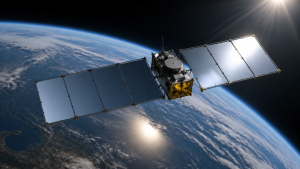
California-based Reflect Orbital signed a contract with Hyderabad-based Skyroot Aerospace on 14 October 2026 for two dedicated rocket launches. The US start-up plans to deploy spacecraft carrying orbital mirrors to reflect sunlight towards selected locations on Earth at night.
Launch contract and Vikram vehicles
The first mission under the contract is planned for Skyroot’s Vikram-1 rocket, while the second is planned for the in-development Vikram-1U launch vehicle. Vikram-1U has additional first-stage boosters and improved performance. Vikram-1 completed its maiden orbital flight in July 2026. The contract’s launch dates and financial terms have not been disclosed.
Orbital mirrors and proposed services
Reflect Orbital plans a satellite constellation to direct sunlight on demand, with adjustable brightness over a swathe about five kilometres wide. The proposed services include illuminating disaster zones for search-and-rescue operations, extending electricity generation at solar farms, lighting remote industrial zones and supporting defence operations. The company has also described potential use at public events.
Regulation, environmental concerns and earlier experiments
In July 2026, the US Federal Communications Commission (FCC) approved construction, launch and operation of Reflect Orbital’s demonstration satellite, Eärendil-1. The FCC’s principal regulatory role concerns radio-frequency spectrum allocation; it stated that concerns about effects beyond that remit fall outside its authority. Environmental organisations and astronomers have raised concerns about night-time light pollution, interference with astronomical observations, impacts on wildlife and disruption of human circadian rhythms.
Important Facts for Exams
- Vikram-1 is a launch vehicle developed by Skyroot Aerospace.
- The FCC is a United States regulator responsible for communications, including radio-frequency spectrum.
- Russian scientists and engineers deployed a 65-foot reflective mirror in orbit in 1993 during the Znamya experiment.
- The Znamya experiment directed a moving beam of reflected sunlight towards Earth and was later discontinued for lack of funds.
Reflect Orbital’s proposed system uses reflected sunlight rather than generating light at the target location. The contract covers two launches using Vikram launch vehicles developed by Skyroot Aerospace.
| Related | |
|---|---|