Public Health Surveillance and Outbreak Response in India
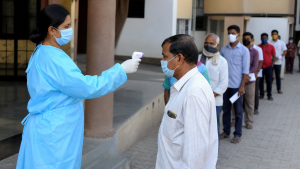
Public health surveillance in India is designed to detect disease patterns early, confirm outbreaks quickly, and support timely control measures. It works through national nodal agencies, state and district units, laboratory networks, and digital reporting systems.
Institutional Framework
The Ministry of Health and Family Welfare oversees surveillance through a mix of technical institutions and field-level reporting units. The system is meant to identify unusual disease trends, issue alerts, and coordinate response across states and union territories.
- National Centre for Disease Control (NCDC): The apex technical organization under the Directorate General of Health Services.
- Core functions: National surveillance, diagnostic support for viral and bacterial pathogens, and outbreak investigation.
- Technical divisions: Epidemiology, microbiology, zoonotic diseases, entomology, and vector-borne diseases.
- Laboratory coordination: Supports coordination of the Indian Council of Medical Research network of laboratories during public health emergencies.
- Decentralized structure: District Surveillance Units and State Surveillance Units analyze local data to detect unusual clusters of illness.
Integrated Disease Surveillance Programme and Reporting Forms
The Integrated Disease Surveillance Programme (IDSP) was launched in November 2004 with World Bank assistance. It created a decentralized state-based system to collect weekly data on epidemic-prone diseases and trigger early action when unusual disease patterns are detected.
- Form S: Syndromic reporting by paramedical staff.
- Form P: Presumptive reporting by medical officers based on clinical diagnosis.
- Form L: Laboratory-confirmed reporting by laboratory technicians.
- Purpose: Early outbreak detection, trend monitoring, and response coordination.
- Weekly surveillance: The system relies on standardized weekly reporting formats.
- District-level role: Local analysis helps identify clusters and unusual increases in disease cases.
Digital Surveillance Platforms and Portals
India has expanded surveillance through web-enabled and disease-specific digital platforms. These systems improve speed, reporting accuracy, and real-time monitoring of outbreaks, treatment, and immunization.
- Integrated Health Information Platform (IHIP): Rolled out in April 2021 as a near-real-time electronic surveillance platform replacing paper-based reporting.
- Coverage under IHIP: Tracks more than 33 epidemic-prone diseases, compared to 18 diseases under the earlier IDSP network.
- GIS mapping: Used to track disease clusters and localized geospatial outbreaks.
- Ni-kshay: The digital portal for tuberculosis case notification, treatment adherence tracking, and direct benefit transfers.
- U-WIN: Used for digital registration of pregnant women and children for routine vaccination tracking.
- INSACOG: Supports genomic surveillance through whole genome sequencing of circulating respiratory viruses and variants.
Disease-Specific Surveillance Systems
Alongside general surveillance, India runs targeted programmes for high-priority diseases and zoonotic threats. These systems combine case detection, diagnostics, vector control, and cross-sector coordination.
- National Vector Borne Disease Control Programme (NVBDCP): Coordinates surveillance and containment of malaria, dengue, chikungunya, kala-azar, Japanese encephalitis, and lymphatic filariasis.
- Field action: Accredited social health activists help with rapid diagnostic test kit administration and fever case reporting in rural areas.
- Vector control: Indoor residual spraying and long-lasting insecticidal nets are key interventions.
- National Tuberculosis Elimination Programme (NTEP): Uses Ni-kshay for case notification and treatment adherence monitoring.
- TB notification: Mandatory for all private and public healthcare providers.
- Diagnostic support: TrueNat and CBNAAT enable decentralized testing and drug-resistance surveillance.
- National One Health Programme for Prevention and Control of Zoonoses: Coordinates surveillance across human, animal, and environmental sectors.
- Priority zoonoses: Rabies, Kyasanur Forest Disease, scrub typhus, Nipah virus, brucellosis, and anthrax.
- National Institute of One Health: Located in Nagpur and serves as the apex research and coordination body.
Statutory Powers and Outbreak Response
Legal powers and emergency structures support containment during outbreaks. These provisions allow authorities to regulate movement, inspect suspected cases, and coordinate response measures in affected areas.
- Epidemic Diseases Act, 1897: Gives special powers to state governments and local authorities to contain dangerous epidemic diseases.
- Section 2: Allows temporary regulations, inspection of travelers, and isolation of suspected patients.
- Section 2A: Empowers the Central Government to inspect ships and vessels, detain carriers, and regulate cross-border transport during outbreak threats.
- Epidemic Diseases (Amendment) Act, 2020: Added explicit protections for healthcare personnel against violence during epidemic duties.
- Public Health Emergency Operations Centres: Function as command and control hubs during active outbreaks.
- Rapid Response Teams: Include epidemiologists, microbiologists, and clinicians, and can deploy to affected districts within 24 hours of cluster alerts.
Important Exam Facts
- NCDC origin: Traces back to the Central Malaria Bureau established at Kasauli, Himachal Pradesh, in 1909.
- Institutional evolution: Central Malaria Bureau became the Malaria Institute of India in 1938, was renamed the National Institute of Communicable Diseases in 1963, and became NCDC in 2009.
- Epidemic Diseases Act, 1897: Enacted during the bubonic plague outbreak in Bombay.
- INSACOG: Established in December 2020 to monitor viral genomic variations across India.
- Kyasanur Forest Disease: Also known as Monkey Fever; a tick-borne viral hemorrhagic fever first identified in Shivamogga district, Karnataka, in 1957.
- TrueNat: An indigenous, portable micro-PCR platform developed for point-of-care diagnosis of tuberculosis and other infectious diseases.
Key Prelims Takeaways
- IDSP: Launched in November 2004 with World Bank assistance as a decentralized surveillance system.
- Three reporting forms: Form S, Form P, and Form L are the backbone of IDSP reporting.
- IHIP: A near-real-time electronic platform tracking more than 33 epidemic-prone diseases.
- Form S: Covers syndromic case definitions such as fever with rash, fever with jaundice, and acute diarrhea.
- Form P: Records presumptive clinical diagnoses made by qualified doctors without mandatory lab confirmation.
- Form L: Captures laboratory-confirmed pathogen reports from designated diagnostic labs.
- One Health approach: Used for zoonotic surveillance across human, animal, and environmental sectors.
| Related | |
|---|---|