Project Bhavini
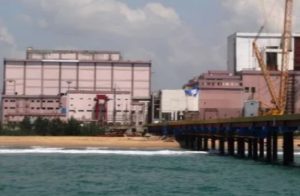
Project Bhavini refers to the development and management initiative of the Bharatiya Nabhikiya Vidyut Nigam Limited (BHAVINI), a public sector enterprise established by the Government of India under the Department of Atomic Energy (DAE). The project represents India’s advanced step in nuclear power generation, focusing on the construction and operation of fast breeder reactors (FBRs) to strengthen the nation’s long-term energy security. Headquartered at Kalpakkam, Tamil Nadu, Project Bhavini symbolises India’s transition from conventional uranium-based nuclear technology to a self-sustaining thorium-based fuel cycle.
Establishment and Objectives
BHAVINI was incorporated on 22 October 2003 as a Government of India enterprise under the Companies Act, 1956, with the primary objective of building and operating fast breeder reactors as part of India’s three-stage nuclear power programme formulated by Dr Homi Jehangir Bhabha.
The main objectives of Project Bhavini include:
- Designing, constructing, and commissioning Fast Breeder Reactors (FBRs) for commercial power generation.
- Demonstrating the viability of India’s closed nuclear fuel cycle, enabling efficient use of fissile materials.
- Advancing towards utilisation of thorium-based fuel, for which India has abundant reserves.
- Supporting research, development, and industrial collaboration in advanced nuclear technology.
The flagship initiative under this project is the Prototype Fast Breeder Reactor (PFBR) at Kalpakkam.
The Prototype Fast Breeder Reactor (PFBR)
The PFBR, located at Kalpakkam, about 80 kilometres south of Chennai, is India’s first 500 MWe (megawatt electric) sodium-cooled fast breeder reactor. Its construction was initiated in 2004 and is managed by BHAVINI under the supervision of the Indira Gandhi Centre for Atomic Research (IGCAR).
The PFBR represents the second stage of India’s nuclear power programme, following the use of Pressurised Heavy Water Reactors (PHWRs) in the first stage. While PHWRs use natural uranium as fuel, the PFBR is designed to utilise plutonium-uranium mixed oxide (MOX) fuel, produced from reprocessed spent fuel of the first stage.
Key technical features of the PFBR include:
- Fuel type: Mixed oxide (MOX) of plutonium and uranium.
- Coolant: Liquid sodium, which acts as an efficient heat transfer medium due to its high thermal conductivity.
- Power output: 500 megawatts (MWe).
- Reactor type: Pool-type, sodium-cooled, fast breeder reactor.
- Breeding ratio: Greater than 1, meaning it produces more fissile material than it consumes.
The reactor is designed for a life span of approximately 40 years and incorporates multiple layers of safety and redundancy in accordance with international nuclear safety standards.
Principle of Fast Breeder Reactors
A fast breeder reactor (FBR) operates without a moderator and uses high-energy (fast) neutrons to sustain the chain reaction. Unlike conventional reactors, which consume fissile fuel, breeder reactors generate more fissile material than they use.
In India’s PFBR, the core contains plutonium-239 as the primary fuel and uranium-238 as a blanket material surrounding the core. Fast neutrons from the fission process convert uranium-238 into plutonium-239, a fissile isotope, thus “breeding” new fuel.
This process enables near-complete utilisation of uranium resources and serves as a bridge to the thorium fuel cycle, the third stage of India’s nuclear programme.
India’s Three-Stage Nuclear Power Programme
Project Bhavini plays a central role in the second stage of India’s three-stage nuclear strategy:
- Stage 1 – Pressurised Heavy Water Reactors (PHWRs): Utilise natural uranium as fuel and produce plutonium as a by-product.
- Stage 2 – Fast Breeder Reactors (FBRs): Use plutonium-based fuel from Stage 1 to generate more plutonium and uranium-233, paving the way for thorium utilisation.
- Stage 3 – Thorium-Based Reactors: Employ thorium-232 to breed uranium-233, enabling sustainable long-term nuclear energy production based on India’s abundant thorium reserves.
Project Bhavini thus functions as the technological link between the uranium-based first stage and the thorium-based future of Indian nuclear power.
Construction and Development Phases
The construction of the Prototype Fast Breeder Reactor began in 2004, with major components fabricated indigenously. The project has faced several technical challenges and delays due to the complexity of sodium-based cooling systems and stringent safety protocols.
Key milestones:
- 2004: Ground-breaking and foundation work commenced.
- 2006–2010: Installation of the reactor vessel and critical components.
- 2012: Integration of major systems and initial testing.
- 2015 onwards: Sequential commissioning, safety reviews, and sodium circuit trials.
The commissioning process involves rigorous testing of the sodium coolant system, reactor control mechanisms, and heat removal circuits before achieving criticality—the state where the reactor becomes self-sustaining in nuclear reactions.
Significance of Sodium as a Coolant
Liquid sodium is chosen as a coolant because of its excellent thermal conductivity, high boiling point, and ability to operate at low pressures. Unlike water, sodium does not slow down neutrons, allowing fast reactor conditions to prevail. However, sodium reacts vigorously with air and water, requiring sophisticated containment systems and strict operational safety.
Role of BHAVINI in India’s Nuclear Infrastructure
BHAVINI’s work extends beyond the PFBR project. It coordinates closely with IGCAR, Nuclear Power Corporation of India Limited (NPCIL), and other institutions for reactor technology, fuel reprocessing, and waste management.
Future plans under Project Bhavini include:
- Construction of Commercial Fast Breeder Reactors (CFBRs) to expand capacity beyond 500 MWe.
- Research on Advanced Fast Reactors (AFRs) with improved fuel efficiency and safety.
- Integration of the fast reactor fuel cycle with thorium utilisation systems.
BHAVINI’s expertise contributes significantly to India’s self-reliance in nuclear technology, reducing dependence on imported uranium.
Safety and Environmental Considerations
Given the complexity of sodium-cooled systems and fast reactor operation, BHAVINI adheres to strict safety protocols established by the Atomic Energy Regulatory Board (AERB). Safety measures include:
- Multiple independent and diverse shutdown systems.
- Passive decay heat removal systems.
- Containment structures resistant to sodium leakage and fire.
Environmental monitoring and radioactive waste management are integral to the project’s operation, ensuring minimal ecological impact.
Strategic and Economic Importance
Project Bhavini holds immense strategic value for India’s energy security and technological autonomy. India’s limited uranium resources and vast thorium deposits necessitate the development of breeder technology to sustain nuclear power generation over the long term.
Key advantages include:
- Enhanced fuel efficiency through recycling and reprocessing.
- Reduced nuclear waste generation due to fuel reuse.
- Indigenous technology development, promoting self-sufficiency.
- Clean energy contribution to India’s sustainable energy mix.
Economically, fast breeder reactors can significantly reduce the cost of nuclear power over time by maximising resource utilisation and decreasing fuel import dependence.
Future Prospects
Upon successful commissioning of the PFBR, BHAVINI plans to construct a series of commercial fast breeder reactors with higher capacities. These are expected to feed reprocessed fuel into the thorium cycle, completing India’s transition to the third stage of nuclear power development.
Research is also ongoing in the development of metallic fuel-based reactors and advanced safety designs to make breeder technology more efficient and globally competitive.