Annual plant
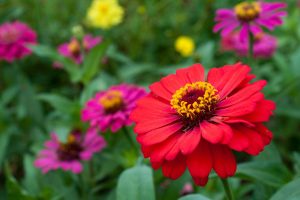
Annual plants are species that complete their entire life cycle—from seed germination through growth, flowering, seed production and senescence—within a single growing season. At the end of this cycle the individual plant dies, leaving behind seeds that form the next generation. Although annuals represent only a small portion of global plant biomass, they have profound ecological and agricultural significance and are among the most successful life-history strategies found in flowering plants.
Evolutionary Background and Life-History Patterns
Globally, annuals constitute around six per cent of all plant species and about fifteen per cent of herbaceous plants. The annual life cycle has evolved independently in over 120 plant families, making it a notable example of convergent evolution. Traditionally, botanists assumed that annuals generally arose from perennial ancestors. Recent phylogenetic studies, however, reveal that the evolutionary pathway is not unidirectional: some perennial species have likely evolved from annual lineages. Modelling suggests that transitions from annual to perennial life cycles occur at roughly twice the rate of the reverse transitions, underscoring the dynamic nature of plant life histories.
Life-history theory helps explain when and where annual strategies are favoured. Annuals tend to dominate in habitats where adult mortality is high relative to seedling mortality. Disturbance-prone environments—those characterised by fire, grazing, drought or fluctuating climatic conditions—create conditions in which young plants have multiple opportunities to establish, whereas long-lived adults face frequent threats. Hot, dry summer regions are especially associated with the evolution and persistence of annuality as adult plants are less likely to survive seasonal extremes, while seeds endure in the soil until favourable conditions return. Annual prevalence also increases with greater temporal variability from year to year, reinforcing the advantages of a seed-based survival strategy.
Human activity further enhances the success of annual plants worldwide. Agricultural expansion, domestic grazing and land conversion tend to favour short-lived opportunistic species, and annuals from Europe and Asia have successfully invaded many parts of the New World in the wake of such disturbances.
Ecological Roles and Successional Dynamics
In many natural systems, annuals dominate early successional stages following disturbances such as ploughing, fire or land abandonment. These pioneer species rapidly colonise open ground but often decline as longer-lived perennials establish. However, in some ecosystems—especially those with Mediterranean climates—annual dominance can persist indefinitely due to the presence of alternative stable states. In such systems, the community may stabilise either in an annual-dominated phase or shift to perennial dominance depending on initial conditions and disturbance history.
The prevalence of annuals has risen globally during the Anthropocene, primarily due to the conversion of perennial-dominated ecosystems into cropland. Today, annual plants cover around seventy per cent of cultivated land and account for roughly eighty per cent of global food consumption.
Traits and Functional Implications
Annual plants exhibit distinctive traits tied to their life-history strategy. They tend to grow quickly, allocate substantial resources to seed production and invest less in root systems than perennials. As a result, seeds are produced in greater quantity and often possess higher persistence in soil seed banks, increasing the likelihood of successful regeneration.
These features also influence ecosystem functions. Because annuals invest less in below-ground biomass, they contribute less to soil stabilisation, erosion prevention, carbon storage and water-use efficiency compared with perennial species. Perennials, with their long-lived roots and repeated yearly growth, enhance nutrient retention and offer greater soil protection. These differences become particularly important in agricultural landscapes where ecosystem services must be balanced with productivity demands.
Despite their lower biomass and ecosystem contributions, annuals play an outsized role in human food systems. Their emphasis on seed production makes them highly suitable for cultivation, and many of the world’s staple crops—including wheat, maize, rice and barley—are annuals. Their rapid life cycle allows multiple harvests in some climates and has shaped agricultural systems for millennia.
Molecular Genetics and Developmental Transitions
Research in molecular genetics has illuminated the mechanisms underlying annual and perennial life histories. In 2008, scientists demonstrated that the inactivation of two key genes—SOC1 and FUL—in Arabidopsis thaliana causes the annual plant to acquire perennial characteristics. These genes regulate flowering time and developmental transitions. When they are disabled, the plant exhibits traits such as delayed flowering and wood formation, both typical of perennial species. This discovery provided striking evidence that a small number of genetic changes can shift fundamental life-history strategies.
Broader Context and Implications
The evolutionary flexibility of annual plants, combined with their ability to persist in seed form, enables them to thrive under a wide variety of environmental conditions. Their global expansion reflects both natural selection and human influence. In ecological terms, they are powerful colonisers, capitalising on disturbance and variability. In agricultural terms, they are indispensable as primary food sources, shaping diets and economies around the world.
| Related | |
|---|---|