NITI Aayog Launches PACT for Zero-Emission Freight
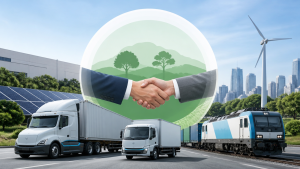
NITI Aayog launched the Platform for Aggregating Clean Transport (PACT) and the Zero Emission Truck (ZET) Marketplace on 7 September 2026 at the 5th e-FAST India Summit in New Delhi. The initiative is linked to zero-emission freight deployment, electric truck adoption, charging infrastructure planning, and business engagement among manufacturers, logistics service providers, charging operators, and financiers.
Platform for Aggregating Clean Transport
PACT is a digital platform for aggregating freight demand from shippers and logistics providers. It is designed to identify viable deployment corridors, improve freight visibility, and support planning for charging infrastructure for electric trucks.
Zero Emission Truck Marketplace
The ZET Marketplace is a digital business-engagement platform for the electric freight ecosystem. It connects e-truck manufacturers, logistics service providers, charging operators, and financiers in one marketplace structure.
Freight Transport and Emissions Profile
Road transport accounts for about 70% of India’s freight movement. Heavy-duty trucks form only 3-4% of the vehicle fleet in India, but they contribute over one-third of transport-sector carbon emissions.
Electric freight vehicle deployments in India increased from 201 vehicles in FY25 to 826 in FY26. More than 3,000 electric medium- and heavy-duty vehicles are in active operation across the country.
Important Facts for Exams
- The 5th e-FAST India Summit 2026 was held in New Delhi on 7 September 2026.
- PACT stands for Platform for Aggregating Clean Transport.
- ZET stands for Zero Emission Truck Marketplace.
- Electric medium- and heavy-duty vehicles are commonly abbreviated as e-MHDVs.
Stakeholders and Financing Issues
Officials present included Shri V Umashankar of the Ministry of Road Transport and Highways, Dr. Hanif Qureshi of the Ministry of Heavy Industries, Ms. Archana Mittal of NITI Aayog, and Shri Pawan Mulukutla of the World Resources Institute. Rajiv Gauba referred to blended finance mechanisms, leasing models, and stronger data systems for reducing financing costs and the cost of capital for electric trucks.
| Related | |
|---|---|