Gollala Gudi Temple Added to India’s National Monuments List
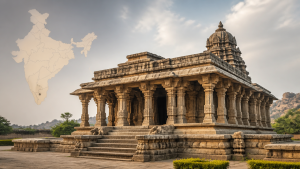
Gollalagudi Temple, also called Gollala Gudi, in Palampet village of Mulugu district, Telangana, was declared a monument of national importance through a gazette notification issued by the Union Ministry of Culture and Tourism on 1 September 2026. The declaration increased the number of Archaeological Survey of India protected monuments in Telangana to 10.
National Importance and Protection
A monument of national importance in India is protected under the Ancient Monuments and Archaeological Sites and Remains Act, 1958. The Archaeological Survey of India takes charge of such sites for conservation, maintenance, and regulated public access.
Architectural Features of Gollalagudi
Gollalagudi is identified as a Trikutalaya temple, a form with three sanctums. It has an east-facing mandapa connected to three garbhagrihas, which is a feature associated with regional Kakatiya-era temple architecture in Telangana.
The temple is broadly attributed to the Kakatiya period of the 12th to 13th centuries CE. Its exact construction date and original dedication remain subjects for archaeological and epigraphic study.
ASI Conservation Work
The Archaeological Survey of India, Hyderabad Circle, stated that it will take charge of the site for conservation work and minor repairs. The planned work includes addressing waterlogging and constructing a proper pathway for visitors.
The preliminary notification for national monument status was issued on 7 March 2026 for Gollala Gudi and a nearby Shiva temple. The notification opened a two-month period for public objections and feedback.
Important Facts for Exams
- The Ancient Monuments and Archaeological Sites and Remains Act, 1958 provides the legal framework for declaring monuments of national importance in India.
- The Archaeological Survey of India functions under the Ministry of Culture and manages protected monuments across the country.
- Trikutalaya is a temple type with three sanctums, and it is found in some regional temple traditions of South India.
- Kakatiya architecture is associated with Telangana and parts of present-day Andhra Pradesh, with the Ramappa Temple as a UNESCO World Heritage Site.
| Related | |
|---|---|