New Scorpion Species Discovered in Similipal Tiger Reserve
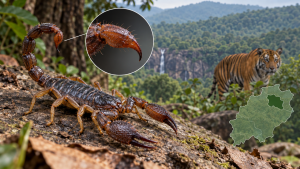
Researchers formally described Liocheles similipalensis, a new scorpion species found in Odisha’s Similipal Tiger Reserve, in November 2026. The discovery is the first confirmed record of the genus Liocheles in Odisha.
Species and habitat
The species measures 44–53 mm and has a glossy, bluish-black appearance. It was found in rocky habitats within tropical moist deciduous forests at about 1,000 metres above sea level. The research team comprised Saurabh Kininge, Tejas Thackeray, Prakash C. Gogineni, Similipal Field Director, and Akshay Khandekar.
Research findings
Published in the journal Euscorpius in 2026, the study raises the recognised global count of Liocheles species from six to seven. Liocheles similipalensis is the fourth species in the genus described from India. The researchers called for further field surveys and DNA-based studies to establish its geographical distribution and evolutionary relationships. The paper’s title identifies the family as Hormuridae and the order as Scorpiones.
Important Facts for Exams
- Book-lung structure: Scorpion book lungs occur in four pairs; each contains about 140–150 air-filled lamellae and connects through an atrial chamber to a spiracle.
- Parthenogenetic congener: In the genus Liocheles, L. australasiae is known for thelytokous parthenogenesis: females can produce daughters without mating.
- Pectinal sensory organs: Scorpion pectines carry dense sensory sensilla that detect chemical and mechanical cues from the ground, supporting orientation and mate-location behaviour.
- Ultraviolet fluorescence: Scorpion cuticle fluoresces blue-green under ultraviolet illumination; the glow is associated with compounds in its outer hyaline layer, although its biological function remains uncertain.
| Related | |
|---|---|