Major Uranium Mines in India
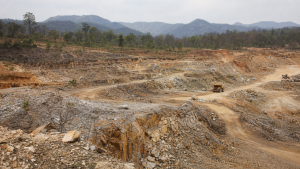
Uranium is a key radioactive metal used as fuel in nuclear reactors and is central to India’s atomic power programme. Domestic mining and processing matter because they support nuclear fuel supply, reduce import dependence, and connect mineral resource mapping with long-term energy security and regional development.
Uranium and India’s Nuclear Energy Programme
India’s nuclear energy programme uses uranium for power generation through nuclear fission. The country follows a three-stage strategy designed to optimise limited uranium reserves and make use of abundant thorium reserves in the long run. The Department of Atomic Energy (DAE) oversees nuclear science and technology in India, including the mining and processing of atomic minerals. The Atomic Energy Commission (AEC) is the apex policy-making body for the sector and frames policies and programmes for the atomic energy domain. India’s uranium resources are important not only for power generation but also for strengthening the domestic fuel cycle. For this reason, uranium mining is closely tied to energy security, strategic planning, and the development of supporting industrial infrastructure.
Uranium Corporation of India Limited (UCIL)
The Uranium Corporation of India Limited (UCIL) was incorporated in 1967 as a Public Sector Enterprise under the Department of Atomic Energy. It is responsible for uranium mining and processing in India. UCIL’s work covers exploration, mining, milling, and the production of uranium concentrate. In practical terms, it provides the initial material needed for India’s indigenous nuclear fuel cycle and supports the supply chain for nuclear power reactors. UCIL’s role is significant because uranium mining requires specialised operations, strict safety systems, and close coordination with the broader nuclear sector. Its activities therefore have importance beyond mining alone, including mineral resource mapping and the planned expansion of nuclear capacity.
Major Uranium Mining Regions in India
India’s known uranium reserves are concentrated mainly in a few regions. The most important among them are the Singhbhum Shear Zone in Jharkhand, the Cuddapah Basin in Andhra Pradesh, and smaller deposits in Meghalaya, Rajasthan, and Karnataka.
- Jharkhand: The most important uranium-bearing belt in India, especially around East Singhbhum and the Singhbhum Thrust Belt.
- Andhra Pradesh: Home to one of the largest uranium deposits, especially at Tummalapalle in Kadapa district.
- Meghalaya: Contains uranium-bearing areas such as Domiasiat and KPM Mawthabah.
- Karnataka: Has the Gogi project in Yadgir district.
- Rajasthan: Includes the Rohil deposit in Sikar district.
Important mines and deposits
- Jaduguda, Jharkhand: India’s first uranium mine, located in East Singhbhum district, began operations in 1967. It is an underground mine and remains the best-known uranium site in the country.
- Narwapahar, Jharkhand: Another important uranium mining area associated with UCIL operations.
- Turamdih, Jharkhand: An underground mine in the Singhbhum Thrust Belt.
- Banduhurang, Jharkhand: Located near Jaduguda and began operations in 2007.
- Bagjata, Jharkhand: An underground mine in the Singhbhum Shear Zone.
- Mohuldih, Jharkhand: Another underground mine contributing to uranium production.
- Tummalapalle, Andhra Pradesh: A major underground uranium mine and processing plant in Kadapa district.
- Lambapur-Peddagattu, Andhra Pradesh: Twin deposits in Nalgonda district planned for future development.
- Domiasiat, Meghalaya: A significant reserve in West Khasi Hills district.
- KPM Mawthabah, Meghalaya: Another potential uranium-bearing site.
- Gogi, Karnataka: A uranium mining project in Yadgir district under development.
- Rohil, Rajasthan: A notable uranium deposit in Sikar district.
Uranium Ore Processing
After mining, uranium ore is processed to extract uranium concentrate, commonly called yellowcake. The usual steps include crushing the ore, leaching it with chemical solutions, and then precipitating, drying, and packaging the concentrate. UCIL operates processing facilities at mine sites, including Jaduguda. The concentrate produced is then sent for further processing and fabrication into fuel for nuclear reactors. This step is crucial because mining alone does not supply usable reactor fuel. Processing uranium is a highly regulated activity due to the radioactive nature of the material. It requires technical control, environmental safeguards, and adherence to safety norms at every stage.
Regulatory Framework for Atomic Minerals
The mining and processing of uranium and other atomic minerals are governed by specific legal provisions in India. The Atomic Energy Act of 1962 provides the legal framework for the development, control, and use of atomic energy for the welfare of the people of India. This Act empowers the Central Government to control atomic minerals, including uranium. The Department of Atomic Energy exercises regulatory control over the nuclear fuel cycle, covering exploration, mining, power generation, and waste management. Environmental clearances and strict safety protocols are required for mining and processing radioactive materials. These controls are essential because uranium projects involve both strategic resources and environmental sensitivities, especially in mineral-rich regions where local development concerns also arise.
Key Prelims Takeaways
- Uranium is a radioactive metal used as fuel in nuclear reactors.
- UCIL was incorporated in 1967 and functions under the Department of Atomic Energy.
- UCIL is responsible for uranium mining and processing in India.
- Jaduguda, Jharkhand, began operations in 1967 and was India’s first uranium mine.
- Major uranium regions include Jharkhand, Andhra Pradesh, Meghalaya, Karnataka, and Rajasthan.
- Atomic Energy Commission is the apex policy-making body for India’s atomic energy sector.
- Atomic Energy Act, 1962 governs the development and control of atomic energy in India.
Recent Context
UCIL marked its Diamond Jubilee celebrations at Jaduguda, highlighting 60 years of uranium mining since the mine began operations in 1967. The event also drew attention to the 815-metre level of the mine, where a future Dark Matter Laboratory of the Saha Institute of Nuclear Physics is planned.
| Related | |
|---|---|