Important International Buffer Zones and Demilitarised Areas
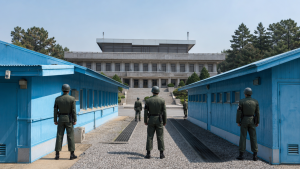
Buffer zones and demilitarised areas are neutral or restricted spaces created to separate potentially hostile sides. They are used to reduce the risk of direct clashes, monitor ceasefires, and support peace arrangements. In international affairs, these zones often become key tools for border security, conflict management, and sovereignty disputes.
Understanding Buffer Zones and Demilitarised Areas
A buffer zone is an area set up between two opposing parties to reduce the chances of confrontation. It may be created by treaty, armistice, or another agreement, and can include limited monitoring activity or peacekeepers.
A demilitarised zone (DMZ) is a stricter arrangement where military presence, installations, and activity are prohibited by agreement. All DMZs are buffer zones, but not all buffer zones are fully demilitarised.
- Buffer zone: Separates hostile parties; may allow limited patrols, surveillance, or peacekeeping presence.
- DMZ: No military presence or activity; boundaries are usually clearly fixed by agreement.
- Purpose: Prevent incursions, lower tensions, and create physical separation between forces.
- Peacekeeping role: International observers or troops may monitor compliance and report violations.
Historical Context and Legal Basis
The idea of neutral spaces to reduce conflict is old, but modern buffer zones largely developed in the 20th century. World War II, the Korean War, the Arab-Israeli conflicts, and Cold War rivalries showed the need for controlled separation lines to manage hostilities after fighting stopped.
These zones usually arise from formal legal instruments such as:
- Armistice agreements: Temporary or permanent arrangements that stop fighting, as in Korea.
- Peace treaties: Agreements that define security zones and border arrangements, as in Sinai.
- Disengagement agreements: Deals that create separation areas after war, as in the Golan Heights.
- UN Security Council resolutions: Often provide mandates for observer or peacekeeping missions.
- Bilateral or multilateral treaties: Used to define neutral territories and security regimes.
After the establishment of the United Nations, peacekeeping became an important mechanism for monitoring these zones. UN missions generally observe ceasefires, report violations, maintain liaison, and support confidence-building measures.
United Nations Role in Monitoring These Areas
The UN has played a central role in supervising several buffer zones and DMZs. These missions are usually lightly armed and operate under specific mandates renewed by the UN Security Council.
- UNDOF: Established in 1974 to supervise the ceasefire line between Israeli and Syrian forces in the Golan Heights.
- UNFICYP: Established in 1964 to prevent renewed fighting in Cyprus and help maintain law and order.
- UNMOGIP: Established in 1949 to observe and report ceasefire violations along the Line of Control in Jammu and Kashmir.
- UNISFA: Established in 2011 to monitor the Abyei area and help protect civilians.
In some cases, monitoring is done by non-UN bodies. The Sinai zone, for example, is overseen by the Multinational Force and Observers, an independent international organisation.
Important International Buffer Zones and DMZs
- Golan Heights (Israel-Syria): Became a buffer zone after the 1967 Six-Day War. The 1974 Disengagement Agreement created the area of separation, which is monitored by UNDOF.
- Korean DMZ (North Korea-South Korea): Established by the 1953 Korean Armistice Agreement. It is about 250 km long and roughly 4 km wide, near the 38th parallel. The Joint Security Area at Panmunjom is the main face-to-face contact point.
- Cyprus Green Line: A demilitarised zone dividing the island, established in 1964 and extended after the 1974 Turkish intervention. UNFICYP patrols the zone, including areas through Nicosia.
- Abyei Area (Sudan-South Sudan): A disputed oil-rich region with special administrative status under the 2005 Comprehensive Peace Agreement. UNISFA monitors the area amid continuing tensions.
- Sinai Peninsula (Egypt-Israel): The 1979 Egypt-Israel Peace Treaty created demilitarised security arrangements in parts of Sinai, monitored by the Multinational Force and Observers.
These examples show how buffer zones are often linked to wider issues of border security, ceasefire monitoring, and unresolved sovereignty claims.
| Zone | Agreement / Date | Monitoring body | Exam focus |
| Golan Heights | 1974 Disengagement Agreement | UNDOF | Area of separation after 1973 war |
| Korean DMZ | 1953 Korean Armistice Agreement | Armistice framework | About 4 km wide; Panmunjom JSA |
| Cyprus Green Line | 1964; extended after 1974 | UNFICYP | Divides the island; passes through Nicosia |
| Abyei | 2005 Comprehensive Peace Agreement | UNISFA | Disputed border and civilian protection |
| Sinai Peninsula | 1979 Egypt-Israel Peace Treaty | MFO | Independent observer mission, not UN |
Key Prelims Takeaways
- Buffer zones are neutral or restricted areas created to reduce direct conflict between hostile parties.
- DMZs are stricter than buffer zones and prohibit military presence and activity.
- UNDOF monitors the Golan Heights ceasefire line and area of separation.
- UNFICYP patrols the Cyprus Green Line and supports stability on the island.
- UNMOGIP was set up in 1949 to observe ceasefire violations in Jammu and Kashmir.
- UNISFA monitors the Abyei area between Sudan and South Sudan.
- MFO oversees the Sinai security arrangements and is not a UN mission.
- The Korean DMZ was created by the 1953 Armistice Agreement and runs near the 38th parallel.
- The Golan buffer zone was established after the 1973 Arab-Israeli War through the 1974 Disengagement Agreement.
- Panmunjom is the Joint Security Area within the Korean DMZ.
- Mount Hermon lies near the junction of Syria, Lebanon, and the Israeli-occupied Golan Heights.
- Legal foundations of such zones include armistice agreements, peace treaties, disengagement agreements, and UN resolutions.
Recent Context
Israel’s “Sufa 53” project in southern Quneitra, near the Golan Heights, has drawn attention to the fragility of the Israel-Syria separation line. The fortified route, trenches, berms, and observation posts are being cited in Syrian complaints as a breach of the 1974 Disengagement Agreement, while regional condemnations have revived focus on UNDOF-monitored buffer zones.
| Related | |
|---|---|