Major Space Science Missions of the 21St Century
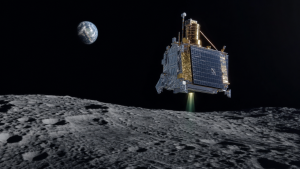
Space science missions in the 21st century have moved beyond simple flybys to include lunar landings, sample-return journeys, solar observatories, deep-space telescopes, and planetary rovers. These missions are helping scientists study the origin of the solar system, search for signs of life, and observe the Sun, planets, asteroids and distant galaxies with greater precision.
India’s lunar missions
- Chandrayaan-1 (2008): India’s first lunar probe carried the Moon Impact Probe (MIP) and NASA’s Moon Mineralogy Mapper (M3). It is best known for discovering water molecules (H2O and OH) on the lunar surface.
- Chandrayaan-2 (2019): The mission had an orbiter, Vikram lander and Pragyan rover. Although the lander did not achieve a soft landing, the orbiter continues to operate in lunar orbit and provides high-resolution data.
- Chandrayaan-3 (2023): It achieved a soft landing near the lunar south pole on August 23, 2023. India became the fourth nation to soft-land on the Moon and the first to reach the south polar region.
- Shiv Shakti Point: The Chandrayaan-3 landing site on the Moon was named Shiv Shakti Point.
Solar and astrophysical observatories
- ASTROSAT (2015): India’s first dedicated multi-wavelength space observatory studies ultraviolet, optical and X-ray bands simultaneously.
- Aditya-L1 (2023): Positioned at the Sun-Earth Lagrangian Point 1 (L1), about 1.5 million km from Earth, it continuously observes the solar corona, chromosphere and solar winds without eclipse interruption.
- XPoSat (2024): The X-ray Polarimeter Satellite measures the polarization of cosmic X-rays from sources such as neutron stars and black holes.
- Parker Solar Probe: NASA’s Parker Solar Probe became the first human-made object to touch the Sun by flying through its outer atmosphere, the corona.
Deep-space and technology demonstrator missions
- Mars Orbiter Mission (Mangalyaan) (2013): Launched via PSLV-C25, it made India the first Asian nation to reach Mars orbit and the first in the world to succeed on its initial attempt.
- SpaDeX (2024): The Space Docking Experiment is designed to demonstrate autonomous docking and undocking of two small spacecraft in low Earth orbit.
- NISAR: The mission represents a joint Earth-observation initiative using dual-frequency radar, namely L-band and S-band.
Asteroid, comet and sample-return missions
- Hayabusa: JAXA’s Hayabusa returned samples from asteroid Itokawa in 2010.
- Hayabusa2: The mission collected sub-surface samples from the carbonaceous asteroid Ryugu and returned them in 2020.
- OSIRIS-REx: NASA’s OSIRIS-REx collected pristine regolith from near-Earth asteroid Bennu in 2020 and delivered the sample capsule back to Earth in September 2023.
- Chang’e 6: China’s mission achieved the first sample return from the far side of the Moon.
Mars and outer solar system exploration
- Curiosity (2011): NASA’s rover confirmed past habitability at Gale Crater.
- Perseverance (2021): It landed at Jezero Crater to search for ancient microbial life and deploy the Ingenuity helicopter.
- Tianwen-1 and Zhurong: China’s 2020 Mars mission deployed an orbiter, lander and the Zhurong rover on Utopia Planitia in 2021.
- Cassini-Huygens: The NASA/ESA mission orbited Saturn from 2004 to 2017. Huygens landed on Titan in 2005 and Cassini detected water-ice plumes on Enceladus.
- New Horizons: It conducted a flyby of Pluto and its moon Charon in July 2015, followed by the flyby of Kuiper Belt object Arrokoth in 2019.
- JUICE: ESA’s Jupiter Icy Moons Explorer, launched in 2023, targets Ganymede, Callisto and Europa to examine subsurface oceans.
Space telescopes and astronomical observatories
- James Webb Space Telescope (JWST): Launched in December 2021 by NASA, ESA and CSA, it is positioned at the Sun-Earth L2 point and captures early galaxy formation and exoplanet atmospheric compositions.
- Kepler and TESS: Kepler discovered thousands of exoplanets using the transit method, while TESS continues all-sky exoplanet searches.
- Euclid Observatory: Launched in 2023, it maps the geometry of the dark universe by measuring dark energy and dark matter.
Key technical concepts
- Lagrangian points: Gravitationally stable positions in space where the gravitational pull of two large masses equals the centripetal force required for a small object to move with them.
- Polarimetry: The measurement of the polarization of electromagnetic waves, used by XPoSat to study high-energy magnetic fields in neutron stars and pulsars.
- Sample return missions: Missions designed to collect soil, rock or atmospheric samples from celestial bodies and safely return them to Earth for laboratory analysis.
Important facts for prelims
Chandrayaan-3 landed near the lunar south pole on August 23, 2023, and August 23 is observed as National Space Day in India.
Aditya-L1 operates from the Sun-Earth L1 point, allowing uninterrupted observation of the Sun.
JWST works at cryogenic temperatures near 40 Kelvin (-233 °C) at the L2 point.
| Mission | Launch Year | Agency | Primary purpose |
| Chandrayaan-1 | 2008 | ISRO | Lunar orbital mapping; confirmed lunar water |
| Curiosity | 2011 | NASA | Mars surface geology and past habitability |
| Mangalyaan (MOM) | 2013 | ISRO | Mars atmospheric and surface observation |
| James Webb (JWST) | 2021 | NASA / ESA / CSA | Deep-space infrared astronomy |
| Chandrayaan-3 | 2023 | ISRO | Soft landing near lunar south pole |
| Aditya-L1 | 2023 | ISRO | Continuous solar halo orbit observation |
| OSIRIS-REx | 2016 (Return 2023) | NASA | Asteroid Bennu sample return |
Key Prelims Takeaways
- India’s first lunar success: Chandrayaan-1 confirmed lunar water molecules on the Moon.
- South pole milestone: Chandrayaan-3 made India the first country to land near the lunar south pole.
- Solar observation: Aditya-L1 is placed at L1 for uninterrupted monitoring of the Sun.
- Polarimetry in space: XPoSat studies the polarization of cosmic X-rays.
- Sample return theme: Hayabusa, Hayabusa2, OSIRIS-REx and Chang’e 6 are important sample-return missions.
- Exoplanet search: Kepler and TESS are central missions for discovering planets beyond the solar system.
- Deep-space astronomy: JWST at L2 is a major observatory for early galaxies and exoplanet atmospheres.
Current General Studies comprises current-affairs-based, General Studies-rich study material on policies, laws, institutions, economy, science, environment, governance, international relations, and other varied but important topics for UPSC and State PSC Prelims examinations.
Fortnightly PDF compilations: Available here
Originally written on
April 29, 2026
and last modified on
September 5, 2026.
| Related | |
|---|---|