Major Space and Astronomy Research Organisations in India
Institutional Framework and Leadership
India’s space and astronomy ecosystem is built around the Department of Space (DoS), which reports directly to the Prime Minister. The Space Commission frames policy, while the Indian Space Research Organisation (ISRO) carries out implementation through a network of specialized centres and research institutes.
Alongside ISRO, several autonomous and academic bodies support space science, satellite development, astronomy, astrophysics, and observational research.
Core Centres of the Space Programme
- Vikram Sarabhai Space Centre (VSSC), Thiruvananthapuram: The main centre for launch vehicle design and development. Dr. U.P. Rajeev took charge as Director on July 1, 2026, succeeding A. Rajarajan.
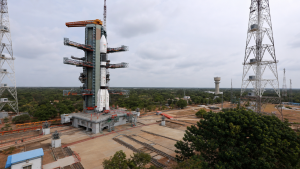
- Satish Dhawan Space Centre (SDSC) SHAR, Sriharikota: Responsible for launch operations, solid propellant processing, and range infrastructure. S. Muthuchezhian assumed charge as Director on June 2, 2026, succeeding E.S. Padmakumar.
- U R Rao Satellite Centre (URSC), Bengaluru: Designs and builds Indian satellites. Shri D.K. Singh became Director on September 1, 2026, succeeding M. Sankaran.
- Human Space Flight Centre (HSFC), Bengaluru: Coordinates India’s human spaceflight programme, including Gaganyaan-related activities. S.R. Biju serves as Director.
- Space Applications Centre (SAC), Ahmedabad: Develops payloads and space-based applications. Dr. Ch. V. N. Rao serves as Director, succeeding Nilesh M. Desai.
Autonomous Space and Academic Institutes
- Physical Research Laboratory (PRL), Ahmedabad: An autonomous unit of the DoS focused on planetary sciences, space physics, and solar astronomy. It is led by Prof. Anil Bhardwaj.
- Indian Institute of Space Science and Technology (IIST), Thiruvananthapuram: A space engineering and research institute offering specialised education in space sciences. Dr. B.N. Suresh is the Chancellor, and Prof. Dipankar Banerjee is the Vice-Chancellor.
- Indian Institute of Astrophysics (IIA), Bengaluru: Conducts research in stellar and solar physics, optics, and observational astronomy. Its Director is Prof. Annapurni Subramaniam.
- Aryabhatta Research Institute of Observational Sciences (ARIES), Nainital: Specialises in atmospheric sciences and astronomical observations. It has been directed by Dr. Manish K. Naja since October 2024.
Premier Astronomical and Observational Centres
- Inter-University Centre for Astronomy and Astrophysics (IUCAA), Pune: A joint initiative of the University Grants Commission (UGC), directed by Prof. Raghunathan Srianand since December 2023.
- National Centre for Radio Astrophysics (NCRA), Pune: A division of the Tata Institute of Fundamental Research (TIFR) that operates the Giant Metrewave Radio Telescope (GMRT). Prof. Yashwant Gupta serves as Centre Director.
- TIFR, Mumbai: A leading fundamental research institution engaged in high-energy astrophysics, balloon-borne astronomy, and related areas. It is directed by Prof. Jayaram Narayanan Chengalur.
Organisation-Wise Quick Reference
| Organisation | Location | Current Head | Core Mandate |
| ISRO / DoS | Bengaluru | Dr. V. Narayanan | Space policy and administration |
| VSSC | Thiruvananthapuram | Dr. U.P. Rajeev | Launch vehicle and rocket design |
| SDSC SHAR | Sriharikota | S. Muthuchezhian | Launch operations and propellant handling |
| URSC | Bengaluru | Shri D.K. Singh | Satellite design and fabrication |
| HSFC | Bengaluru | S.R. Biju | Human spaceflight coordination |
| SAC | Ahmedabad | Dr. Ch. V. N. Rao | Payloads and sensor development |
| IIST | Thiruvananthapuram | Prof. Dipankar Banerjee | Space sciences education and research |
| IIA | Bengaluru | Prof. Annapurni Subramaniam | Observational astrophysics and optics |
| PRL | Ahmedabad | Prof. Anil Bhardwaj | Planetary and solar system research |
| ARIES | Nainital | Dr. Manish K. Naja | Optical astronomy and atmospheric science |
| IUCAA | Pune | Prof. Raghunathan Srianand | Astronomy training and research |
| NCRA-TIFR | Pune | Prof. Yashwant Gupta | Radio astronomy and GMRT operations |
| TIFR | Mumbai | Prof. Jayaram Narayanan Chengalur | Fundamental physics and astrophysical research |
Key Prelims Takeaways
- DoS and ISRO: The Department of Space is the administrative parent of ISRO and reports directly to the Prime Minister.
- Policy mechanism: The Space Commission frames policy, while ISRO executes India’s space programme.
- Main launch centre: SDSC SHAR at Sriharikota is India’s primary launch base and supports launch operations.
- Satellite development: URSC in Bengaluru is the key centre for satellite design and fabrication.
- Human spaceflight: HSFC coordinates human spaceflight activities, including the Gaganyaan programme.
- Radio astronomy: NCRA-TIFR operates the GMRT, a major metre-wavelength radio telescope array near Pune.
- Largest optical telescope: ARIES houses the 3.6-metre Devasthal Optical Telescope, India’s largest fully steerable optical telescope.
Exam note: COSPAR’s Vikram Sarabhai Medal recognises research contributions from developing countries.
Current General Studies comprises current-affairs-based, General Studies-rich study material on policies, laws, institutions, economy, science, environment, governance, international relations, and other varied but important topics for UPSC and State PSC Prelims examinations.
Fortnightly PDF compilations: Available here
Originally written on
February 27, 2026
and last modified on
September 5, 2026.
| Related | |
|---|---|