Major National Sports Federations in India
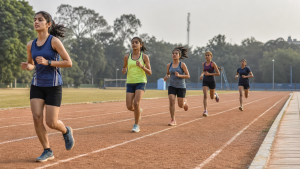
National Sports Federations in India are autonomous bodies that administer specific sports disciplines, conduct domestic competitions, and help select national teams. For Prelims revision, their role is important because sports governance now involves a statutory framework, recognition norms, and dispute-resolution mechanisms.
The National Sports Governance Framework
- National Sports Governance Act, 2025: Received presidential assent on August 18, 2025, replacing the National Sports Development Code of India, 2011.
- Implementation: The Act entered partial implementation from January 2026, creating a statutory basis for sports administration in the country.
- National Sports Board (NSB): The Act provides for the NSB to recognise and oversee national sports bodies.
- National Sports Tribunal (NST): The Act also provides for the NST to settle athletic and administrative disputes.
- RTI status: Any national sports federation receiving government funding or grants is treated as a public authority under the RTI Act.
National Sports Governance Rules, 2026
- Standardisation: The Union Government notified the National Sports Governance (National Sports Bodies) Rules, 2026 to standardise internal administration and representation.
- Sportspersons of Outstanding Merit (SOMs): Recognised National Sports Bodies must include at least four SOMs in their General Bodies.
- Women’s representation: Exactly 50% of these designated SOM positions are reserved for women.
- Eligibility: An SOM nominee must be at least 25 years old and must have retired from active competitive sport at least one year before nomination.
Key Olympic and Team Sports Federations
- Indian Olympic Association (IOA): Led by P.T. Usha, who became the first woman elected President in December 2022.
- All India Football Federation (AIFF): Led by President Kalyan Chaubey since September 2022.
- Football Federation of Bharat (FFB): The AIFF accepted a proposal on June 20, 2026, to change its name to FFB, subject to approval by the Sports Ministry and FIFA.
- Hockey India: Administered by President Dilip Tirkey and Secretary General Bhola Nath Singh.
- Hockey results: The Indian men’s hockey team finished eighth and the women’s team finished fifth at the FIH Hockey World Cup in August 2026.
Cricket and Combat Sports Governing Bodies
- Board of Control for Cricket in India (BCCI): Headed by Mithun Manhas, who became the 37th President on September 28, 2025.
- Historic firsts at BCCI: Manhas is the first uncapped Indian cricketer and the first administrator from Jammu and Kashmir to serve as BCCI President.
- Wrestling Federation of India (WFI): Led by President Sanjay Kumar Singh.
- Aadhaar verification in wrestling: WFI introduced mandatory mobile OTP-based Aadhaar verification for youth championships from June 2026.
- Effect of verification: More than 500 wrestlers were excluded from the U-17 National Open Ranking Tournament due to record discrepancies.
- Boxing Federation of India (BFI): Led by Ajay Singh, who won a third consecutive term as President on August 21, 2025.
Athletics and Archery Governing Bodies
- Athletics Federation of India (AFI): Headed by Bahadur Singh Sagoo, elected unopposed as President in January 2025.
- AFI background: Bahadur Singh Sagoo is a former Asian Games champion shot putter and succeeded Adille Sumariwalla.
- Archery Association of India (AAI): Coordinates national archery events under President Arjun Munda.
- AAI administration: Virendra Sachdeva serves as Secretary General.
- International role: WFI President Sanjay Kumar Singh was elected a Bureau Member of United World Wrestling (UWW)-Asia on March 24, 2025.
Key Prelims Takeaways
- Statutory framework: Sports administration is now governed by the National Sports Governance Act, 2025.
- NSB role: The National Sports Board recognises and oversees national sports bodies.
- NST role: The National Sports Tribunal handles sports-related disputes.
- RTI coverage: Federations receiving government grants are public authorities under the RTI Act.
- SOM requirement: At least four Sportspersons of Outstanding Merit must be included in the General Bodies of recognised bodies.
- Women’s quota: Half of the SOM positions are reserved for women.
- Age and retirement norm: SOM nominees must be at least 25 years old and retired from active competition for at least one year.
Recent Context
The current trigger is the shift to a statutory sports-governance model after the National Sports Governance Act, 2025 entered partial implementation in January 2026. This has increased the relevance of compliance, recognition, and dispute resolution in the functioning of national sports federations.
Current General Studies comprises current-affairs-based, General Studies-rich study material on policies, laws, institutions, economy, science, environment, governance, international relations, and other varied but important topics for UPSC and State PSC Prelims examinations.
Fortnightly PDF compilations: Available here
Originally written on
April 19, 2026
and last modified on
September 5, 2026.
| Related | |
|---|---|