Major Government Initiatives for Clean Transport in India
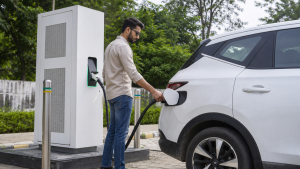
India’s clean transport push combines demand incentives, public transport electrification, freight decarbonisation, and domestic manufacturing support. The policy mix is designed to cut oil dependence, reduce emissions, and create a stronger EV and alternative-fuel ecosystem across the value chain.
PM E-DRIVE Scheme
PM E-DRIVE, or the Prime Minister Electric Drive Revolution in Innovative Vehicle Enhancement, is the key demand-side scheme for promoting electric mobility. It was launched on 1 October 2024 under the Ministry of Heavy Industries as the successor to the FAME programmes. The Cabinet has extended its implementation up to 31 March 2028, while keeping the overall budget intact.
- Total outlay: ₹10,900 crore.
- FY 2026-27 allocation: ₹1,500 crore.
- Incentive mode: Upfront demand incentives are provided through Aadhaar-authenticated digital vouchers (e-vouchers).
- Electric two-wheelers: Subsidy capped at 15% of ex-factory price.
- Battery cost reference: Maximum battery cost calculation is capped at ₹2,500 per kWh for FY 2025-26.
- Eligibility limit: Vehicle price cap of ₹1.5 lakh for electric two-wheelers.
- Claim limit: Incentives are restricted to one vehicle per individual category and are verified through Aadhaar-based authentication.
The scheme is structured to support both private adoption and public fleet transition. Its budget is distributed across electric buses, two- and three-wheelers, charging infrastructure, trucks, and ambulances. This makes PM E-DRIVE relevant not only for consumer EV uptake but also for cleaner logistics and emergency transport.
| Segment | Outlay (₹ crore) | Purpose |
| Electric buses | 4,391 | 14,028 e-buses for state transport systems |
| Electric 2- and 3-wheelers | 3,679 | Direct purchase-linked demand incentives |
| EV charging infrastructure | 2,000 | Public charging stations across India |
| Electric trucks | 500 | Medium- and heavy-duty freight deployment |
| Electric ambulances | 500 | Clean emergency response vehicles |
PM-eBus Sewa Scheme
Public transport electrification is central to urban air quality improvement and lower operating emissions. The PM-eBus Sewa scheme was approved in August 2023 under the Ministry of Housing and Urban Affairs to deploy 10,000 electric buses in 169 cities.
- Target cities: Cities with populations between 3 lakh and 40 lakh, along with capital cities, hill states, and the northeastern region.
- Implementation model: Public-Private Partnership (PPP).
- Total budget: ₹20,000 crore.
- Union Government share: ₹10,000 crore.
- State and local share: The remaining funding is to be provided by participating state and local administrations.
- Payment Security Mechanism: A dedicated mechanism is built in to ensure timely payments to private operators and reduce cash-flow risk.
The scheme is important from a policy-implementation perspective because it links public transport expansion with financial certainty for operators. By using PPP support and payment security, the programme aims to improve the viability of e-bus procurement and deployment in cities that need cleaner mass transit.
e-FAST India and Freight Decarbonisation
Freight is a major decarbonisation challenge because road transport carries the bulk of India’s goods movement. e-FAST India, or Electric Freight Accelerator for Sustainable Transport, was launched by NITI Aayog in September 2022 with support from WRI India and other partners. It is aimed at accelerating the shift to electric freight vehicles and planning the enabling ecosystem.
- Freight share: Road transport accounts for about 70% of India’s total freight movement.
- Emission intensity: Heavy-duty trucks form only 3% to 4% of the vehicle fleet but generate over 34% of transport-sector carbon emissions.
- Fleet growth: Electric freight deployments rose from 201 units in FY25 to 826 units in FY26.
- Current scale: More than 3,000 e-MHDVs are active across India.
- Platform role: e-FAST India brings together shippers, logistics service providers, manufacturers, charge point operators, and financiers.
The platform supports corridor planning, charging network development, and commercial viability for electric trucks. This makes it a key instrument for reducing freight emissions, improving logistics efficiency, and addressing financing barriers in a segment where high upfront costs remain a major obstacle.
PLI Schemes for Domestic Manufacturing
Supply-side support is essential for building a competitive clean-transport ecosystem. The Production Linked Incentive (PLI) schemes aim to expand domestic manufacturing, strengthen value chains, and reduce dependence on imported components.
- PLI for Advanced Chemistry Cell (ACC): Backed by ₹18,100 crore to create 50 GWh of domestic chemistry-cell manufacturing capacity.
- Policy objective: To reduce reliance on imported lithium-ion and advanced battery components.
- PLI for Auto and Components: Allocated ₹25,938 crore to promote domestic production of advanced automotive technologies.
- Eligible areas: Electric vehicles, hydrogen fuel-cell systems, and critical electronic components.
- Phased Manufacturing Programme: Works with the PLI framework to require progressive localisation of key components over time.
Together, these schemes support industrial depth rather than only final-vehicle assembly. For exam purposes, the important point is that clean transport policy in India is not limited to subsidies; it also includes domestic manufacturing incentives, localisation targets, and ecosystem development.
Key Prelims Takeaways
- PM E-DRIVE: Launched on 1 October 2024, with an outlay of ₹10,900 crore and execution extended to 31 March 2028.
- PM E-DRIVE incentives: Demand incentives are delivered through Aadhaar-authenticated e-vouchers.
- E-2W support: Subsidy is capped at 15% of ex-factory price, with a vehicle price ceiling of ₹1.5 lakh.
- PM-eBus Sewa: A PPP-based scheme for 10,000 electric buses in 169 cities, backed by a Payment Security Mechanism.
- Freight emissions: Trucks are a small share of the fleet but contribute over 34% of transport emissions.
- e-FAST India: Focuses on freight corridor planning, charging infrastructure, and stakeholder coordination.
- PLI support: ACC PLI targets 50 GWh of cell capacity, while the auto-components PLI supports EV-related manufacturing.
Recent Context
On 7 September 2026, NITI Aayog launched the Platform for Aggregating Clean Transport (PACT) and the Zero Emission Truck (ZET) Marketplace under e-FAST India. PACT helps aggregate freight demand and identify viable corridors, while the ZET Marketplace connects manufacturers, logistics providers, charge point operators, and financiers to speed up electric truck adoption.
| Related | |
|---|---|