KRIBHCO Plans 3-4 Lakh Tonnes of Non-Urea Fertilisers
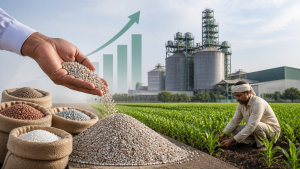
Krishak Bharati Cooperative Limited (KRIBHCO) has announced plans to import 3-4 lakh tonnes of non-urea fertilisers for the rabi season, which begins in October in many parts of India. The planned imports mainly cover phosphatic fertilisers such as Di-Ammonium Phosphate (DAP) and NPK fertilisers.
KRIBHCO and Cooperative Fertiliser Supply
KRIBHCO is a multi-state cooperative society engaged in fertiliser production, marketing, and distribution in India. It operates in the fertiliser sector, where urea is the main nitrogenous fertiliser and DAP and NPK are widely used non-urea fertilisers.
Rabi Season Fertilisers
The rabi season covers winter-sown crops such as wheat, mustard, gram, and barley. DAP supplies phosphorus and nitrogen, while NPK fertilisers contain nitrogen, phosphorus, and potassium in different ratios for crop nutrition.
Import Plan, Stock Position and Market Prices
KRIBHCO Chairman V. Sudhakar Chowdary announced the import plan at the cooperative’s 46th annual general meeting. KRIBHCO Managing Director S.S. Yadav stated that the cooperative had already imported 8 lakh tonnes of DAP and 1 lakh tonne of other NPK fertilisers, and it planned to import another 3 lakh tonnes in the next two to three months. The cooperative also reported an existing stock of 6 lakh tonnes for the season. Global prices for DAP are around USD 900 per tonne, while NPK is around USD 915 per tonne.
Important Facts for Exams
- Di-Ammonium Phosphate is a phosphatic fertiliser used in crop nutrition during the rabi season.
- NPK fertilisers contain three primary plant nutrients: nitrogen, phosphorus, and potassium.
- El Nino is a climate phenomenon linked with changes in rainfall and sowing patterns in India.
- KRIBHCO reported a pre-tax profit of Rs. 824.68 crore for financial year 2025-26.
Fertiliser Sector Context
India imports a large share of its phosphatic and potassic fertiliser requirements because domestic production is limited. Fertiliser demand in the rabi season is closely linked to sowing area, irrigation availability, and international prices of raw materials and finished fertilisers.
| Related | |
|---|---|